

British Army cap badges sit at the entry point of most militaria collections in 2026 — cheap enough to start with, deep enough to spend decades chasing. This guide ranks the regimental badges worth building a collection around, from the most recognisable to the genuinely obscure, and tells you what separates a real one from a repro.
- The Parachute Regiment (PARA) cap badge wins best overall for new collectors in 2026 — widely available, unmistakable design, low cost of entry.
- The Royal Marines Globe & Laurel badge suits collectors bridging Army and Naval Service insignia, though it isn't technically a British Army badge.
- Grenadier Guards and Coldstream Guards badges reward Foot Guards specialists chasing full ceremonial sets.
- Genuine bi-metal or staybrite construction and correct-era backing separate real British Army cap badges from cast reproductions.
- MilitaryMart stocks genuine, graded cap badges and insignia alongside the uniform pieces they'd have sat on.
Why this matters
The cap badge market got noisier through the 2020s as cast reproductions flooded auction sites at genuine-looking prices. A collector building a British Army cap badge collection in 2026 needs a framework for what's worth buying, not just what's cheap.
MilitaryMart deals in graded, genuine surplus every week — badges, insignia, and the uniforms they came off. That trade experience is what this ranking is built on, not marketing copy. Condition grading matters here the same way it matters on a jacket or a boot: new, used, graded, or NOS (new old stock) changes what a badge is actually worth to a serious collector.
Best overall: the Parachute Regiment (PARA) cap badge. Best for cross-service collectors: the Royal Marines Globe & Laurel badge — Naval Service, not Army, but a common companion piece in mixed collections. Best budget entry: the Coldstream Guards grenade badge, one of the more affordable Foot Guards badges to find in genuine condition.
What makes the best British Army cap badge for collectors
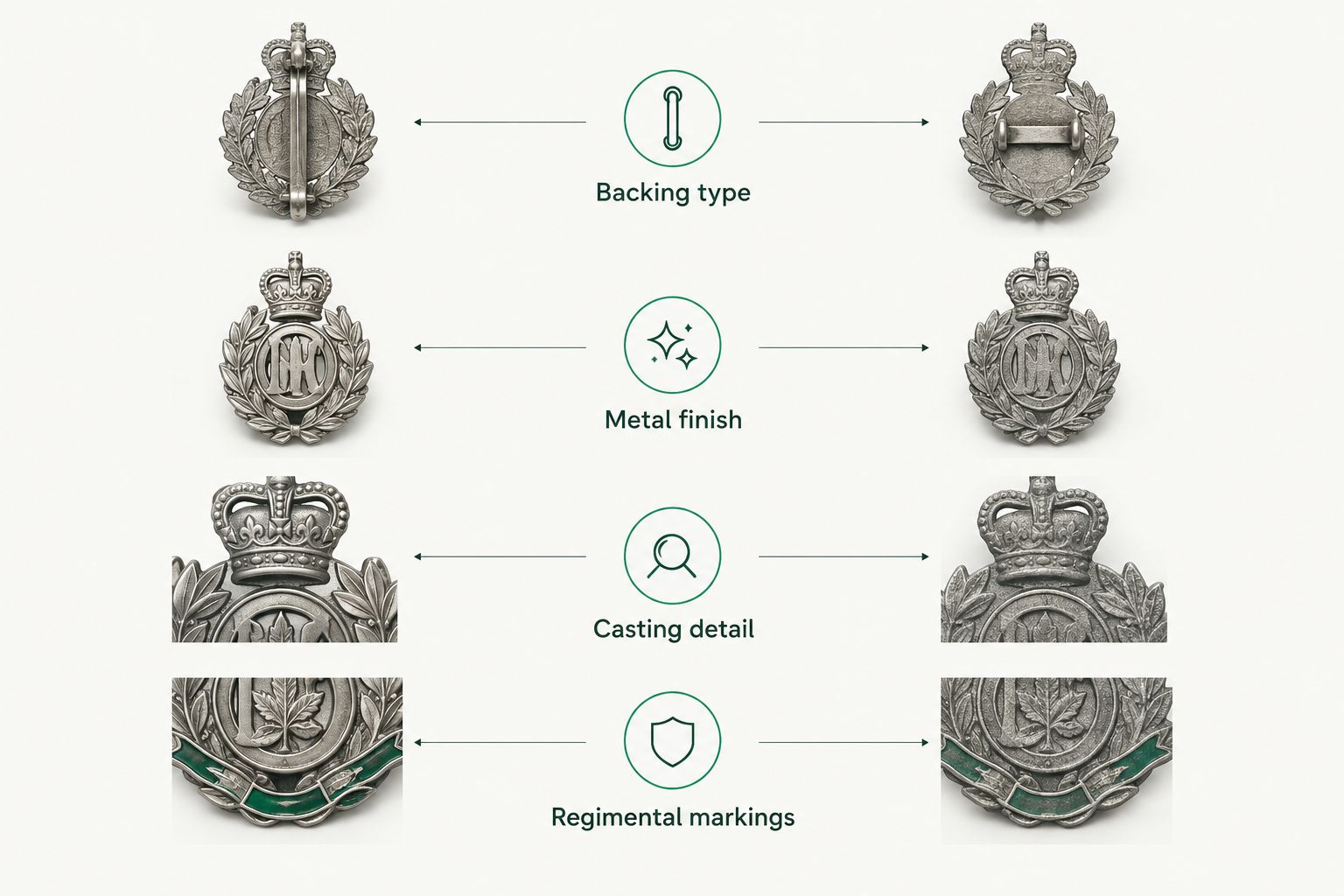
- Genuine construction — staybrite, bi-metal, or blackened brass, not a soft cast repro
- Correct-era backing — lugs on pre-WWII badges, slider fittings on most post-war issue, screw-post on later commercial pieces
- Sharp casting detail — genuine dies produce crisp lettering and edges; repros blur
- Honest condition grading — new, used, graded, or NOS stated up front, not glossed over
- Regimental history — badges from disbanded or amalgamated regiments have a finite supply that only shrinks
- Set completeness — matching buttons or shoulder titles add long-term interest to a themed collection
Genuine vs reproduction: the quick check
Hold the badge up to the light and check the reverse first, not the front. Reproductions often nail the face design but get the backing fitting or the metal weight wrong. How to identify genuine military surplus from replicas covers the same checks used across MilitaryMart's wider surplus range, and they apply directly to badges and insignia.
British Army cap badges at a glance
| Badge | Best for | Standout feature | Key limitation |
|---|---|---|---|
| Parachute Regiment (PARA) | First-time collectors | Instantly recognisable winged parachute design | Common enough that rarity value is low |
| Royal Marines Globe & Laurel | Cross-service collectors | Ties into ceremonial dress cap sets | Not a British Army badge — Naval Service |
| Grenadier Guards | Foot Guards specialists | Grenade device tied to the senior Guards regiment | Genuine ceremonial pieces are harder to source than field badges |
| Coldstream Guards | Budget-conscious starters | Affordable entry into Guards collecting | Less distinctive than the Grenadier Guards grenade |
| Royal Green Jackets | Post-amalgamation specialists | Bugle horn design from a regiment folded into The Rifles in 2007 | Supply is finite and shrinking |
| Royal Engineers | Corps and technical-arm collectors | Grenade-and-globe design tied to a long-serving corps | Less demand than infantry regiment badges |
| Royal Artillery | Support-arm collectors | Gun device recognised across generations of gunners | Common issue years mean lower rarity premium |
1. Parachute Regiment (PARA) cap badge: best for first-time collectors
The PARA badge is the regulation silver-finish metal badge worn by the Parachute Regiment, and it's usually the first British Army cap badge anyone buys because it's everywhere and it's obvious what it is. It works as a standalone piece or as the anchor for a wider PARA uniform collection.
Parachute Regiment cap badge pros:
- Immediately recognisable, even to non-collectors
- Easy to find in genuine, graded condition
- Pairs naturally with other PARA insignia and kit
Parachute Regiment cap badge cons:
- High availability keeps long-term rarity value modest
- Some later commercial reissues need checking against genuine issue backings
Verdict: Buy. It's the sensible first badge for anyone starting a British Army cap badge collection in 2026.
2. Royal Marines Globe & Laurel cap badge: best for cross-service collectors
The Globe & Laurel is the Royal Marines' regimental badge, and while the Royal Marines sit within the Naval Service rather than the British Army, the badge shows up constantly in mixed British military collections alongside Army insignia. It's most often collected as part of a full No. 1 Dress cap rather than loose.
Royal Marines badge pros:
- Strong ceremonial design with genuine historical weight
- Sits well in a display alongside Army Foot Guards badges
- Often available complete on the dress cap itself, not just as a loose badge
Royal Marines badge cons:
- Not technically a British Army badge — a caveat worth knowing before buying
- Full ceremonial caps cost more to source in graded condition than a loose badge
Verdict: Buy, with the caveat noted above for anyone building a strictly Army-only collection.


3. Grenadier Guards cap badge: best for Foot Guards specialists
The Grenadier Guards badge carries the grenade device that names the regiment, and it's the senior regiment of the Foot Guards. Collectors chasing a full Guards set usually start here before moving on to Coldstream, Scots, Irish, and Welsh Guards badges.
Grenadier Guards badge pros:
- Strong regimental prestige within Foot Guards collecting
- Distinctive grenade design that's hard to confuse with other Guards regiments
- Slots into a wider ceremonial dress collection
Grenadier Guards badge cons:
- Genuine ceremonial-grade examples take longer to source than field-issue badges
- Reproductions are common given the badge's popularity
Verdict: Buy for anyone building a Foot Guards set; Wait if you're only after a single showcase piece and haven't checked provenance yet.
4. Coldstream Guards cap badge: best budget entry point
The Coldstream Guards badge is a solid, affordable way into Guards regiment collecting. It's less flashy than the Grenadier Guards grenade but genuinely easier to find at entry-level cost, which makes it a reasonable first Guards badge.
Coldstream Guards badge pros:
- More affordable entry into Foot Guards collecting than most alternatives
- Steady supply of genuine graded examples
- Straightforward starting point for a Guards-themed set
Coldstream Guards badge cons:
- Less visually distinctive than the Grenadier Guards design
- Lower resale interest compared with rarer Guards badges
Verdict: Buy if budget is the main constraint on starting a Guards collection.
5. Royal Green Jackets cap badge: best for post-amalgamation specialists
The Royal Green Jackets carried a bugle horn badge until the regiment was amalgamated into The Rifles in 2007. That amalgamation is exactly why the badge matters to serious collectors now — the supply of genuine Royal Green Jackets badges only shrinks from here.
Royal Green Jackets badge pros:
- Finite supply following the 2007 amalgamation into The Rifles
- Distinctive bugle horn design tied to a specific regimental lineage
- Strong interest among collectors focused on amalgamated and disbanded regiments
Royal Green Jackets badge cons:
- Genuine examples are harder to find than badges from still-serving regiments
- Prices reflect the scarcity, so patience matters more than budget here
Verdict: Buy if you find a genuine graded example; Hold out rather than settle for an unverified one.
6. Royal Engineers cap badge: best for corps and technical-arm collectors
The Royal Engineers badge combines a grenade and a globe, marking one of the British Army's longest-serving corps. It appeals to collectors who focus on support arms and technical corps rather than infantry regiments.
Royal Engineers badge pros:
- Long regimental history behind a distinctive grenade-and-globe design
- Steady availability in genuine graded condition
- Complements a wider corps-focused collection alongside Royal Artillery pieces
Royal Engineers badge cons:
- Less collector demand than infantry regiment badges, which can mean slower resale
Verdict: Buy for a corps-themed collection; Skip if you're only chasing infantry regiments.
7. Royal Artillery cap badge: best for support-arm collectors
The Royal Artillery's gun device is one of the most recognised support-arm badges in British military collecting, spanning generations of gunners. It's a natural companion to a Royal Engineers badge in a corps-focused set.
Royal Artillery badge pros:
- Widely recognised design with a long service history behind it
- Genuine examples are relatively easy to find
- Pairs naturally with other corps and support-arm insignia
Royal Artillery badge cons:
- Common issue years mean lower rarity premium than amalgamated-regiment badges
Verdict: Buy as a foundation piece for a support-arm collection.
How this ranking works
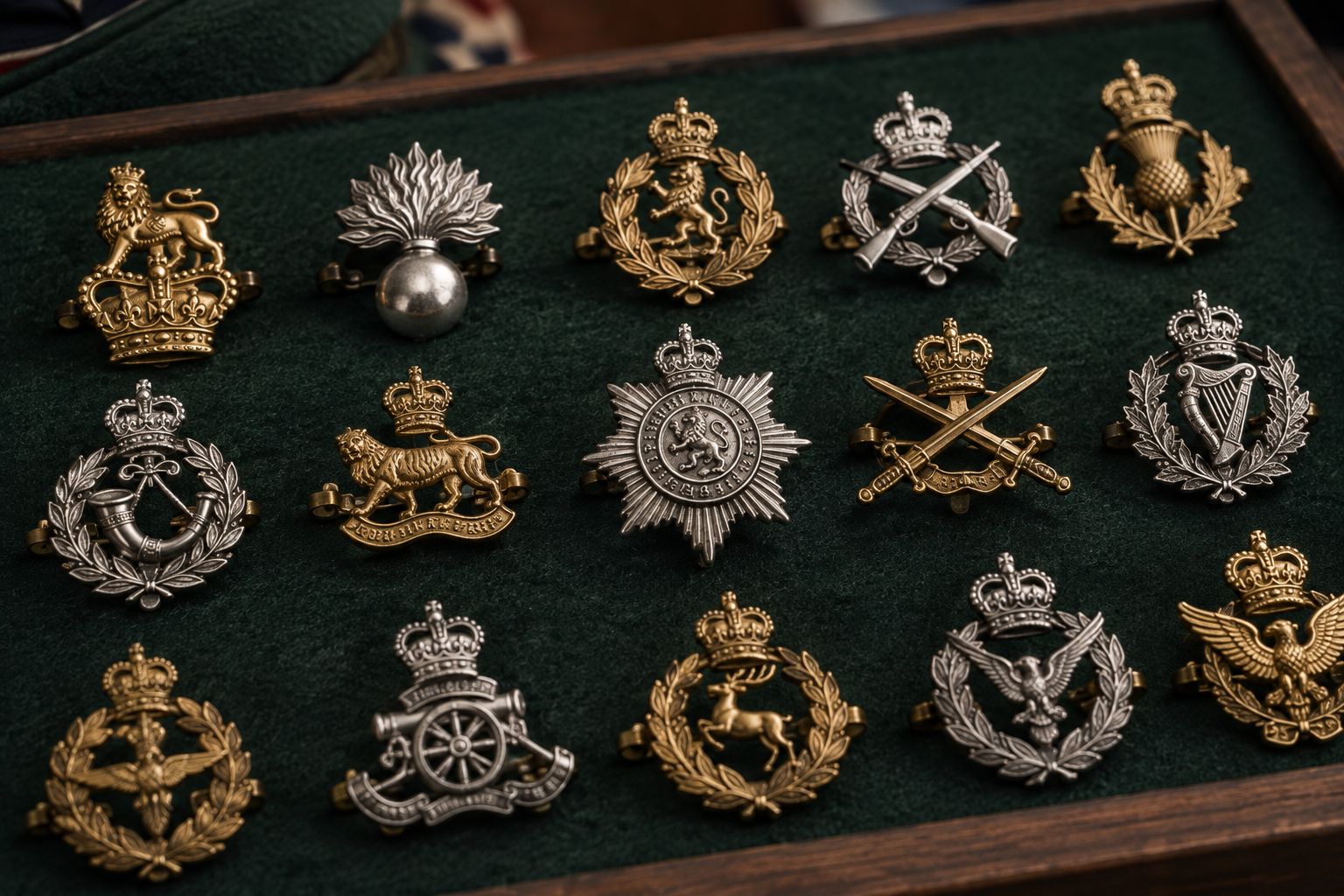
Each badge above is judged against the same six criteria: genuine construction, correct-era backing, casting sharpness, honest grading, regimental history, and how well it slots into a wider set. The Parachute Regiment badge tops the list on accessibility and clarity, not rarity — for a rarity-led pick, the Royal Green Jackets badge is the stronger long-term hold. How to attach badges and patches to a uniform correctly is worth a read once you're mounting badges onto a display cap or dress uniform rather than just a board.
Which British Army cap badge should you choose?
Start with the Parachute Regiment badge if this is your first piece — it's affordable, genuine examples are easy to verify, and it teaches you what correct backing and casting detail actually look like before you spend more on rarer regiments. Move to Grenadier Guards or Coldstream Guards once you want a Foot Guards theme, and chase the Royal Green Jackets badge specifically if amalgamated and disbanded regiments are your focus in 2026. The Royal Marines Globe & Laurel earns its place too, as long as you know it's a Naval Service badge and not technically Army.
FAQ
What's the most collectible British Army cap badge in 2026?
The Royal Green Jackets bugle horn badge carries the strongest long-term collector interest because the regiment amalgamated into The Rifles in 2007, which caps the supply of genuine examples permanently.
How can you tell a genuine cap badge from a reproduction?
Check the backing fitting first — lugs, slider, or screw-post should match the badge's era — then look at casting sharpness and metal weight, since reproductions often blur fine lettering.
Is the Parachute Regiment cap badge a good first purchase?
Yes. It's widely available, easy to verify against genuine issue examples, and gives new collectors a reliable reference point before buying rarer regimental badges.
Is the Royal Marines Globe & Laurel a British Army badge?
No. The Royal Marines sit within the Naval Service, not the British Army, but the badge is commonly collected alongside Army insignia in mixed militaria collections.
What materials are British Army cap badges made from?
Genuine badges are typically staybrite, bi-metal, or blackened brass depending on regiment and issue period, which is one reason metal weight and finish matter when checking authenticity.
Do amalgamated regiment badges hold value better than current-issue badges?
Generally yes, because the supply of genuine badges from disbanded or amalgamated regiments like the Royal Green Jackets stops growing once the regiment folds into another.
Can you display a genuine cap badge without mounting it on a uniform?
Yes, a felt-lined display board works well and keeps different backing types from scratching each other, which matters more than most new collectors expect.
Should a beginner buy loose badges or badges still mounted on a cap?
Loose graded badges are usually cheaper and easier to verify individually, while a mounted cap like the Royal Marines No. 1 Dress cap gives context but costs more to source in genuine condition.
One last thing
Backing type dates a badge more reliably than most collectors assume — lugs point to pre-WWII issue, slider fittings dominate the post-war decades, and screw-post backs usually mean a later commercial reissue, regardless of what the front design tells you. Check the back before you check the price.


Leave a comment