

Yes, you can use a poncho as a basha shelter if it has waterproof fabric, sound attachment points and enough coverage for your sleeping kit. Close the hood securely, pitch the fabric with a slope and keep your bedding clear of exposed edges. For a 2026 wild camp, the main compromise is simple: once your poncho becomes the roof, you cannot wear it without taking your shelter down.
- Can you use a poncho as a basha shelter? Yes, if waterproof fabric, secure tie-outs and coverage suit the pitch.
- Military Mart distinguishes genuine surplus from military-style kit; check the individual description before choosing.
- The MTP Lightweight Poncho lists waterproof nylon, six brass eyelets and a weight of 350g.
- Choose a dedicated basha when you need your waterproof clothing and shelter working separately.
Can you use a poncho as a basha shelter?
A suitable waterproof poncho can serve as a small overhead shelter; not every garment called a poncho is suitable. Check the description, attachment points and actual coverage rather than relying on camouflage or an army-style name. If authenticity matters, start with the guide to identifying genuine military surplus and replicas.
The comparison below separates a wearable shelter option from a dedicated basha. The specifications come from the individual product descriptions, not assumptions about military kit generally.
| Option | Best for | Stated features | Main advantage | Main limitation |
|---|---|---|---|---|
| MTP Lightweight Poncho | Buyers wanting waterproof clothing with attachment points for a small shelter | Waterproof nylon, drawstring hood, six brass eyelets, side press studs, 350g | Combines wearable rain cover with useful pitching features | You lose your wearable rain cover while it is pitched; check coverage before relying on it |
| British Army Style BTP Basha | Buyers wanting a separate shelter sheet with several pitching points | 12 reinforced edge loops, brass eyelets, three reinforced pitch loops, fully waterproof single-coated fabric | Keeps your shelter separate from your clothing | Adds a separate item to carry and is described as army style, not genuine issue |
Neither option replaces ground insulation, suitable bedding or a sensible campsite. An open-sided roof also leaves you exposed to wind-driven rain.
Why this matters for your wild camp
A poncho shelter saves duplication only when it covers the job you actually need. A roof that leaves your sleeping bag sticking out is not a useful saving, however neatly it packs.
For your 2026 kit list, decide whether the poncho is primarily clothing, an emergency cover or your planned overnight roof. Those roles overlap, but they are not interchangeable in bad weather. Do not make your only waterproof garment your only shelter without planning for the changeover.
Military Mart suits bushcraft buyers who want genuine surplus distinguished from military-style kit. The practical limit is that origin alone does not establish shelter suitability: condition, fabric and fittings still need checking.
What makes a poncho suitable for a basha pitch?
Waterproof fabric
Look for an explicit waterproof description. Camouflage describes a pattern; cotton describes a material. Neither tells you that a poncho will keep rain off your sleeping kit.
A poncho liner is a different item again. Do not substitute a liner for a waterproof outer sheet simply because both carry the poncho name.
Sound attachment points
Eyelets or reinforced loops give you places to attach guylines. Examine the fabric around each fitting, not just the metal or stitching itself. A sound eyelet surrounded by torn cloth is still a weak attachment.
The MTP Lightweight Poncho description lists six brass eyelets. The British Army Style BTP Basha lists 12 reinforced edge loops and three reinforced pitch loops. These figures describe fittings, not a guaranteed wind rating or a measure of how many people fit underneath.
A hood you can close
The head opening needs attention when a garment becomes a roof. Tighten and secure the hood using its intended fastening, then arrange it so water sheds away rather than collecting around the opening.
Do not assume a tied drawcord makes every hood watertight. Test the closure before using the poncho over bedding.
Enough useful coverage
Lay your sleeping mat, sleeping bag and essential kit beneath a practice pitch. Check your head, feet and the sides of your bedding. Leave room to move without pushing the sleeping bag beyond the roof.
Measure the pitched shelter, not just the flat sheet. Raising the roof or changing its shape changes the area protected underneath.
How do you pitch a poncho as a basha?
Start somewhere you can practise without depending on the result overnight. Have suitable cord, pegs and supports ready; do not assume a poncho includes pitching accessories unless its description says so.
- Choose the site. Use firm ground away from drainage channels, unstable trees and overhead dead branches. Check permission and the rules for camping at that location.
- Check the fabric. Open the poncho fully and inspect the body, seams, hood and attachment points. Deal with damage before applying tension.
- Close the hood. Secure the opening and position it so it does not form a pocket that holds rainwater.
- Set the roof. Use appropriate attachment points and supports to create a sloping roof. Keep the more exposed edge low enough to reduce rain blowing underneath.
- Tension the edges. Adjust guylines gradually until the fabric sheds water without deep hollows. Do not haul a weak fitting tight to remove every crease.
- Check the coverage. Put your actual sleeping kit underneath, then check where water would run and where your bedding sits relative to the edges.
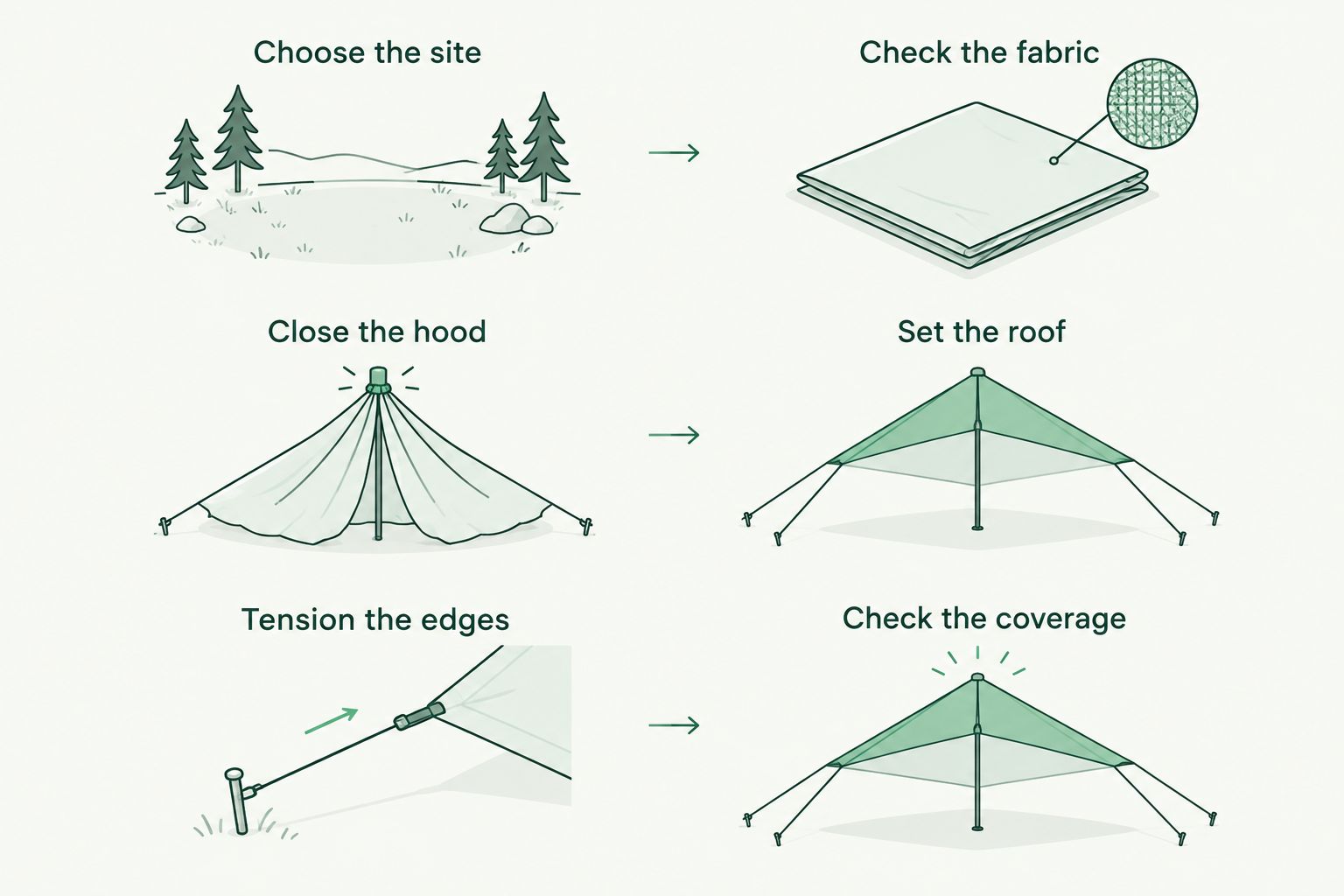
After pitching, look along the roof from outside. Sagging pockets, loose corners and an open hood are easier to spot before rain arrives. Recheck the tension if the fabric relaxes or conditions change.
Which poncho or basha features should you choose?
Choose the MTP Lightweight Poncho for a wearable option with stated attachment points; choose the British Army Style BTP Basha when a separate roof is the priority. The right choice depends on your kit arrangement, not the camouflage pattern.
The MTP Lightweight Poncho lists a weight of 350g, waterproof nylon, a drawstring hood and press studs down both sides. Those are useful facts for your 2026 packing list. They do not establish its packed dimensions, overnight capacity or suitability for exposed conditions.
The British Army Style BTP Basha gives you a dedicated shelter sheet with reinforced edge and pitch loops. Its limitation is equally clear: you still need wearable waterproofs. Keep the words army style distinct from genuine British Army issue when comparing descriptions.


For surplus from Military Mart, read the individual condition description as well as the product name. Genuine issue identifies origin; used, new and NOS describe different condition histories. None removes the need to inspect the kit before a trip.
Why does poncho shelter performance vary?
The same basic pitch does not produce the same result with every poncho. These are the main checks:
- Fabric: an explicitly waterproof outer and a cotton garment do different jobs. Start with the stated material and intended use.
- Condition: holes, damaged seams and worn fabric undermine an otherwise suitable design. Check used kit closely.
- Attachment points: their position and condition determine where you can apply tension without loading unsupported cloth.
- Hood closure: the opening must shed rain rather than direct it inside or collect water.
- Coverage: your height, bedding and chosen pitch determine whether the roof protects the kit underneath.
- Exposure: wind direction, wind-driven rain and the surrounding ground affect an open shelter even when its fabric is waterproof.
A tidy garden pitch is a useful starting point, not proof that the same arrangement suits an exposed hillside. Match the shelter to the forecast and your experience.
How do you check a used surplus poncho?
For a 2026 surplus purchase, separate cosmetic wear from damage that affects the job. Marks and fading are not the same problem as a torn tie-out or leaking hood seam.
Open the poncho in good light. Inspect both sides, run your fingers around attachment points and check the hood fastening and press studs. Look for repairs and assess the surrounding fabric as well as the repair itself.
Follow the care instructions for cleaning and any waterproofing treatment. Do not apply heat, detergent or a coating on the assumption that all surplus waterproofs use the same material.
Carry out a controlled water check outdoors before packing the poncho over dry bedding. Watch the seams, hood and any repaired areas. Dry the kit thoroughly afterwards and do not treat a successful check as a storm-performance rating.
Is a poncho basha enough for an overnight camp?
A poncho basha is only enough when its coverage, condition and pitch suit the conditions and your complete sleeping system. It provides a roof, not a sealed tent or ground insulation.
For a first attempt, use a permitted campsite or another location where you can stop the exercise easily. Check the forecast and have a reliable alternative. Cadets should follow their instructors' shelter and kit requirements rather than substituting a poncho without approval.
Keep a stove or fire outside the shelter and away from the fabric. Do not use a small poncho roof as a cooking enclosure.
Can you still wear the poncho once camp is set up?
You cannot wear the same poncho while it remains pitched as your roof. Taking it down exposes whatever was underneath, which matters most when rain is already falling.
Pack separate waterproof clothing if you need to leave camp without dismantling the shelter. Otherwise, plan how you will protect bedding during both pitching and packing away. This practical conflict is the strongest reason to carry a separate basha.
How should you position bedding under a poncho?
Keep the whole sleeping system inside the sheltered footprint, with space between bedding and the edges. Check the position while lying down, not just while looking at an empty mat.
Use appropriate ground insulation and protection from wet ground. Keep spare clothing and other vulnerable kit protected separately; overhead cover does not stop water flowing across the campsite.
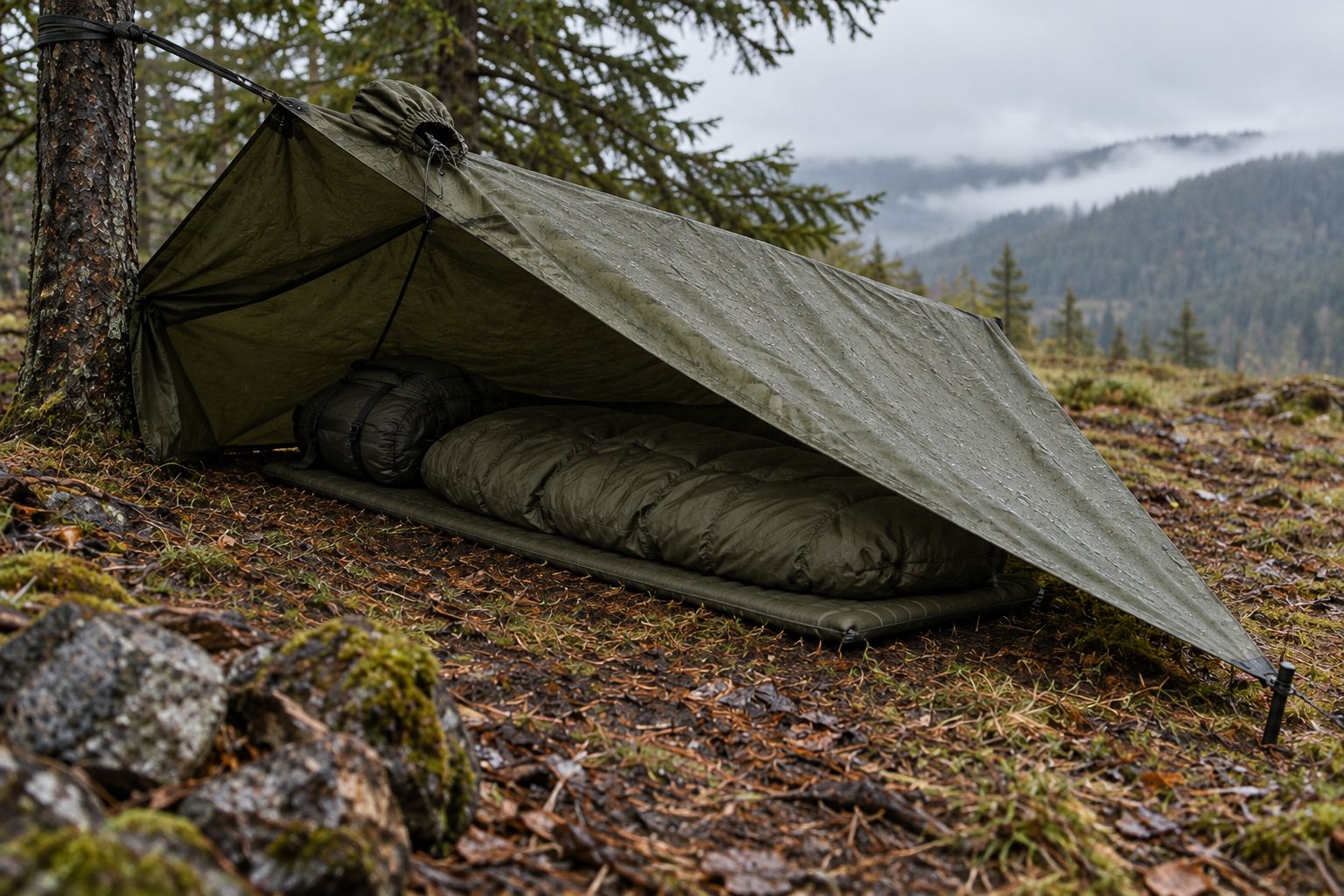
Avoid placing bedding directly beneath a sagging hood or a low pocket in the roof. Correct the pitch first. Moving the sleeping bag away from a drip does not fix the opening that caused it.
FAQ
Can you use any rain poncho as a basha shelter?
No, not every rain poncho is suitable for a basha pitch. Check waterproof fabric, sound attachment points, hood closure and coverage before using one as your overnight roof.
How do you stop rain coming through a poncho hood?
Secure the hood using its intended fastening and arrange it so water sheds away from the opening. Test the closure before placing bedding underneath; a tightened drawcord alone is not proof of a watertight seal.
Is a poncho liner waterproof enough to use as a basha?
Do not use a poncho liner as a waterproof basha unless its own specification explicitly supports that use. A liner and a waterproof outer perform different jobs.
Is a separate basha better than a poncho shelter?
A separate basha is the better choice when you need your waterproof clothing and shelter at the same time. A suitable poncho is useful when combining those roles matters more than keeping them separate.
How much does the MTP Lightweight Poncho weigh?
The MTP Lightweight Poncho lists a weight of 350g. Its description also lists waterproof nylon, a drawstring hood, six brass eyelets and press studs down both sides.
Does a Grade A surplus poncho need checking before camping?
Yes, inspect and test a Grade A surplus poncho before relying on it as a shelter. Read the individual condition description and check the fabric, hood, seams and attachment points.
Can I cook under a small poncho shelter?
Keep cooking outside a small poncho shelter and away from its fabric. Do not use the shelter as an enclosure for a stove or fire.
One last thing
Practise the wet-weather changeover, not just the finished pitch. Pack your bedding away while the roof is still up, then work through how you will put the poncho on without soaking the kit you have just protected.
For your 2026 preparation, that rehearsal is more useful than another neat photograph of an empty shelter. Military Mart poncho and basha descriptions give you the starting specifications; your practice pitch establishes whether the chosen kit covers your sleeping arrangement.


Leave a comment