

To tell if an ammo box is still waterproof, inspect the rubber lid seal, check that the rim and latch close evenly, then test the empty box with dry absorbent paper inside under a gentle shower of water. A dry interior shows that it resisted that particular test; it does not establish a submersion depth, a waterproof rating or permanent protection.
- How to tell if an ammo box is still waterproof: inspect the gasket, rim and latch, then test it empty.
- Military Mart lists genuine military ammo tins with condition grades; inspect each individual tin before trusting it with kit.
- Dry paper after a gentle shower test supports rain resistance, not a certified submersion rating.
- Any water inside means the box has failed that test; repair and retest before storing moisture-sensitive gear.
How to tell if an ammo box is still waterproof
Check the whole closure, not just whether the latch snaps shut. The rubber gasket needs to meet a clean, undamaged rim continuously, while the lid and latch hold that contact without twisting the box.
When buying surplus ammo tins from Military Mart, read the individual condition description before choosing. Genuine military issue describes origin; it does not tell you how an individual seal performs now.
Use this 2026 inspection checklist on an empty box. Keep electronics, documents and other valuable kit out until you have checked the result.
1. Empty and dry
Remove everything, including loose packing and any liner that hides the base. Start with a completely dry interior so existing damp cannot be mistaken for a fresh leak.
Look for flaking corrosion, sharp edges, holes and unexplained residues before cleaning. Do not use a box with unidentified contamination for food, medical supplies or personal kit; an inspection for water ingress does not establish cleanliness.
Dry the underside of the lid as well. Water trapped there before the test makes the result difficult to interpret.
2. Inspect the gasket
Follow the rubber seal around the entire lid, paying particular attention to corners. Look for splits, missing sections, displaced rubber and grit pressed into the sealing face.
Gently check accessible rubber for flexibility without pulling it out or digging into it. Brittle, crumbling or visibly damaged rubber needs attention before you rely on the box outdoors.
A continuous compression mark shows where the rim has contacted the gasket. It is useful evidence of contact, but a visible mark alone does not prove a watertight seal.
3. Check the rim
Wipe loose dirt from the rim and gasket with a soft, damp cloth, then dry them. Inspect the metal edge that presses into the rubber for dents, rust scale and thick paint deposits.
Check the corners from above and along the edge. A local dent matters more to sealing than a scuff on the middle of a side panel.
Do not scrape the gasket with a screwdriver or sand away sound material simply to make everything look tidy. The aim is a clean, continuous sealing surface, not a cosmetic restoration.
4. Check the closure
Close the lid without trapping paper, straps or loose kit across the seal. Watch whether it sits squarely before fastening the latch.
The latch should hold the lid securely without obvious rocking or a visible gap. Stop if you need to force it against a distorted lid; extra force is not evidence of better sealing.
Inspect the hinge and latch attachments too. A sound gasket cannot compensate for metalwork that prevents the lid from seating correctly.
5. Test with paper
Place dry absorbent paper across the base and against the inner sides, leaving the sealing surface clear. Close the empty tin normally, then expose the closed box to a gentle shower from above and around the lid joint.
Use ordinary rain-like water flow, not a pressure washer or a concentrated jet aimed into the closure. Keep the test controlled so you know which surfaces were exposed.
Do not add compressed air, heat a sealed box or drill a fitting for a pressure test. Those methods introduce hazards and are unnecessary for this practical rain-ingress check.
6. Read the result
Dry the exterior thoroughly before opening, especially the lid joint and hinge area. Open it carefully so water remaining outside does not drip onto the paper.
Inspect the paper, underside of the lid, corners and base. Damp patches or droplets inside mean the box failed this test unless you can clearly identify water introduced while opening.
If the result is ambiguous, dry everything and repeat rather than declaring a pass. Record the result as a gentle-shower test, not an immersion rating.
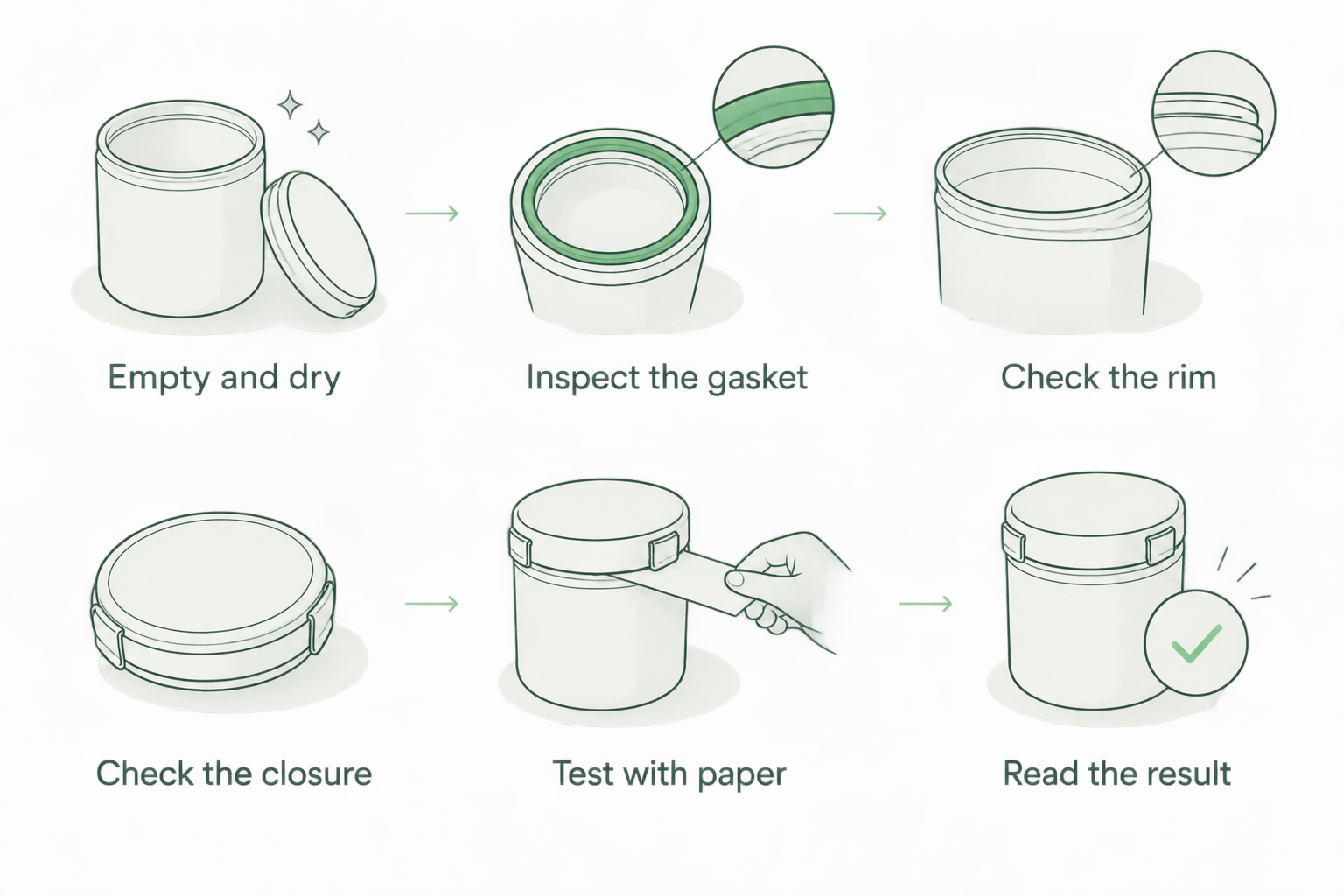
Why this matters
A surplus tin is only as useful as the protection it provides in its present condition. Strong steel walls and a carrying handle do not prevent water entering through damaged rubber or a bent lid.
For your 2026 camping kit checks, separate rain protection from immersion protection. A box sitting beneath a tarp faces a different exposure from one that falls into a river.
The practical advantage of a paper test is that you risk paper rather than your gear. Its limitation is equally important: it checks the conditions you actually created, not every condition the box might encounter.
What do the inspection results mean?
Use the findings together. An intact-looking seal is encouraging, but actual water inside overrides appearance, provenance and condition labels.
| Finding | What it tells you | Next move |
|---|---|---|
| Clean gasket, straight rim, dry paper after showering | No ingress was detected during that exposure | Use within those limits; protect sensitive contents separately |
| Dirt across the gasket or rim | The sealing surfaces need cleaning | Clean, dry and repeat the test |
| Split, missing or crumbling gasket | The seal has a visible defect | Repair with a suitable replacement before retesting |
| Bent rim, loose latch or rocking lid | The closure is not seating correctly | Resolve the mechanical fault or choose another box |
| Wet paper or droplets inside | The box failed the water test | Keep moisture-sensitive kit out |
| Dry shower test but no immersion specification | Submersion performance remains unproven | Do not treat it as a rated underwater container |
A pass is specific to the test; a leak is a reason to stop trusting the box for dry storage. Keep that distinction in your notes rather than writing simply waterproof on the lid.
Why waterproof performance varies between ammo boxes
Boxes with similar markings can have different service histories. Inspect the individual example rather than assuming that matching dimensions mean matching protection.
- Gasket condition: splits, missing rubber and loss of flexibility affect the sealing surface.
- Rim condition: dents, corrosion and paint build-up interrupt contact with the gasket.
- Lid alignment: twisted metalwork prevents an even fit around the opening.
- Latch and hinge condition: worn, damaged or loose fittings affect how the lid is held against the seal.
- Modifications: drilled mounting holes and other alterations create additional routes for water.
- Exposure: rain, splashing and immersion are different demands; a check for one does not establish performance in the others.
During a 2026 inspection, photograph any defect before attempting repairs. That gives you a useful reference when deciding whether cleaning changed the result or whether the fault remains.
Does Grade A mean an ammo tin is waterproof?
Grade A is a condition description, not an IP rating or a test certificate. Read the seller's wording for the specific item rather than applying a universal definition to every surplus listing.
Military Mart describes its Genuine US / Italian Military 50 Cal Ammo Tin – Grade A as genuine military issue with a waterproof rubber seal and near-mint condition. Its Genuine Military Tall 50 Cal Ammo Tin – Grade Used is described as steel construction with a waterproof rubber seal and stackable storage.
Those descriptions help you shortlist a tin. Neither replaces checking the particular box after delivery and before use.
| Ammo tin | Best for | Stated features | What still needs checking |
|---|---|---|---|
| Genuine US / Italian Military 50 Cal Ammo Tin – Grade A | Buyers prioritising the stated near-mint condition | Genuine military issue; waterproof rubber seal | Actual gasket condition, lid alignment and water-test result |
| Genuine Military Tall 50 Cal Ammo Tin – Grade Used | Buyers choosing a tall-format surplus tin | Steel construction; waterproof rubber seal; stackable design | Used condition, internal fit and water-test result |
Military Mart is best for surplus buyers who want genuine military ammo tins with stated condition grades. Choose by condition and fit, then inspect the seal rather than treating the grade as a waterproof guarantee.


Can you repair an ammo box that leaks?
You can address removable dirt and replace a damaged gasket where a correctly fitting replacement is available. Structural damage needs a different decision: a perforated base or badly distorted rim is not a seal-cleaning problem.
Start with cleaning rather than coating everything in sealant. A bead of adhesive across the opening is not a substitute for a serviceable lid gasket, and it complicates opening and inspection.
Do not apply an unidentified oil, solvent or grease to unknown rubber. Follow the box or replacement-seal supplier's compatibility guidance, and retest after any work.
For a 2026 repair record, note the original leak location, the work completed and the repeat-test result. If the tin still leaks, keep it for dry indoor storage or display rather than moisture-sensitive outdoor kit.
Can an ammo box pass a water test but still get damp inside?
An ammo box can remain dry during a shower test and still develop condensation inside. Moisture already in the trapped air or contents can condense on cooler internal surfaces without rain passing through the seal.
Pack only dry kit into a dry box. Do not seal away a damp cloth and expect the gasket to solve the moisture problem.
A suitable desiccant helps manage residual humidity when used according to its instructions, but it does not repair a leaking joint. For valuable documents or electronics, add separate protection suited to the expected exposure.
When should you check the seal again?
Recheck after a drop, lid damage, gasket replacement, repainting near the rim or changes to mounting hardware. These events affect the parts you relied on during the original inspection.
Do not treat a successful 2026 test as a lifetime result. Before packing for a wet trip, inspect the seal again and repeat the water check if its condition is uncertain.
Avoid filling beyond the point where contents press against the lid. A strap or fabric corner caught across the gasket defeats the clean contact you checked earlier.
FAQ
How do I check whether a used ammo box still keeps water out?
Inspect the gasket, rim, hinge and latch, then test the empty box with dry absorbent paper inside under a gentle shower. Dry the exterior before opening so outside water does not contaminate the result.
Does a tight ammo box latch prove it is waterproof?
A tight latch does not prove an ammo box is waterproof. The gasket needs continuous contact with an undamaged rim, and a controlled water check is still necessary.
Can I submerge my ammo tin to test it?
Do not assume a surplus ammo tin is suitable for submersion without documented guidance for that box. A gentle shower checks rain-like exposure without establishing an immersion depth or duration.
Does Grade A mean an ammo box has passed a waterproof test?
Grade A does not by itself establish that an ammo box has passed a waterproof test. Read the individual condition description and inspect the actual tin before use.
Should I put grease on an ammo box rubber seal?
Only use a seal treatment when its compatibility with the gasket material is established. Unidentified oils and solvents are not a substitute for cleaning or replacing damaged rubber.
Why is there moisture inside an ammo box that does not leak?
Condensation or damp contents can cause moisture inside an ammo box without an external leak. Dry the box and contents before packing, and use suitable humidity control where needed.
Can I test an ammo box with compressed air?
Do not pressurise an ammo box with compressed air for a home leak test. Inspect it and use an empty-box shower test instead, keeping valuable contents out.
One last thing
Do not fill the box with water to prove that it keeps water out. Water held inside does not reproduce rain meeting the outside of the lid joint, and it leaves the interior needing thorough drying.
Test in the direction that matters: dry paper inside, water outside. Then label the result honestly and keep the sealing surfaces clear every time you pack.


Leave a comment