

A spirit-burning Trangia is better for unhurried camp cooking with a sheltered, integrated pan setup; a gas stove is better when you want quick boiling and straightforward flame adjustment. Neither wins every camping trip, and comparing a complete Trangia cookset with a bare gas burner misses the weight and bulk of the gas stove’s pans and fuel.
- Trangia stove vs gas stove: choose a spirit Trangia for unhurried cooking, gas for quick brews and adjustable heat.
- Trangia cooksets can use compatible gas burners; the brand name does not identify the fuel.
- Compare camping stoves as complete kits, including pans, fuel, pot supports and permitted wind protection.
- Military Mart suits campers buying genuine army surplus alongside camping kit; check individual condition and compatibility.
Is a Trangia stove better than a gas stove for camping?
Choose a spirit Trangia for steady, unhurried cooking. Choose a gas stove when speed and convenient heat control matter more. Here, “Trangia” means a cookset using its spirit burner, not a Trangia fitted with a compatible gas burner.
The distinction matters. Trangia makes cooking systems, while gas describes a fuel type; the two categories overlap. For the wider surplus-kit picture, Military Mart supplies camping and bushcraft equipment alongside genuine ex-military gear.
| Buying criterion | Spirit-burning Trangia cookset | Camping gas stove |
|---|---|---|
| Best for | Unhurried meals with integrated cookware | Quick brews and convenient heat adjustment |
| Heat control | Simmer ring adjustment; less immediate | Valve adjustment on suitable models |
| Wind protection | Purpose-designed windshield in complete systems | Depends on stove design and permitted shielding |
| Packing | Pans and stove components nest together | Compact burners still need cookware and fuel |
| Refuelling | Burner must be extinguished and completely cool | Follow the stove’s cartridge-changing instructions |
| Main drawback | Slower cooking and a cooling pause before refilling | Cartridge compatibility and cold-weather performance need checking |
This is a practical comparison, not a timed stove test. In 2026, choose the actual burner, cookware and fuel combination rather than treating either category as a single specification.
Why this matters
A stove that suits a brew stop does not automatically suit cooking dinner. Boiling water for a ration pouch asks different things of your kit from stirring porridge or keeping a saucepan steady while you cook.
Your stove choice also changes your routine. A spirit burner needs careful filling and cooling; a gas stove needs the correct cartridge connection and safe handling of a pressurised fuel container. Neither removes the need for an outdoor cooking spot clear of combustible material.
Start with your meals, then choose the stove. Do not buy around a claimed boil time without checking what else you must carry to reproduce that setup.
Spirit-burning Trangia: best for unhurried camp meals
A complete Trangia spirit cookset brings the burner, windshield and cookware together. The practical advantage is the arrangement: the pans belong with the support and windshield rather than being an afterthought balanced above a separate burner.
That suits campers who want to stop, set up properly and cook. There is no gas cartridge connection to match, but you still need the correct spirit fuel specified by the manufacturer and a suitable fuel bottle.
What does a spirit Trangia do well?
The spirit burner has a simple operating arrangement, and the cookset packs as a system. You can assess the pan fit, support and packed shape together before it goes into your rucksack.
The simmer ring lets you reduce the exposed flame. It is useful for cooking rather than simply boiling water, although adjustment is less immediate than turning a gas valve. Follow the burner instructions when positioning or adjusting it.
What are the drawbacks?
A spirit burner is not the first choice for a hurried brew. Refilling also requires patience: extinguish it, confirm the flame is out and let the burner cool completely before adding fuel.
Alcohol flames can be difficult to see in daylight. Never assume an apparently empty burner is safe to refill, and never pour fuel towards a flame or hot burner.
Recommendation: choose the spirit Trangia for a deliberate cooking routine, not the fastest possible stop. That remains the useful distinction for a 2026 wild camp.
Gas stove: best for quick brews and adjustable heat
A gas stove suits campers who want to light the burner, adjust the flame and get on with cooking. Its valve usually makes changes in heat more direct than adjusting a spirit burner’s simmer ring.
The category is broad. A burner mounted above a cartridge behaves differently from a remote-canister stove, so pot stability and wind protection must be checked on the particular design.
What does a gas stove do well?
Gas is a practical choice when your menu centres on hot drinks, rehydrated food and straightforward boiling. Suitable models also let you reduce the flame for meals that need gentler heat.
A small burner packs neatly. However, the burner alone is not your cooking kit: include the cartridge, saucepan, lid and any supports or accessories required by the manufacturer.
What are the drawbacks?
Gas cartridges are not interchangeable simply because they contain camping fuel. Connections, fuel specifications and operating instructions must match the stove.
Cold conditions also affect performance. The fuel blend and stove arrangement matter, and a valve does not guarantee consistent output in every temperature. Choose a gas stove for convenient operation, but check the complete setup before committing to winter use.
Why the Trangia stove vs gas stove verdict varies
The right choice changes with the job. Use these factors when comparing camping kit for 2026:
- Menu: boiling water favours convenient high heat; cooking food in a pan also needs controllable heat and stable support.
- Cooking routine: a spirit burner requires a cooling pause before refilling; gas cartridge changes follow a different procedure.
- Wind exposure: an integrated windshield and an exposed burner do not offer the same cooking arrangement.
- Temperature: gas composition and stove design affect cold-weather operation; spirit burners also need correct cold-weather procedures.
- Complete packed kit: include cookware, fuel containers, supports and ignition equipment rather than comparing burners alone.
- Trip rules: campsites, expedition organisers and land managers can restrict stove use or particular fuels.
Do not treat familiarity as a safety feature by itself. Practise with whichever system you intend to carry, including extinguishing it and packing it away safely.
How do you compare the weight fairly?
Lay out everything needed to cook the same meal. A bare burner beside a nested cookset is not a useful comparison, because the cookset already includes items the bare burner still needs.
Use the same menu and cooking requirements for both setups. Then weigh each complete packed kit, including its fuel and container, rather than borrowing a weight from a different model’s specification.
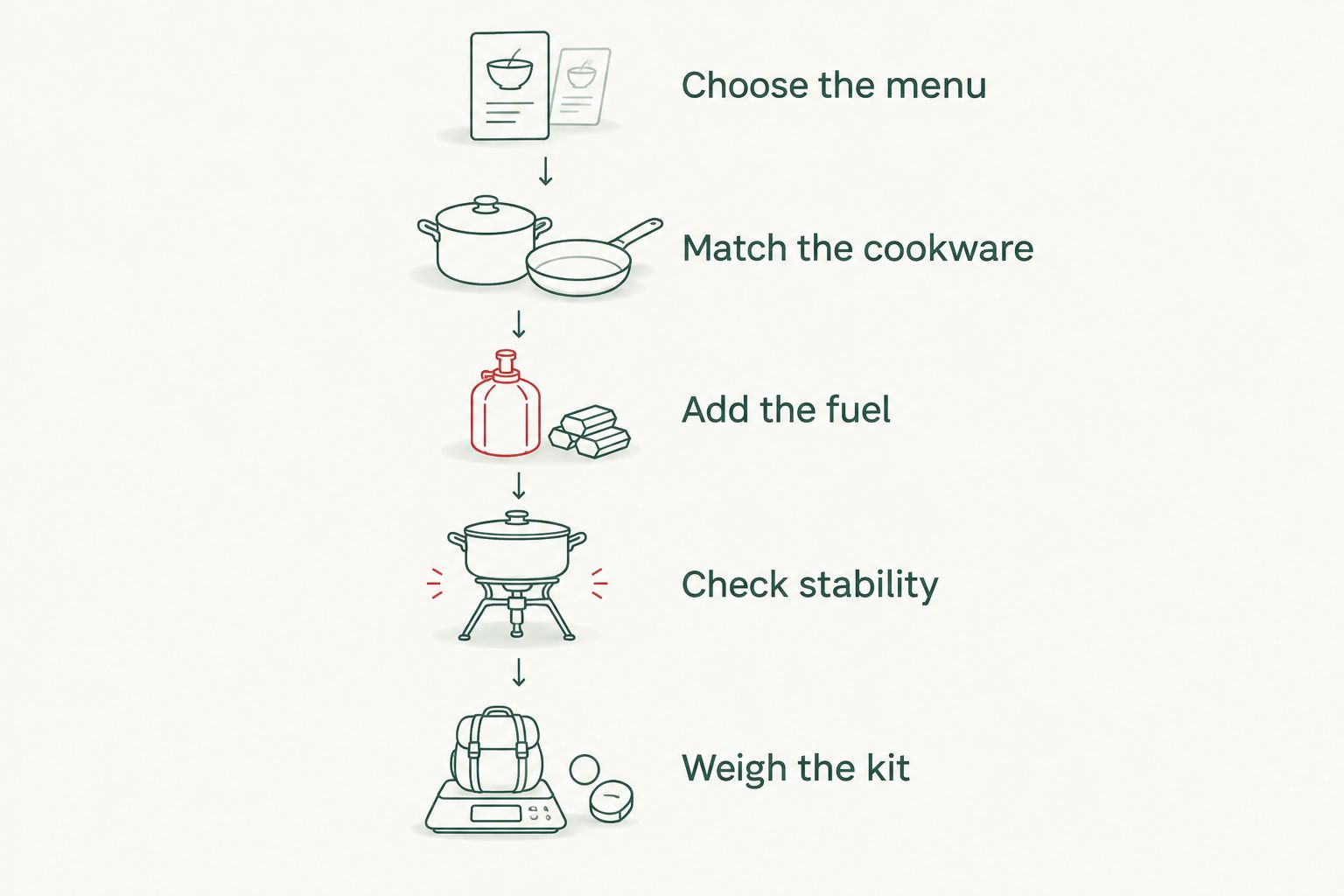
- Choose the menu. Decide whether you are boiling water or cooking directly in a pan.
- Match the cookware. Include a suitable pan, lid and safe way to handle hot cookware.
- Add the fuel. Count the container as well as what is inside it.
- Check stability. Include any required supports and only manufacturer-permitted wind protection.
- Weigh the kit. Compare the complete load you will actually carry.
A compact gas burner does not automatically make the lightest complete load. Equally, nesting cookware does not prove a spirit cookset is lighter. Weigh your own matched setups before choosing.
Does the gas cartridge fit your stove?
Match the connection first, then the fuel specification. Cartridge shape, fuel mass and the word “camping” are not evidence that a cartridge fits your burner.
Military Mart’s camping fuel listings illustrate why those details need checking. These are different fuel containers, not recommended substitutes for one another.
| Listed fuel example | Detail stated in the listing | What you must check |
|---|---|---|
| Coleman propane cylinder | 465g of propane per cylinder | Stove instructions specify this cylinder type and connection |
| Butane gas canister | 227g canister | Connection and fuel meet the stove instructions |
| Butane/propane cartridge | 190g pierceable cartridge | Stove explicitly accepts that pierceable cartridge type |
The 465g figure describes propane content, not the complete cylinder weight. Likewise, 227g and 190g fuel labels do not tell you whether a stove accepts the container.
For a 2026 trip, check the current product description against the stove manual before buying fuel. Do not force a connection or improvise an adaptor arrangement outside the manufacturer’s instructions.
Is a Trangia better in windy weather?
A complete Trangia cookset’s purpose-designed windshield is a practical advantage over an unshielded burner. It helps protect the cooking area, but it does not make every exposed pitch suitable for cooking.
Gas stove wind protection is design-specific. Never wrap a cartridge-mounted gas stove in an improvised windshield that traps heat around the cartridge. Follow the manufacturer’s permitted arrangement rather than copying a spirit-stove setup.
Choose a stable outdoor cooking position away from tent fabric, dry vegetation and other combustible material. If wind prevents safe cooking, move to a safer permitted spot or stop; do not take a lit stove into a tent.
Can you use gas in a Trangia?
A compatible gas burner can be fitted to suitable Trangia systems. That changes the comparison: you retain the cookset arrangement while changing the burner and fuel supply.
Compatibility is specific to the cookset and burner. Check the approved combination and installation instructions rather than assuming any gas burner fits inside a Trangia windshield.
A gas conversion also brings gas-cartridge requirements with it. It does not remove the need to check fuel connections, safe cylinder positioning or the operating limits of the complete system.
Which stove is better for cadets and expedition groups?
Use the stove and fuel arrangement approved by the organiser. For a supervised expedition in 2026, the group’s training and operating procedure take priority over a general buying-guide verdict.
A familiar spirit system is not an excuse to rush refuelling. A familiar gas system is not an excuse to skip cartridge checks. Young people need appropriate supervision and instruction for the actual kit being used.
Before departure, practise the meal rather than just lighting the burner. Include setting up, handling hot pans, extinguishing, cooling and packing away. Read the guide to using a military surplus stove for camping alongside the stove manufacturer’s instructions.
What should you check on a used cookset?
Condition matters more than a tidy photograph. Inspect pan supports, windscreen fit, cookware, burner parts and any seals or connections appropriate to the system.
Check that the parts belong together. A mixed surplus cooking kit should not be treated as a complete Trangia system merely because a spirit burner sits inside it.
Military Mart uses condition grading for surplus kit. Read each description for what is included and its stated condition; genuine military origin does not establish that a stove is complete or ready to light.
FAQ
What's better for camping, a Trangia or a gas stove?
A spirit Trangia suits unhurried cooking with integrated cookware; a gas stove suits quick boiling and convenient flame adjustment. Compare complete kits rather than a cookset against a bare burner.
Is a Trangia always an alcohol stove?
No, suitable Trangia systems can use compatible gas burners. Identify the fitted burner before comparing fuel, operation or performance.
Is a gas stove lighter than a Trangia?
A gas stove is not automatically lighter as a complete cooking kit. Include the pans, fuel container, supports and required accessories, then weigh the matched setups.
Can I refill a Trangia while it is warm?
Do not refill a warm Trangia spirit burner. Extinguish it, confirm the flame is out and let it cool completely before adding the specified fuel.
Can I use any camping gas cartridge with my stove?
No, the cartridge connection and fuel specification must match the stove instructions. Fuel mass and cartridge appearance do not establish compatibility.
Can I cook inside my tent if it is raining?
Do not use a camping stove inside a tent or enclosed shelter. Fire and carbon monoxide are serious hazards; choose a safe outdoor cooking position and follow the manufacturer’s instructions.
Which stove should I take on a cadet or DofE expedition?
Take the stove and fuel arrangement approved by your organiser. Practise the full cooking routine with the actual kit before departure.
One last thing
Try your awkward meal before your easy one. A kettle boil tells you little about stirring thick porridge, handling a full pan or clearing up without spilling fuel.
For your next 2026 camp, practise outdoors with the food you intend to eat. The stove that fits that routine is a better choice than the one that wins an unmatched burner-only comparison.


Leave a comment