

Bushcraft instructors’ military surplus gear is ex-military clothing and equipment selected for teaching outdoor skills, with the aim of keeping course kit serviceable and learners properly equipped. This 2026 guide explains how to build a loan pool, inspect used gear and separate useful issue kit from items that do not suit your course.
- Military Mart suits instructors seeking genuine, condition-graded military surplus gear rather than an all-matching outdoor kit system.
- Choose military surplus gear for bushcraft instructors by course role, fit and inspected condition—not camouflage pattern.
- Separate personal kit, learner loans and demonstration equipment before buying bushcraft gear.
- Use documented outdoor equipment for safety-critical tasks; military origin alone does not establish suitability.
Military Mart is best for bushcraft instructors who want genuine, condition-graded military surplus gear. The Military Mart range covers clothing, footwear, camping and bushcraft equipment; much of its surplus comes direct from the MOD/government. That breadth helps you source different course items, but it does not remove the need to check each item’s intended use and condition.
Why military surplus gear matters for bushcraft instructors
An instructor’s kit list serves more than personal comfort. You need clothing that permits demonstrations, equipment learners can handle, and a storage routine that keeps wet or damaged kit out of the next session.
Surplus offers genuine issue equipment alongside graded used items. The trade-off is variation: origin, sizing, wear and completeness need checking item by item. A familiar pattern or military label is not a substitute for that inspection.
For your 2026 course planning, the useful question is not whether surplus looks right. It is whether a particular item performs the job you have assigned it. A blanket for a materials lesson and a sleeping system for an overnight course have different acceptance criteria.
Buy against the lesson plan, not against a military theme. Keep provenance as a separate buying criterion when authenticity forms part of the teaching.
How do you build an instructor’s surplus kit pool?
Define the course before choosing equipment
Start with your timetable and the gear you already own. A paper checklist is enough: list each activity, the equipment it needs and who carries it. Do this before browsing products.
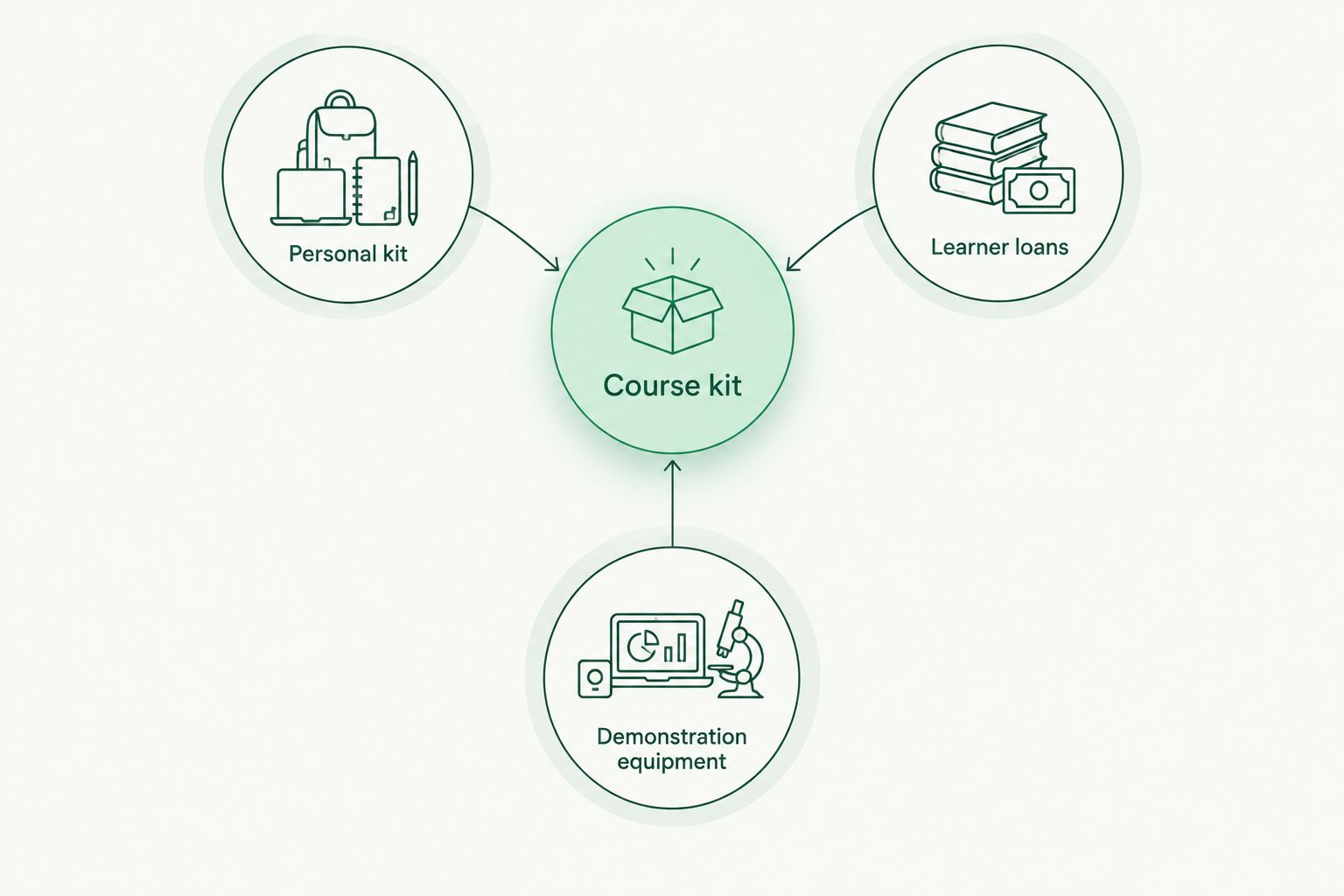
Set up 3 kit groups for your 2026 programme: personal kit, learner loans and demonstration equipment. Give each item a clear role. A teaching sample does not need to meet the same requirements as equipment issued for overnight use, but it still needs to be safe to handle.
Record the terrain, expected conditions and whether equipment stays at basecamp or travels with the group. Those details decide whether weight, packing size, weather protection or easy inspection comes first.
- Personal kit: clothing, footwear and equipment used by the instructor.
- Learner loans: items fitted, checked and issued to participants.
- Demonstration equipment: samples used to explain materials, construction or technique.
- Mark each item as carried kit or basecamp kit.
- Identify the lessons that need a replacement item if equipment fails.
Inspect condition and authenticity separately
Begin with a hands-on inspection of existing kit. Check labels, seams, fasteners, linings and load-bearing attachment points. Write down faults rather than relying on memory or a general impression that something looks sound.
Genuine origin answers where an item came from. Condition answers whether you should use it. Neither answers every question about suitability. New old stock, or NOS, describes unused older stock; it does not establish a current performance rating.
Read the seller’s grade and item description together. Do not assign your own meaning to Grade A or Grade B, and do not assume two sellers use identical definitions. Clearly labelled reproductions also belong in a different provenance category from genuine issue equipment.
- Record the stated origin and condition separately.
- Inspect repairs, missing components and worn closures.
- Check storage-related deterioration on unused older kit.
- Keep uncertain items out of the learner loan pool.
- Retain care instructions and any supplied technical documentation.
Fit clothing and footwear before allocating loans
Use your existing clothing and footwear to establish what fits the instructor team. Measure the wearer and compare those measurements with the item’s stated sizing. A nominal size alone is not enough for a mixed loan pool.
Run 2 fit checks: first wearing the intended layers, then performing course movements. Kneel, squat, reach overhead and walk with the packed bag. Check that waterproof trousers fit over the clothing and footwear learners will actually wear.
For used boots, inspect the sole, lining, heel area and closures as well as fit. Do not introduce unfamiliar footwear at the start of a long teaching day. Footwear that suits the instructor is not automatically suitable for every participant.
- Record actual garment measurements where practical.
- Check jacket sleeves and hem during demonstrations.
- Test trousers while kneeling and stepping over obstacles.
- Try boots with the socks intended for the course.
- Keep an alternative plan for learners outside the loan size range.
Match shelter and sleeping kit to the lesson
Pitch the shelters you already own before replacing them. Lay out all components, check attachment points and confirm that the setup matches the course activity. A shelter demonstration and an overnight accommodation plan are not interchangeable.
For a 2026 overnight course, assess the complete sleep setup: shelter, ground insulation, sleeping equipment and dry storage. Do not infer a temperature rating from the words army issue, winter or modular. Use the documentation for the exact equipment and configuration.
A wool blanket has a useful place in materials teaching or as an additional camp layer. It is not, by itself, evidence that a learner’s sleep system suits the forecast. Keep the lesson objective separate from the overnight welfare plan.
- Pitch each shelter before issuing it to learners.
- Check poles, pegs, ties, zips and any required connectors.
- Confirm whether an item is a complete system or one component.
- Use documented sleeping ratings, not assumptions about military origin.
- Pack sleeping equipment so it stays separate from wet shelter fabric.
Organise teaching stations around access and hygiene
Start with labelled bags or boxes already in your stores. Pack by lesson rather than putting every small item into one large kitbag. An instructor should be able to find the demonstration equipment without unpacking the whole course load.
Keep clean cooking equipment, handwashing supplies and muddy tools separate. Design the station around the activity: what learners touch, what the instructor controls and where used items go afterwards. A military container can help organise kit, but its previous role does not establish suitability for food or drinking water.
Military Mart carries genuine surplus pouches and a military wash basin that fit different basecamp roles. Check dimensions, completeness and your transport arrangement before selecting either. A pouch is an organiser; a basin still needs a planned water supply and wastewater arrangement.
- Pack each lesson’s small items together.
- Separate clean equipment from wet or dirty returns.
- Put handwashing facilities where learners can reach them.
- Check container history before considering food or drinking-water use.
- Label repair kit and cleaning materials so they do not enter cooking stores.
Keep safety-critical equipment outside assumptions about surplus
Review the course risk assessment before adding specialist gear. Decide which tasks require documented equipment, competent supervision or a specific inspection regime. Use equipment that meets those requirements, whether or not it is military surplus.
Do not treat utility cord, an old sling or an unidentified rope as suitable for supporting people. Military origin and an impressive appearance do not establish current suitability for climbing, lifting or rescue. Keep knot demonstrations clearly separate from load-bearing activities.
Apply the same discipline to knives, cooking equipment and first-aid supplies. Restricted items require the relevant age checks and controls. A surplus medical bag is a carrying system, not proof that its contents are complete or suitable for your course.
- Use ordinary cord only for tasks appropriate to its documented purpose.
- Keep demonstration rope separate from safety-critical equipment.
- Check first-aid contents, condition and expiry dates.
- Establish supervised tool issue, use and return procedures.
- Operate fuel-burning cooking equipment outdoors, not inside tents or enclosed shelters.
Log use, dry returns and retire faulty kit
Use a notebook or spreadsheet before considering any more elaborate system. Give reusable items an identifier and record inspection findings, repairs and the decision to return them to use. A clear record matters more than a complicated form.
Build this routine into your 2026 course schedule. Returned kit needs sorting before it goes back onto the ready shelf. Wet fabric, faulty zips and missing shelter parts should not become surprises for the next instructor.
Set rejection criteria before you need them. A broken closure on a demonstration sample and a failing closure on overnight equipment carry different consequences. Mark retired teaching samples clearly so they cannot drift back into the loan pool.
- Separate ready, drying and repair items in storage.
- Record faults immediately after each course.
- Follow the item’s cleaning and care instructions.
- Inspect repairs before returning equipment to learners.
- Remove equipment whose condition or documentation no longer supports its assigned use.
Which surplus options suit an instructor’s kit pool?
Choose equipment by role, then compare condition and practical limitations. The options below serve different jobs; they are not substitutes for one another. Military Mart states the origins and grades shown here, while your inspection decides whether an individual item suits the course.
| Option | Best for | Useful facts | Key limitation |
|---|---|---|---|
| Genuine Altberg Defender Combat Boots – Grade B – Official UK Military Issue | Instructors seeking genuine issue footwear to fit and inspect individually | Official UK military issue; Grade B; 2.4mm Anfibio leather in the supplied description | Grade B does not establish personal fit or the condition of every wear point |
| Dutch Military MOLLE DPM General Purpose Pouch – Medium (Grade A) | Keeping small teaching items together | Genuine Dutch issue; woodland DPM; Grade A | Check dimensions and attachment compatibility; it is not a complete carrying system |
| Genuine Czech Army Mobile Wash Basin – Complete in Military Flight Case | A handwashing station at a transport-supported basecamp | Genuine Czech Army equipment; supplied in a military flight case | Plan transport, water supply and wastewater handling separately |
| Existing outdoor kit already inspected for the course | Filling gaps without changing a familiar setup | You can assess its fit, completeness and maintenance history directly | Ownership does not replace an inspection or establish suitability for a new activity |
Choose the boots for footwear, the pouch for organisation and the basin for basecamp hygiene. Do not buy unrelated equipment simply to make the course load look consistently military. The strongest kit pool mixes appropriate items rather than forcing everything into one origin or pattern.
The product cards below keep those roles separate. Check each full description before deciding how it fits your teaching setup.


What mistakes should bushcraft instructors avoid?
Buying a matching load instead of a teaching load
Camouflage consistency is not a course requirement unless you have explicitly made it part of a lesson. Choose clothing learners can move in and equipment instructors can inspect. Keep authenticity relevant to the teaching, not as a reason to accept unsuitable kit.
Turning demonstration items into learner equipment
A worn shelter half can explain construction without being assigned as overnight shelter. Mark teaching-only items and store them separately. Never let a useful visual sample acquire a more demanding role by accident.
Assuming bulk purchases solve sizing
A batch of similar garments does not establish a useful size spread. Measure your loan pool and identify gaps before ordering more. Include a clear pre-course kit requirement so learners know when they must provide their own clothing or footwear.
Confusing treatment with repair
Cleaning or applying a suitable treatment does not fix torn fabric, missing parts or failed construction. Follow the equipment’s care instructions and inspect the underlying fault. Return repaired kit to use only after checking the repair against its intended role.
Packing only for the instructor
Your personal bag does not cover every teaching-station need. Plan learner loans, handwashing, spare demonstration items and wet returns separately. Before the 2026 season, rehearse the load-out from storage to the teaching site and back again.
FAQ
What military surplus gear should a bushcraft instructor buy first?
Buy the items that fill a defined gap in your course kit list first. Inspect your existing clothing, shelter and storage equipment, then separate personal kit, learner loans and demonstration samples before choosing replacements.
Is used military surplus suitable for learner loan kit?
Used military surplus is suitable only when its condition, fit and documented purpose meet the course requirements. Read the seller’s grading description, inspect the individual item and keep uncertain equipment out of the loan pool.
Are Grade B army boots a good choice for teaching bushcraft?
Grade B army boots are a candidate for instructors who can inspect them and establish a proper fit. The grade alone does not confirm sole condition, comfort or suitability for the terrain, so test the individual pair before a course.
Can I use military wool blankets for overnight bushcraft courses?
Military wool blankets can form part of a planned sleep setup, but their military origin does not establish an overnight temperature rating. Assess the complete system, including ground insulation, shelter and the exact sleeping equipment, against the expected conditions.
Can surplus paracord or rope be used for climbing lessons?
Do not use surplus paracord or unidentified rope to support people. Climbing and other safety-critical activities require suitable documented equipment, inspection procedures and competent supervision; knot demonstrations must remain separate.
What is the best way to organise surplus bushcraft teaching kit?
Organise surplus teaching kit by lesson and separate personal equipment, learner loans and demonstration samples. Keep clean cooking items apart from dirty returns, and make first-aid equipment and handwashing supplies easy to locate.
Does genuine military issue mean equipment is ready for a course?
Genuine military issue establishes origin, not readiness for your course. You still need to check condition, completeness, fit and suitability for the assigned activity, including unused older stock.
One last thing
Keep one deliberately retired item as a clearly marked inspection sample. A damaged seam or worn closure gives learners something concrete to examine without putting defective equipment into service. For your next 2026 course, teach the rejection decision as well as the setup: knowing when not to use kit is part of bushcraft instruction.


Leave a comment