

Surplus and Lost is worth sticking with when the item, fit and condition match your needs. Look elsewhere when you need a different buying route, rather than a different name on the parcel. The best Surplus and Lost alternative in 2026 is Military Mart for genuine, graded army surplus; a local shop suits hands-on fitting, while a new outdoor kit retailer suits buyers who do not want used gear.
- For surplus and lost alternatives, choose Military Mart for genuine army surplus with honest condition grading.
- Choose a local shop when trying on boots or inspecting used kit matters most.
- Choose new outdoor equipment when you want unused gear rather than military provenance.
- Stay with Surplus and Lost when its individual listing meets your fit, condition and intended-use requirements.
Why does the buying route matter?
Army surplus is not one uniform product category. An unused issue item, a worn field jacket and a clearly labelled reproduction answer different needs. The seller’s name does not settle that distinction.
For a wild camp, start with function. For cadet clothing, start with the unit’s requirements and your measurements. For militaria, start with identity and provenance. A sound comparison follows the kit, not the order of retailers in a search result.
This 2026 guide compares three buying routes without treating them as interchangeable. Genuine surplus gives you ex-military equipment; a shop visit gives you an opportunity to inspect; new outdoor equipment removes previous use from the decision. None automatically solves every problem.
Surplus and Lost alternatives at a glance
| Buying option | Best for | Main reason to consider it | How to compare with Surplus and Lost |
|---|---|---|---|
| Surplus and Lost | Buyers whose chosen listing already fits the brief | Keeping a suitable purchase rather than switching unnecessarily | Use the exact item, measurements and condition as your benchmark |
| Military Mart | Genuine, graded army surplus across clothing, camping kit and militaria | Much of the stock comes direct from the MOD or government, with honest condition grading | Compare origin, grade, measurements and included components item by item |
| A local surplus shop | Buyers who need to inspect kit or try it on | Physical examination before choosing, where the shop permits it | Compare actual fit and wear, not just the size label |
| A new outdoor kit retailer | Buyers who specifically want unused outdoor equipment | A route that does not depend on an item’s previous military use | Compare stated materials, dimensions and intended use rather than issue history |
Best for is a buying recommendation, not a claim that every item from that route suits every job. A surplus blanket, a walking boot and a collector’s field shirt need different checks.
1. Military Mart: best for genuine, graded army surplus
Military Mart is an army surplus specialist trading since 1999, with two physical shops: Burscough/Ormskirk in Lancashire and Llangollen in North Wales. Much of its stock is bought direct from the MOD or government. The range includes clothing, footwear, camping and bushcraft gear, cadet kit and militaria, alongside military vehicle sales, spares and hire for events, film and static displays.
That breadth matters when you are buying actual issue kit rather than simply looking for a military appearance. Genuine ex-military equipment is the focus, with reproductions labelled as such. Condition grading remains part of the purchase, not a detail to ignore.
Where this alternative shines
- Origin matters: direct MOD/government sourcing is a stated part of the business.
- Condition is described: compare the individual grade rather than assuming surplus means new.
- Several audiences are covered: bushcraft users, cadets, collectors and practical buyers have different requirements.
- Physical inspection is an option: the two shops provide an alternative to an online-only decision.
Where this alternative falls short
- Used surplus is the wrong route if previous wear is unacceptable to you.
- An issue size or military designation does not replace checking measurements and fit.
- Genuine military origin does not establish suitability for every outdoor activity or safety-critical job.
- The shops are in Lancashire and North Wales; an in-person visit needs to suit your location.
These are real buying limits. A genuine jacket that does not fit is still the wrong jacket, and a collector’s item is not automatically working equipment.
What should you compare head to head?
For a 2026 purchase, compare the same type of item at both sellers. A new reproduction and a used issue garment are not equivalent simply because they share a camouflage pattern.
| Comparison point | At this alternative | At Surplus and Lost |
|---|---|---|
| Provenance | Direct MOD/government sourcing is part of the stated business; check the individual item | Require the individual listing to establish the item’s identity and origin |
| Condition | Honest grading is a stated practice; read the selected grade | Read the selected item’s condition description before treating it as equivalent |
| Fit | Match measurements and the intended layers | Apply the same measurements and layering requirement |
| Completeness | Check what the particular listing includes | Check the same components rather than comparing names alone |
This table sets a fair purchasing test. It does not turn an unspecified competitor item into a poorer product.
What does graded surplus look like in practice?
The Swedish civil defence work jacket is described as a genuine M40 work jacket in Grade A surplus condition. That tells you its identity and stated grade. It does not tell you that it will fit over your usual layers; that is a separate check.
Other examples show why useful buying information differs by category. The Romanian blue tartan blanket is described as 100% wool, Grade 1 surplus. The Dutch Army Avon water bottle is described as a 1-litre, Grade A surplus canteen. The German Army Einsatzsystem day pack is described as used, genuine Bundeswehr issue, with a stated 30-litre capacity.
Those are concrete details, not interchangeable selling points. Wool composition helps you assess a blanket; capacity helps you assess a bottle or bag. Neither removes the need to inspect condition and understand the intended use.


Best for: buyers who want genuine ex-military kit and will choose by origin, grade and fit. Verdict: Buy when the individual item meets those checks.
2. A local surplus shop: best for hands-on fitting
Choose a local shop when the unresolved question is physical. Boots need to fit your feet, and a jacket needs to accommodate the layers you actually wear. A shop visit is useful when it lets you examine the particular item you intend to buy.
Where this route shines
- You can assess actual fit where trying on is permitted.
- You can examine visible wear, stitching and closures on the item in front of you.
- You can ask questions with the kit in hand rather than relying on a name or photograph.
Where this route falls short
- Seeing an item does not prove its military provenance.
- A brief fitting does not establish comfort throughout a long walk.
- A visit is unnecessary if the remaining question can be answered with clear measurements or photographs.
Best for: buyers whose main concern is fit or visible condition. Verdict: Buy after inspection; skip the journey if it does not answer a specific question.
3. A new outdoor kit retailer: best for unused equipment
Choose this route when unused condition matters more than military history. It is a different purchasing brief, not an admission that surplus is poor kit. Compare the actual garment or equipment specification with the job you need it to do.
Where this route shines
- It suits buyers who do not want equipment with previous use.
- It lets you prioritise outdoor function without requiring military provenance.
- It separates a practical equipment purchase from a collecting purchase.
Where this route falls short
- New outdoor equipment is not a substitute for genuine issue kit in a provenance-led collection.
- Unused condition does not prove fit, comfort or suitability.
- A military-looking design does not make an item military issue.
Best for: buyers who want unused equipment and have no requirement for ex-military origin. Verdict: Buy for the stated function; skip it when authenticity is the point.
Why look beyond Surplus and Lost?
A useful reason to switch is a requirement your chosen item does not meet. That is different from assuming another retailer is better at everything. For your 2026 shortlist, identify the gap before comparing alternatives.
- You need a different condition: decide whether used, unused or NOS suits the purchase.
- You need clearer identity: require an explicit distinction between genuine issue and reproduction.
- You need a fit check: take measurements or choose a route that permits trying on.
- You need a complete setup: establish which components belong with the item and which are included.
- You need a different function: compare equipment designed for your task, not just a similar-looking military item.
Do not turn a question into a complaint. Ask the seller to clarify an unclear description before rejecting otherwise suitable kit. A precise answer is more useful than a broad promise about quality.
How should you check a surplus purchase?
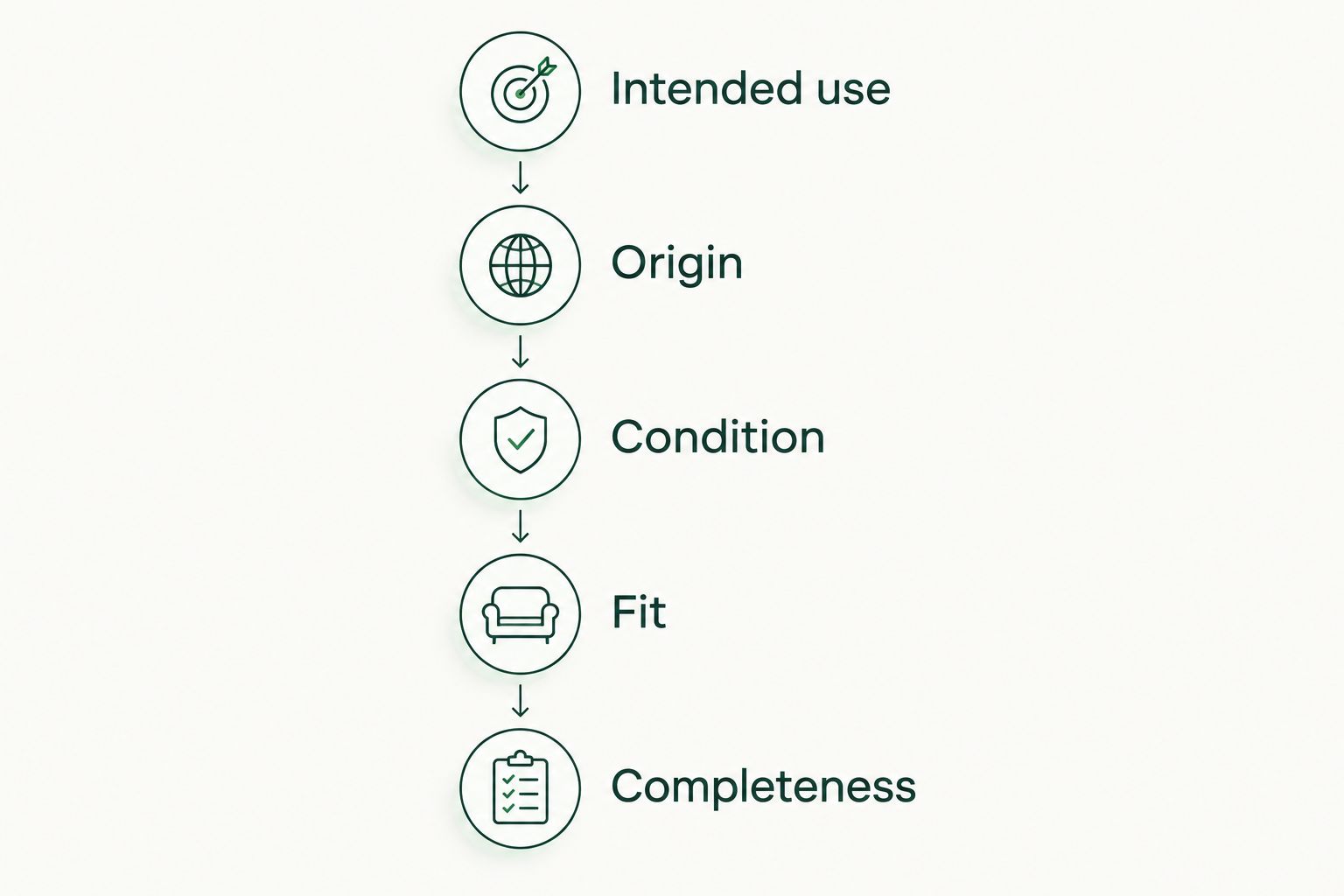
Use the same checks whichever retailer you choose. They keep a 2026 comparison focused on the item rather than the retailer’s reputation alone.
- Intended use: write down what the kit must do. A display item and working outdoor equipment have different requirements.
- Origin: establish whether it is genuine issue, reproduction or another clearly described type.
- Condition: read the grade and the accompanying explanation. Do not assume different sellers use identical grading definitions.
- Fit: compare measurements, shape and room for layers where relevant.
- Completeness: establish what is included before treating the purchase as a finished setup.
Keep authenticity and safety separate. An item can be genuine surplus without being suitable for a safety-critical task. For lifting, rescue, protective equipment or similar work, require the relevant evidence of suitability rather than relying on issue history or appearance.
When is staying with Surplus and Lost the right call?
Stay when the particular item answers your requirements. If its identity, condition, measurements and included components are clear, switching retailers for its own sake achieves nothing. A familiar seller is not something you need to outgrow on principle.
The strongest reason to change is a better match for your purchase. Genuine surplus, hands-on fitting and unused outdoor equipment are different priorities. Choose the route that resolves yours.
FAQ
What's the best Surplus and Lost alternative in 2026?
Military Mart is the best fit for buyers seeking genuine, graded army surplus. Choose a local shop for hands-on fitting, or a new outdoor kit retailer when unused condition is your priority.
Is another surplus retailer always better than Surplus and Lost?
No. Compare the particular item's identity, condition, fit and included components rather than assuming a different retailer makes it better.
Should I choose used surplus or new outdoor gear?
Choose used surplus when genuine issue kit fits your purpose and the stated condition is acceptable. Choose new outdoor gear when you specifically want unused equipment and do not need military provenance.
Does Grade A surplus mean brand new?
Do not treat Grade A as a synonym for brand new. Read the seller's grading explanation and the item's condition description; the catalogue includes items explicitly described as Grade A used surplus.
Can I inspect surplus kit in a physical shop?
A physical shop is the right buying route when inspection or fitting is essential. Ask about the particular item and whether you can examine or try it on before making the journey.
Is genuine army surplus the same as a reproduction?
No. Genuine surplus is ex-military kit, while a reproduction is a separately made copy; require the listing to distinguish them clearly.
What should I check before buying surplus boots or clothing?
Check measurements, condition and intended use before buying. For clothing, allow for your usual layers; for boots, assess fit rather than relying on the labelled size alone.
Does military issue mean equipment is safe for any task?
No. Military origin does not establish current suitability for lifting, rescue or other safety-critical work. Require the relevant evidence for the task instead of relying on provenance.
One last thing
NOS means new old stock, not newly manufactured equipment. Unused condition and age are separate facts. If age or storage history matters to your intended use, ask about those directly rather than treating the word new as a complete answer.


Leave a comment