

An army cadet uniform is the clothing and footwear a recruit wears for authorised cadet activities; for a new starter in 2026, the buying rule is simple: confirm what your detachment supplies, then buy only the approved gaps. Fit, the correct pattern and serviceable condition matter more than putting together a complete military-looking outfit.
- Buy army cadet uniform only after your detachment confirms its issue arrangements and clothing requirements.
- Military Mart suits recruits seeking genuine surplus replacements, subject to detachment approval and careful sizing.
- Prioritise approved boots, suitable socks and correctly fitting clothing before extra field kit.
- Check camouflage, condition grading and measurements separately; genuine issue does not automatically mean suitable for cadets.
Why does the right uniform matter for a new cadet?
A recruit needs kit that meets the detachment’s instructions and allows comfortable movement. A parent needs to know which purchases are necessary. Those are different questions from choosing clothing for a wild camp or collecting militaria.
Your detachment’s instructions take priority over any retailer’s suggested list. Ask what to wear to the first session, what clothing will be issued and what you must provide yourself. Do not assume that another recruit’s arrangements apply to you.
Use the army cadet uniform fitting guide alongside the measurements requested on individual listings. A size label is a starting point, not proof that a garment fits.
For your 2026 starter list, separate ordinary training clothing from footwear, parade requirements and camp equipment. Buying everything together makes it harder to spot unnecessary extras or incorrect items.
How should you build an army cadet uniform shopping list?
Confirm what your detachment wants before buying
Start with a conversation, not a basket. Ask the adult instructor responsible for your joining arrangements to explain the required clothing, footwear and headwear. Request written instructions where possible so you can compare them with product descriptions later.
Make a simple list with three headings: supplied, buy yourself and wait for instructions. This works on paper or in a phone note. Keep items awaiting confirmation out of your shopping basket.
Ask specifically about boots, camouflage pattern, belts, berets and badges. A genuine military item can still be wrong for your detachment, your activity or your stage of training.
- Confirm what to wear to the first session.
- Ask which uniform pieces the detachment supplies.
- Record the required boot colour and style.
- Check the required camouflage and clothing system.
- Leave badges and specialist equipment pending instructions.
Measure the recruit rather than copying everyday sizes
Use a tape measure and record body measurements before comparing listings. Measure in centimetres when the seller requests centimetres. Do not substitute a jeans size for a measured waist or guess a military size from age.
Keep chest, waist, inside leg and height separate. For headwear, measure around the head where the band will sit, then follow the relevant sizing instructions. Avoid buying a much larger garment simply to allow for growth: excessive sleeves and trouser length interfere with fit now.
Check movement as well as dimensions. The recruit should be able to sit, bend, raise their arms and kneel without the clothing pulling tight. Repeat the check with the layers intended underneath.
- Record chest, waist, height and inside leg.
- Keep body measurements separate from garment measurements.
- Use the units specified by the listing.
- Check sleeve and trouser length while moving.
- Recheck measurements before ordering replacement clothing.
Match each garment to the approved pattern and condition
Compare what the detachment requests with the listing’s actual description. MTP means Multi-Terrain Pattern; DPM means Disruptive Pattern Material. Both describe camouflage, but they are not interchangeable purchasing instructions.
If your detachment specifies them, British Army MTP PCS trousers are a relevant garment type to assess. Check the listing’s measurements and condition before deciding. Do not treat the product name alone as confirmation of suitability.
Military Mart sells genuine ex-military clothing and uses condition grading. That helps you distinguish listings, but the item’s own description still matters. Read whether it is used, new old stock, like new or otherwise graded; do not assume a grade guarantees a particular remaining service life.
Genuine issue describes origin, not automatic cadet approval. Likewise, a military-style garment is not genuine issue merely because its camouflage looks familiar.
- Match the requested pattern and garment type.
- Read the full condition description, not just the title.
- Check fastening, pocket and adjustment details.
- Look for disclosed repairs or signs of wear.
- Confirm whether the listing is genuine issue or reproduction.
Fit approved boots before adding extra kit
Once the detachment confirms its footwear requirements, make fit the deciding factor. Start with 1 pair of approved boots that fits properly, rather than several pairs chosen for different appearances. Do not buy a particular model just because it carries a military name.
Try boots with the socks the recruit will wear during training. Check both feet, lace the boots properly and walk indoors. Toes should not be compressed, and the heel should not lift excessively. Stop if the boots cause pain; breaking in is not a remedy for the wrong size.
With used surplus boots, inspect the lining, heel area, sole tread, stitching and fastening points. Check for uneven wear and separation between the upper and sole. A condition grade does not replace a fit assessment.
- Confirm colour and style before selecting a model.
- Try both boots with training socks.
- Check toe room and heel hold while walking.
- Inspect used soles, linings and stitching.
- Reject painful fit rather than hoping it improves.
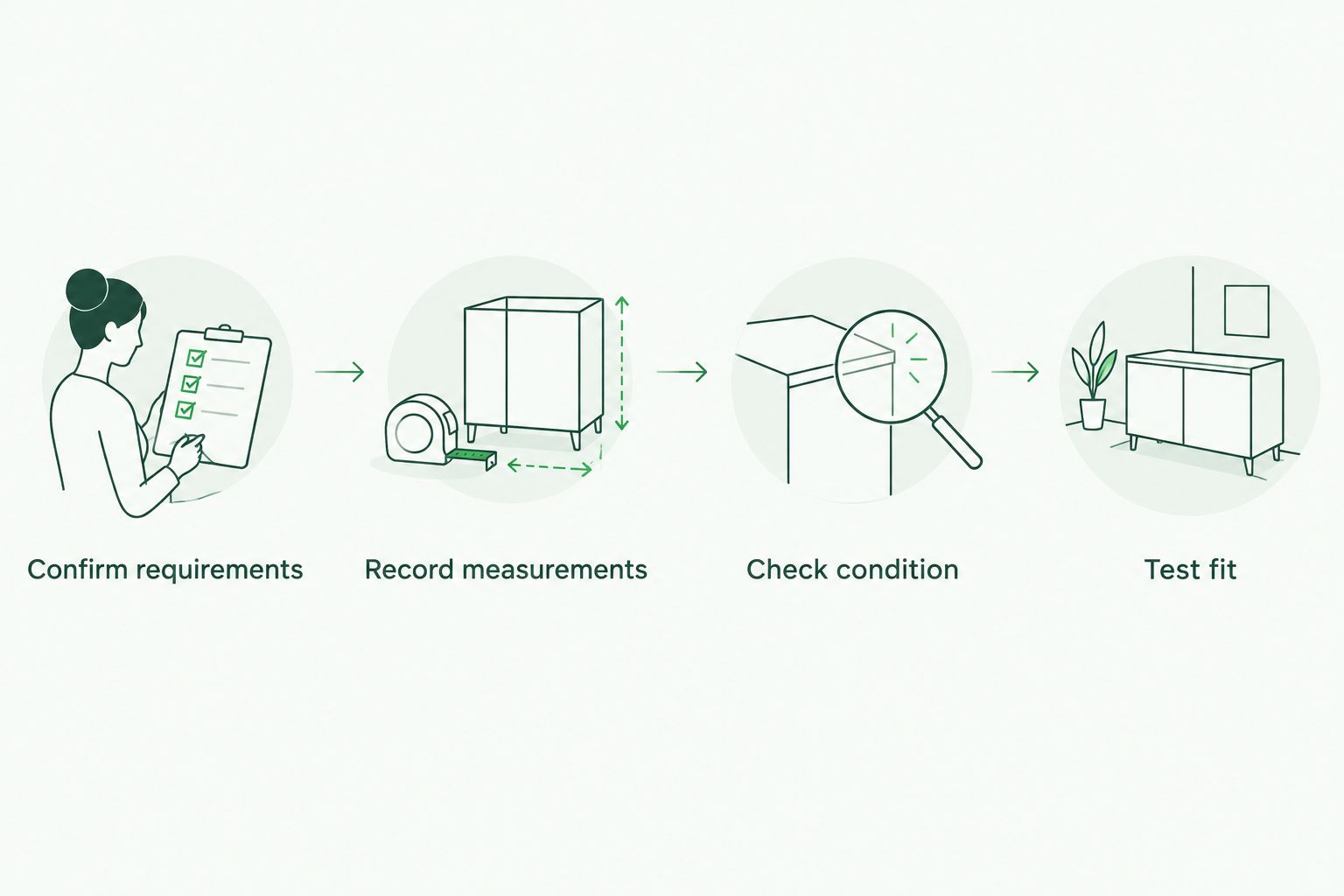
A practical buying sequence keeps those decisions in order: approval first, measurements next, then condition and fit. Apply it to each purchase, not just the main uniform.
What belongs on the 2026 starter checklist?
Treat this as a list to confirm with the detachment, not a statement that every recruit must buy every item. Put a tick beside what has already been supplied before shopping.
| Item to confirm | What to establish | Buying decision |
|---|---|---|
| Combat shirt and trousers | Required pattern, garment type and issue arrangements | Buy only confirmed gaps |
| Boots | Approved colour, style and correct fit | Prioritise once requirements are clear |
| Socks | Fit inside the approved boots and suitable fabric | Plan clean changes |
| Belt | Required type and whether supplied | Wait for confirmation |
| Beret and cap badge | Correct headwear and detachment instructions | Do not guess |
| Smock or waterproofs | Required clothing and activity instructions | Add when specified |
| Badges and name tapes | Correct items and placement | Fit only as instructed |
| Camp equipment | Activity-specific packing list | Keep separate from uniform buying |
The recruit should try the complete approved outfit together. A shirt that fits alone can feel restrictive beneath another layer. Trousers that look right without boots can sit differently once the boots are on.
Add socks and care essentials before optional accessories
Check what you already own first. Suitable socks, a notebook and basic cleaning equipment are more practical starting points than extra pouches. Use the detachment’s instructions to decide what belongs in the recruit’s bag.
As a simple planning allowance, set aside 2 pairs of suitable socks for a training day: one worn and one clean change. This is a suggested starting point, not an official packing requirement. Follow the activity list when it specifies otherwise.
For cold-weather activities, sock fabric is only part of foot comfort. The discussion around wool socks for cold-weather protection should not distract from boot fit, keeping feet dry and reporting cold or painful feet promptly. Do not pack thicker socks without checking that they still fit inside the boots.
Follow each garment’s care label. Use boot-care products suitable for the actual upper material; do not assume the same treatment suits every leather, fabric or membrane-lined boot.
- Check existing socks before buying specialist pairs.
- Carry a clean change when the activity requires it.
- Choose cleaning products for the boot material.
- Keep 1 notebook for instructions and kit reminders.
- Read washing labels before cleaning surplus clothing.
Delay field equipment until the activity list arrives
A uniform shopping list is not an annual-camp packing list. Leave sleeping systems, large rucksacks, cooking equipment and extra load-carrying kit until the detachment tells you what the activity requires. Ask whether equipment will be provided before buying it.
Military Mart also sells camping, bushcraft and survival gear, but catalogue breadth is not a reason to add it to a recruit’s first order. The right purchase solves a stated requirement. An unused extra only creates another item to carry and maintain.
For your first camp in 2026, compare the issued packing list with kit already owned. Check suitability and condition, then ask about any gaps. Keep restricted items entirely outside routine recruit shopping; never assume an activity permits something because a retailer sells it.
- Wait for the activity-specific packing list.
- Ask what equipment the detachment provides.
- Check existing kit against the stated requirements.
- Avoid buying a large rucksack before confirming the load.
- Ask instructors about any uncertain or specialist item.
Which buying route suits a new recruit in 2026?
The best route starts with the detachment, then fills confirmed gaps. Compare sourcing options by suitability and condition, not by how complete a bundle looks. None of these routes removes the need to check fit.
| Option | Best for | Main advantage | Key limitation |
|---|---|---|---|
| Detachment issue arrangements | Establishing the required starting kit | Connects the recruit with local instructions | You must confirm exactly what is supplied |
| Genuine used surplus | Approved replacements where condition is acceptable | Original issue clothing with its condition described | Wear and fit require careful checking |
| New old stock | Buyers seeking unused older issue kit | Unused condition where explicitly stated | Older kit still needs inspection and approval |
| New military-style clothing | Requirements that explicitly allow non-issue alternatives | An alternative to genuine surplus | Similar appearance does not establish authenticity or acceptance |
Military Mart is best for recruits seeking genuine surplus replacements after detachment approval. Its condition descriptions support that choice; they do not establish whether a particular item meets your cadet instructions.
What mistakes should new recruits and parents avoid?
Buying matching camouflage instead of the specified clothing
Camouflage is not a complete specification. Check the pattern, garment type and detachment instructions separately. Do not replace a requested item with something that merely looks close in a photograph.
Buying boots with excessive growing room
Loose footwear is not a sensible growth allowance. Assess the recruit’s current fit with the intended socks and check it again as they grow. Extra room does not help if the foot moves around inside the boot.
Treating a surplus grade as a sizing or suitability guarantee
Condition, size and suitability are separate decisions. A higher-grade item can still fit badly or be the wrong garment. Read the listing and assess all three before ordering.
Sewing badges on before receiving instructions
Do not copy insignia from a photograph of a serving soldier or another cadet. Ask which badges the recruit should wear and where they belong before sewing. Genuine badges are not automatically appropriate badges.
Buying camp kit to complete the uniform order
A recruit does not need to purchase every outdoor category at once. Keep uniform gaps separate from future activity equipment. Revisit that second list when an instructor supplies the actual requirements.
FAQ
What army cadet uniform should a new recruit buy first?
Buy only the items your detachment confirms you must provide. Establish its issue arrangements first, then prioritise correctly fitting approved footwear and any missing uniform pieces.
Do I need to buy a complete army cadet uniform before joining?
Do not buy a complete uniform before confirming the joining instructions. Ask what to wear to the first session and which items the detachment will supply.
Can a new cadet wear genuine army surplus?
Choose genuine army surplus only where it meets the detachment’s requirements. Genuine issue confirms origin; it does not confirm the correct pattern, size or suitability for a particular activity.
Are MTP and DPM the same camouflage?
MTP and DPM are different camouflage patterns. MTP means Multi-Terrain Pattern and DPM means Disruptive Pattern Material; buy the pattern your detachment specifies.
Are used surplus boots suitable for a new cadet?
Consider used surplus boots only when their style is approved and their fit and condition are suitable. Inspect the soles, linings, stitching and fastening points, and reject boots that cause pain.
How do I choose the right army cadet uniform size?
Take the recruit’s measurements and compare them with the individual listing’s sizing instructions. Check movement and intended layers rather than relying on age, everyday clothing size or camouflage appearance.
Should I buy cadet badges and a beret online straight away?
Wait until the detachment confirms the correct headwear, badges and placement. Do not assume that military insignia shown on a product page belongs on a new recruit’s uniform.
One last thing
Before the first session, have the recruit put on the whole approved outfit and pack the required bag themselves. Check that they can work the fastenings, adjust the belt and identify their own kit. For a new recruit in 2026, a correctly fitted, understood set of kit beats a larger collection of extras.


Leave a comment