

A British Army 24 hour ration pack contains a day's food for one person: meal pouches, snacks, drinks and an accessory selection, with the exact contents determined by the menu and pack type. Water and cooking equipment are separate planning jobs, so a full ration pack is not a complete camp kitchen. This 2026 guide explains what to look for inside, how to read the menu and what to check before taking it into the field.
- A British Army 24 hour ration pack combines meals, snacks, drinks and accessories; exact contents vary by menu.
- British Army menu numbers identify selections, not quality grades or guaranteed dietary suitability.
- Check individual food labels, dates and pouch condition before packing for a wild camp.
- Military Mart's ration-pack advice puts menu checks and practical camp planning ahead of assumptions.
What's in a British Army 24 hour ration pack?
A complete British Army operational ration pack brings together food for 24 hours, rather than just a main meal. Think breakfast, substantial meals, food to eat between stops, drinks and small accessories. The menu list tells you which particular items make up that selection.
Use the table as a contents checklist, not a promise that every pack contains every example. Different menus and ration formats have different combinations. For the energy side of planning, see the guide to British Army ration pack calories by menu.
| Contents group | What to look for | What to check |
|---|---|---|
| Breakfast | A breakfast meal or other breakfast foods | Preparation instructions and ingredients |
| Main meals | Ready-to-eat meal pouches | Dish names, dietary labels and pouch condition |
| Snacks and accompaniments | Biscuits, bars, spreads or other snack foods | Exact selection and whether you will eat it |
| Sweet items | Desserts, sweets or other sweet foods | Allergens and individual packet instructions |
| Drinks | Hot-drink ingredients or powdered drinks | Water requirements and caffeine information |
| Accessories | Eating, hygiene or seasoning items | What is actually included rather than assumed |
The useful distinction is a complete daily ration versus a collection of separate meals. A loose meal pouch does not tell you what breakfast, drinks or snacks you have. Equally, an outer ration bag does not prove that its original contents are still complete.
Why this matters before a wild camp
A menu that looks fine on paper still needs to suit the person carrying it. If you leave the breakfast untouched, dislike the main meals and give away the snacks, the pack is not doing its job. Read the contents before choosing it, not after reaching camp.
For a 1-day trip, lay the food out against your actual schedule. Account for an early start, a walking lunch and an evening meal. The label describes the ration's intended coverage; your appetite, activity and other food determine how you use it.
Military Mart is best for outdoor buyers who want an army surplus specialist. For ration planning, that means treating origin, exact contents and condition as separate checks rather than assuming that military issue answers every question.
What breakfast and main meals should you expect?
Look for the named breakfast and main-meal items on the contents list. British operational rations commonly use sealed, shelf-stable meal pouches, but the dish selection belongs to the particular menu. There is no single breakfast or evening meal that defines every British ration pack.
Do not choose solely from a photograph of an opened pack. A photograph shows that photographed selection; it does not establish the contents of a different menu or batch. Match the menu description to the pack you are considering.
Breakfast: check the preparation instructions
Breakfast matters when you want to leave camp without a lengthy stop. Read whether the item is ready to eat, needs water or has particular heating instructions. That tells you what equipment and time to allow.
Keep the breakfast food accessible if you plan to eat before packing the shelter. Burying it beneath the rest of your kit creates an unnecessary unpacking job. Leave the original label with the food so you retain the ingredients and preparation details.
Main meals: read the dish, not just the menu number
A menu number is a reference for a selection. It is not a taste rating, a condition grade or a guarantee that the food suits your diet. Read each dish name and then its ingredients.
For your 2026 camp food list, record the actual meals you intend to carry. That is more useful than writing down a menu number alone, especially when several people are sharing a shopping list or organising group kit.
What snacks, drinks and accessories are inside?
Snacks and accompaniments fill the gaps between meals. Depending on the menu, these include foods such as biscuits, bars, spreads and sweets. Check the selection rather than assuming that a favourite item from an older pack will appear again.
Keep food intended for walking breaks separate from the evening meal. You should not need to empty your rucksack to find something to eat. Retain wrappers until you can dispose of them properly, including small tear-off corners.
Drinks need their own water plan
Powdered drinks and hot-drink ingredients are not a water supply. Read their mixing instructions and include that water in your trip planning. Water for drinking, preparing food and washing kit all needs accounting for.
Do not assume a drink sachet treats unsafe water. Only a product specifically intended for water treatment should be used for that purpose, following its own instructions. A complete food selection does not remove the need for a safe water source.
Accessories are useful, but check them
An accessory selection can include eating, hygiene and seasoning items. Treat the contents list as the authority: do not assume that a spoon, matches, tissues or a particular condiment is present because another pack contained it.
The same applies to heating equipment. A ration pack is food, not proof that a stove, fuel or heater is included. Confirm the equipment separately before leaving home, even when the meal itself needs little preparation.
Why do British Army ration pack contents vary?
The words on the outer pack describe a ration format, not an unchanging menu. For a 2026 purchase, use the description and labels attached to that particular pack rather than a generic contents list found elsewhere.
- Menu selection: different menus change the dishes and accompanying foods. Read the full selection before choosing.
- Ration format: a complete daily ration and an individual meal pouch serve different purposes. Check what the description actually covers.
- Dietary designation: choose from explicit dietary labelling, then check individual ingredients. A familiar dish name is not enough.
- Production batch: use the contents information associated with the actual batch. Do not substitute an older menu photograph for it.
- Completeness: an opened or split selection needs an item-by-item check. Original packaging alone does not establish what remains inside.
These differences matter most when replacing a pack you have used before. Start again with the current description. Previous experience tells you what you liked, but it does not confirm the next pack's contents.
How do you check a ration pack before taking it camping?
Do the checks at home, in good light, with enough space to lay everything out. Keep the packaging and labels together while you work. A quick inspection before packing is easier than solving a missing-meal problem in the rain.
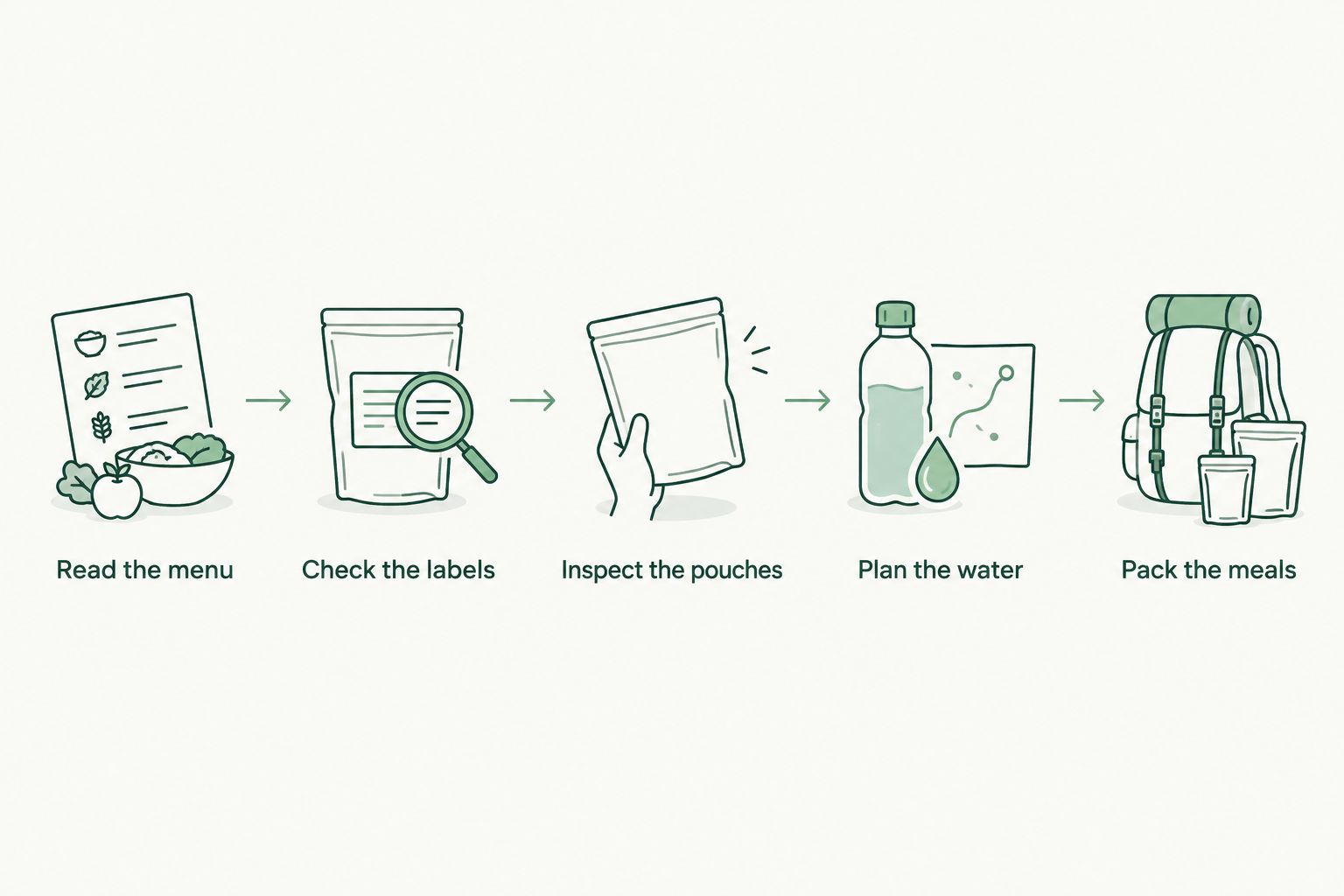
- Read the menu. Match the outer description to the food inside. Identify breakfast, main meals, snacks and drinks.
- Check the labels. Read ingredients, allergens, preparation instructions and storage information on individual items.
- Inspect the pouches. Look for leaks, punctures, damaged seals, swelling or other signs that packaging is compromised. Do not eat suspect contents.
- Plan the water. Separate drinking needs from water required for food, drinks and cleaning. Confirm where safe water will come from.
- Pack the meals. Group food by when you will use it, keeping snacks accessible and labels with their items.
Do not taste food to decide whether damaged packaging is acceptable. A sealed pouch's integrity matters, and a smell check is not a substitute for following food-safety guidance. Keep doubtful items out of the food bag.
For 2026 trip planning, write down anything you still need after the inspection. That list should cover missing food, suitable eating kit, safe water and any necessary heating equipment. For more detail, read how to use military ration packs safely.
Does a 24 hour ration pack include drinking water?
A 24 hour ration pack provides food and drink ingredients, not your drinking-water supply. Carry or source safe water separately, and read the instructions for anything that needs mixing or preparation. Do not infer a water allowance from the pack's name.
Your route and access to reliable water determine the practical plan. Mark refill opportunities before setting off, and have an appropriate treatment method where needed. Keep food planning and water planning connected, but do not confuse them.
Can you eat British Army ration meals cold?
Many ready-to-eat ration meal pouches can be eaten without heating; the individual label decides. Ready to eat does not mean every item in the pack has identical instructions. Check drinks, breakfast foods and accompaniments separately.
Heating improves the eating experience for many savoury dishes, but it adds equipment, fuel and handling tasks. Follow the pouch instructions and your stove's instructions. Never use a fuel-burning stove inside a tent or other enclosed space because of fire and carbon monoxide risks.
Is one pack enough for one person?
A 24 hour ration pack is intended to feed 1 person for 1 day, but that is not a personal nutrition assessment. Read the food labels and compare the complete selection with your planned activity and normal intake. Include extra suitable food where your trip plan requires it.
Check what you will actually eat, too. A full pack containing foods you avoid is less useful than a carefully planned selection you know you can manage. For cadet activities and organised expeditions, follow the leader's food requirements rather than making an independent substitution.
How should you read dates and condition on surplus food?
Read the date wording itself. A best-before date concerns quality; a use-by date concerns safety, and food should not be eaten after its use-by date. Neither wording removes the need to follow storage instructions and check packaging integrity.
Do not treat an outer code as a substitute for checking individual items. If the meaning of a marking is unclear, ask for clarification before relying on the food for a trip. Keep date information when repacking rather than discarding it with the outer bag.
Military Mart's condition grading helps describe surplus kit, but food labels and packaging checks still govern your ration inspection. A clothing-style condition assumption is not a food-safety decision. Food needs its own checks, regardless of the item's military origin.
FAQ
What's normally inside a British Army 24 hour ration pack?
A British Army 24 hour ration pack combines breakfast and main-meal foods with snacks, drinks and an accessory selection. The exact dishes and small items depend on the menu and pack type, so check its contents list.
Does every British Army ration pack contain the same meals?
No, British Army ration pack meals vary by menu. Use the particular pack's contents list rather than assuming a photograph or a previous purchase shows what you will receive.
Does a British Army ration pack come with a stove?
Do not assume a stove, fuel or heater comes with a British Army ration pack. Confirm heating equipment separately and follow the preparation instructions on each food item.
Can I eat British Army ration food without heating it?
Ready-to-eat ration food can be eaten without heating when its label permits it. Check each item separately because not every food or drink in the pack has the same preparation requirements.
How do I know whether a ration pack suits my allergies?
Read the allergen and ingredient information on every food item you intend to eat. A menu number, dish name or general description does not establish that the whole pack suits your allergies.
Is a British Army 24 hour ration pack enough for a whole day?
A British Army 24 hour ration pack is intended as a day's food for one person. Compare its actual contents and nutrition labels with your activity, appetite and any organised expedition requirements.
What should I ask Military Mart about a ration pack?
Ask Military Mart to clarify the menu, completeness or label information you need before choosing a ration pack. Resolve those details before relying on the food for a camp or expedition.
One last thing
Make your first ration-pack meal at home, not halfway through a wet camp. You will learn whether you like the food, whether your spoon reaches comfortably into the pouch and whether your planned preparation method is practical.
Before your first 2026 trip, keep a short note of the meals you enjoyed and the items you left untouched. Choose the next menu from that experience, then check its labels afresh. Familiarity helps with preferences; it never replaces a condition check.


Leave a comment