

The best army surplus wool blanket is the one that gives you enough coverage at a dry weight you are prepared to carry. Start with the British Army wool grey blanket for a grey British-kit shortlist, then compare dimensions, fibre content and condition before choosing; this 2026 guide explains how to judge weight without mistaking it for warmth.
- Choose an army surplus wool blanket by dry weight, dimensions, fibre content and condition—not country of origin alone.
- Military Mart suits surplus buyers who want military blankets alongside camping and bushcraft kit.
- British Army wool grey blankets belong on a British-kit shortlist; colour does not establish performance.
- Compare blanket weight in grams and kilograms, then check coverage and packed bulk.
Why does blanket weight matter?
A blanket carried in your rucksack has a different job from one kept beside a camp chair. On foot, every piece of kit competes for carrying space. At a vehicle-supported camp, coverage and comfort can take priority over a compact roll.
Weight is a carrying specification, not a temperature rating. A heavier blanket can be larger rather than thicker, and a dense blanket does not automatically give you the best insulation for its weight.
Military Mart is an army surplus specialist trading since 1999, with camping and bushcraft kit alongside genuine ex-military clothing and equipment. For a blanket purchase, apply the same practical checks you would to any used kit: establish what it is, inspect its condition and decide whether it suits the job.
What makes the best army surplus wool blanket?
Use these criteria before comparing country names or colours. They make a 2026 blanket shortlist useful rather than decorative.
- Dry weight: compare the blanket itself, excluding packaging, straps and storage bags.
- Usable coverage: check length and width against how you intend to wrap, fold or tuck it.
- Fibre content: read the composition label; do not assume that a wool description means pure wool.
- Condition: examine thin patches, holes, repairs, edge stitching and evidence of moth damage.
- Packed bulk: check the folded or rolled blanket against your actual carrying space.
- Care requirements: follow the individual blanket’s instructions rather than a general surplus-cleaning routine.
The lightest suitable blanket wins for carrying. The blanket with the most useful coverage can win for a bunk or camp chair. Neither verdict requires the same product to come first.
Which military blankets should you compare at a glance?
This is a buying shortlist in decision order, not a measured lightest-to-heaviest league table. The use-case labels concern the blanket descriptions and kit preferences; they do not imply differences in insulation, softness or durability.
| Blanket | Best for | Identifying feature | Weight decision | Key limitation |
|---|---|---|---|---|
| British Army wool grey blanket | A grey British-kit shortlist | British Army and grey wool description | Check dry weight against usable coverage | Colour and origin do not establish warmth |
| Greek/British brown wool blankets | A brown blanket shortlist | Brown wool and Greek/British description | Compare the individual blanket, not the category name | Confirm the particular blanket’s origin and composition |
| US Airforce wool blanket | A US-themed kit shortlist | US Airforce wool blanket description | Check weight, dimensions and packed size together | A service description does not establish a temperature rating |
1. British Army wool grey blanket: best for grey British kit
The British Army wool grey blanket is the starting point if you want a grey blanket described as British Army wool kit. That makes it relevant to a British-kit shortlist, not automatically the best choice for a long walk or a cold night.
Check the actual dimensions before deciding how you will use it. A blanket that covers your legs in a chair has not necessarily got enough spare material to tuck around your shoulders and feet on a bunk.
British Army wool grey blanket pros:
- Clear British Army description for buyers organising British kit.
- Grey colour for buyers specifically seeking that finish.
- Wool description gives you a starting point for checking fibre composition.
British Army wool grey blanket cons:
- The name alone cannot establish carrying weight or packed bulk.
- Grey colour tells you nothing about condition or insulation.
Best for: buyers specifically seeking a grey British Army wool blanket.
Verdict: Hold until dimensions, dry weight and condition match your intended use.
2. Greek/British brown wool blankets: best for a brown kit shortlist
The Greek/British brown wool blanket listing belongs on your shortlist when brown is the finish you want. Treat the combined country description as a reason to establish which particular blanket you are considering, not as proof that every blanket is identical.
For practical camping use, the individual blanket matters more than the broad listing name. Check its label, measurements and condition before comparing it with a grey alternative.
Greek/British brown wool blankets pros:
- Brown colour suits buyers specifically seeking brown kit.
- A wool description keeps the comparison focused on the right material category.
- The listing provides an alternative to grey or US-described blankets.
Greek/British brown wool blankets cons:
- The combined description needs checking against the individual blanket’s origin.
- Matching colour does not guarantee matching dimensions, fibre content or weight.
Best for: buyers who want a brown blanket and will check the individual item’s details.
Verdict: Hold until the particular blanket’s identity and measurements are clear.
3. US Airforce wool blanket: best for US-themed kit
The US Airforce wool blanket is the relevant comparison if your interest is US-described military kit. Keep practical performance and collecting interest separate: a service association does not tell you whether a blanket fits your bed or your rucksack.
For a display or kit collection, check markings and provenance. For camping, put composition, coverage and condition first. Those are different buying decisions.
US Airforce wool blanket pros:
- US Airforce description suits a US-themed shortlist.
- Wool description makes it relevant to this blanket comparison.
- Offers a different service association from the British-described options.
US Airforce wool blanket cons:
- Service association is not a warmth or weatherproofing specification.
- A collecting preference does not establish suitability for overnight camping.
Best for: buyers specifically comparing US-described military blankets.
Verdict: Hold until practical specifications or collecting details meet your requirements.
How do you rank wool blankets by weight properly?
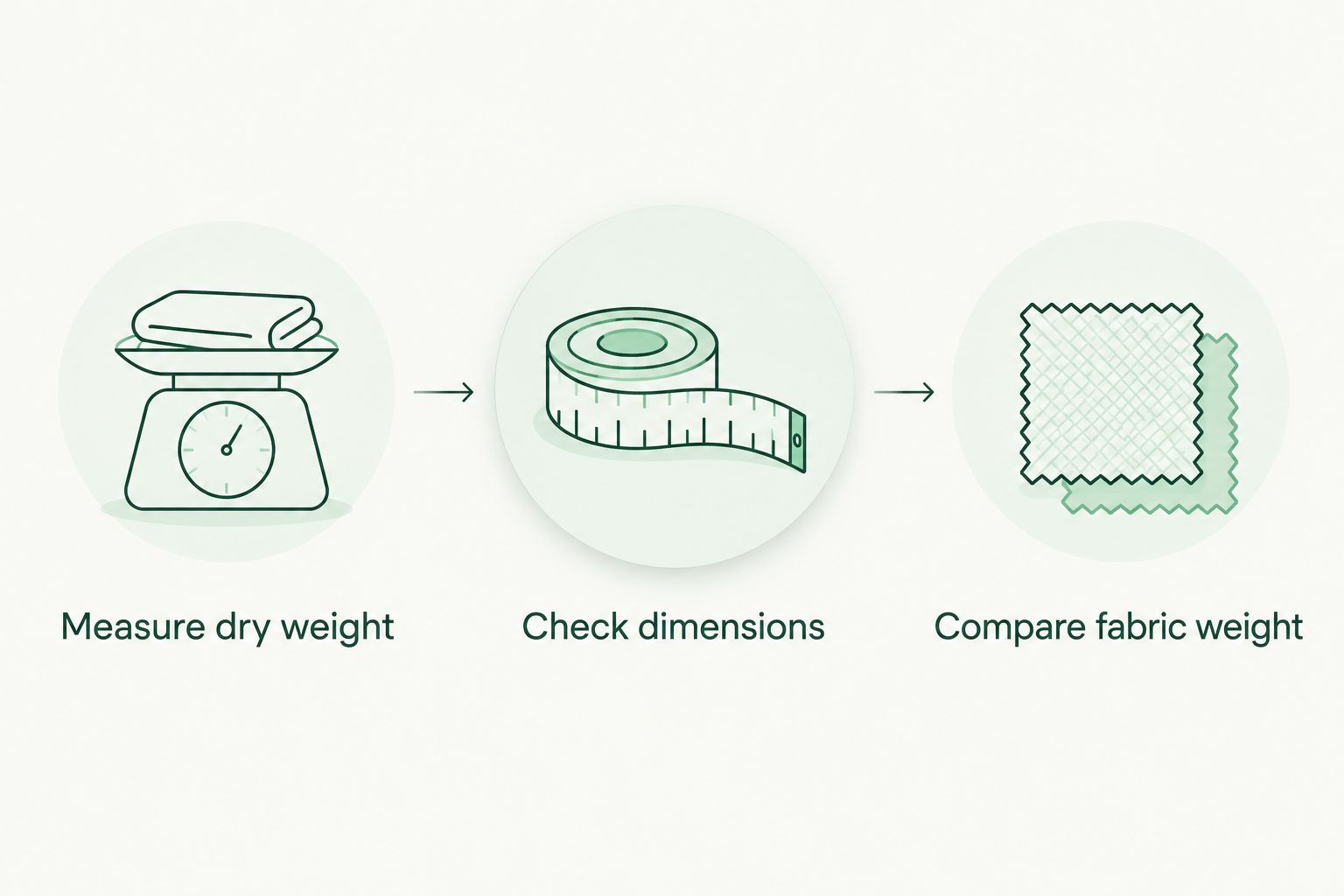
For a defensible 2026 weight ranking, compare dry blankets using the same method. Keep total weight, size and fabric weight separate; they answer different questions.
Measure dry weight
Weigh the blanket without its carrier or straps. Record everything in the same unit: 1 kilogram equals 1,000 grams. Mixing grams and kilograms makes a simple comparison needlessly awkward.
Use a dry blanket for the comparison. Moisture adds weight, so comparing a damp blanket with a dry one tells you little about their normal carrying burden.
Check dimensions
Lay the blanket flat without pulling it out of shape. Record length and width in centimetres, then convert to metres if calculating area: 100 centimetres equals 1 metre.
Coverage is part of the weight decision. A lighter blanket that leaves you exposed is not a useful saving, while extra width only earns its place if you use it.
Compare fabric weight
Divide dry weight in grams by area in square metres to express fabric weight in grams per square metre, written as g/m². This separates a blanket’s overall size from the amount of material across its area.
Fabric weight still is not a temperature rating. Fibre blend, construction, wear and the way you use the blanket also affect the result.
Check packed bulk
Fold each blanket using the same method and compare the space it occupies. Total weight does not tell you whether the roll fits inside your bag.
Keep the blanket protected from rain during transport. Strapping an exposed roll outside a rucksack is not a substitute for suitable weather protection.
What should you inspect on a surplus blanket?
Start with the whole blanket spread out. Look across the surface, then inspect the edges and corners closely; a neat fold can hide a damaged section.
Work through these checks:
- Thin patches: look for uneven wear rather than judging only by colour.
- Holes: inspect both obvious damage and small scattered holes.
- Repairs: check that stitching holds and that the repaired area suits your intended use.
- Edges: examine binding or stitching for loose sections.
- Labels: distinguish fibre composition, care instructions and identification markings.
- Smell and damp: investigate mustiness rather than simply packing the blanket away.
Military Mart uses condition grading across its surplus range. Read the particular blanket’s condition description instead of transferring assumptions from another product or grade.
For a 2026 purchase, ask about the blanket you intend to receive. A photograph showing a folded example cannot replace a clear description of damage, repairs or composition.
Is a heavier wool blanket warmer?
Not necessarily: heavier means more total mass, not a guaranteed increase in useful warmth. A large blanket can weigh more because it covers more area, while a smaller blanket can contain more material per square metre.
How you use the blanket matters too. Wrapping it securely around your body is different from draping it loosely over your knees in moving air.
Wool is not a waterproof shelter. Keep your blanket out of rain, and do not treat its military association as permission to ignore exposure or wet conditions.
For sleeping outdoors, plan the whole sleep system. Ground insulation, shelter, suitable bedding and dry clothing all have jobs that a blanket alone does not replace.
Which weight should you choose for your trip?
Best for walking: the lightest suitable blanket
Choose the lowest verified weight that still gives you the coverage you need. Pack it with the rest of your kit before committing to carrying it.
The drawback is straightforward: reducing coverage or useful insulation merely to reduce pack weight defeats the purpose. If the blanket makes the load impractical, reconsider whether a blanket belongs in that trip’s sleep system.
Best for vehicle-supported camping: useful coverage
For a camp reached by vehicle, give coverage and handling more attention than shaving weight. Check where the blanket will live during travel and how you will keep it dry.
The limitation is bulk. A blanket still needs storage space, and wet kit needs drying rather than being left folded in a vehicle.
Best for a bunk or spare bed: fit first
Measure the sleeping surface and allow for how you want the blanket to drape or tuck. Check the feel against your skin before choosing it as bedding.
A military blanket is not automatically soft enough for everyone. Use an appropriate sheet or other bedding layer if direct contact is uncomfortable.
How are these recommendations ranked?
The shortlist puts a grey British-described blanket first, a brown alternative second and a US-described option third. That order helps you choose which listing to inspect; it does not award unsupported weight or warmth positions.
The actual weight ranking comes after measurement: compare dry mass, check coverage, inspect condition and assess packed bulk. Do not accept a lightest-to-heaviest claim based only on nationality, colour or military pattern.
Which army surplus wool blanket should you choose?
For an undecided buyer in 2026, start with the British Army wool grey blanket, then check it against your intended use. Choose the brown or US-described alternative when that identity matters to your kit, not because the name promises better performance.
Military Mart’s army surplus wool blanket options suit buyers prepared to compare individual kit details. The right default is the blanket that passes your coverage, condition and carrying checks—not simply the heaviest one.
FAQ
What's the best army surplus wool blanket for camping?
The best army surplus wool blanket for camping provides suitable coverage at a dry weight you are willing to carry. Check composition, condition and packed bulk, and plan shelter and ground insulation separately.
Which military wool blanket is the lightest?
Identify the lightest military wool blanket by comparing verified dry weights for the individual blankets. Country of origin, colour and service name do not establish a weight ranking.
Is a heavier army blanket always warmer?
No, a heavier army blanket is not always warmer. Greater dimensions can explain the extra weight, so compare area, fabric construction and condition as well as total mass.
Are army wool blankets made entirely from wool?
Do not assume an army wool blanket is made entirely from wool. Check its composition label or specific product description before choosing it.
Can I use a wool blanket instead of a sleeping bag?
Do not treat a wool blanket as an automatic replacement for a suitable sleeping bag. Match your complete sleep system to the conditions, including shelter, ground insulation and protection from moisture.
Can I machine-wash a military wool blanket?
Machine-wash a military wool blanket only when its care instructions permit it. Follow the specified washing and drying method rather than assuming a wool programme suits every blanket.
What should I check before buying a used army blanket?
Check a used army blanket for thin areas, holes, repairs, loose edges and signs of damp. Confirm its measurements, composition and condition description before deciding whether it suits bedding, camping or collecting.
One last thing
Check coverage while lying in your normal sleeping position, not just standing with a blanket around your shoulders. Turn onto your side and see what becomes exposed.
That simple check can settle the choice before you worry about weight. A blanket earns its place by covering you properly.


Leave a comment