

Best overall: an ex-military Land Rover 110 utility. Best for compact use: a Land Rover 90. Best for hands-on restoration: a Series III. This 2026 Military Mart guide explains what to inspect when searching for an ex military land rover for sale, and why condition comes before model badges.
- An ex military land rover for sale needs identity, chassis and paperwork checks before comparison by model.
- The Land Rover 110 utility is the default choice for carrying camping kit.
- The Land Rover 90 suits buyers who value a shorter vehicle over load space.
- Military Mart's ex-military vehicle guide puts condition and intended use before cosmetic finish.
- Compare individual vehicles, not assumed cheapest-to-dearest model rankings.
Why does condition matter more than the price ranking?
There is no dependable cheapest-to-dearest order for ex-military Land Rover models. A restoration project, a repaired working vehicle and a documented collector's example are different purchases, even when they share a badge.
For your 2026 shortlist, separate the vehicle's condition from its specification. Then compare the work needed to make each example suitable for your intended use. Fresh paint does not tell you whether the chassis is sound or the registration documents match.
Military Mart is best for surplus buyers who want military vehicles, spares and genuine ex-military kit from the same specialist. Choose the vehicle on its own evidence, not on the reputation of military equipment generally.
What makes the best ex-military Land Rover?
Use these criteria before choosing a model:
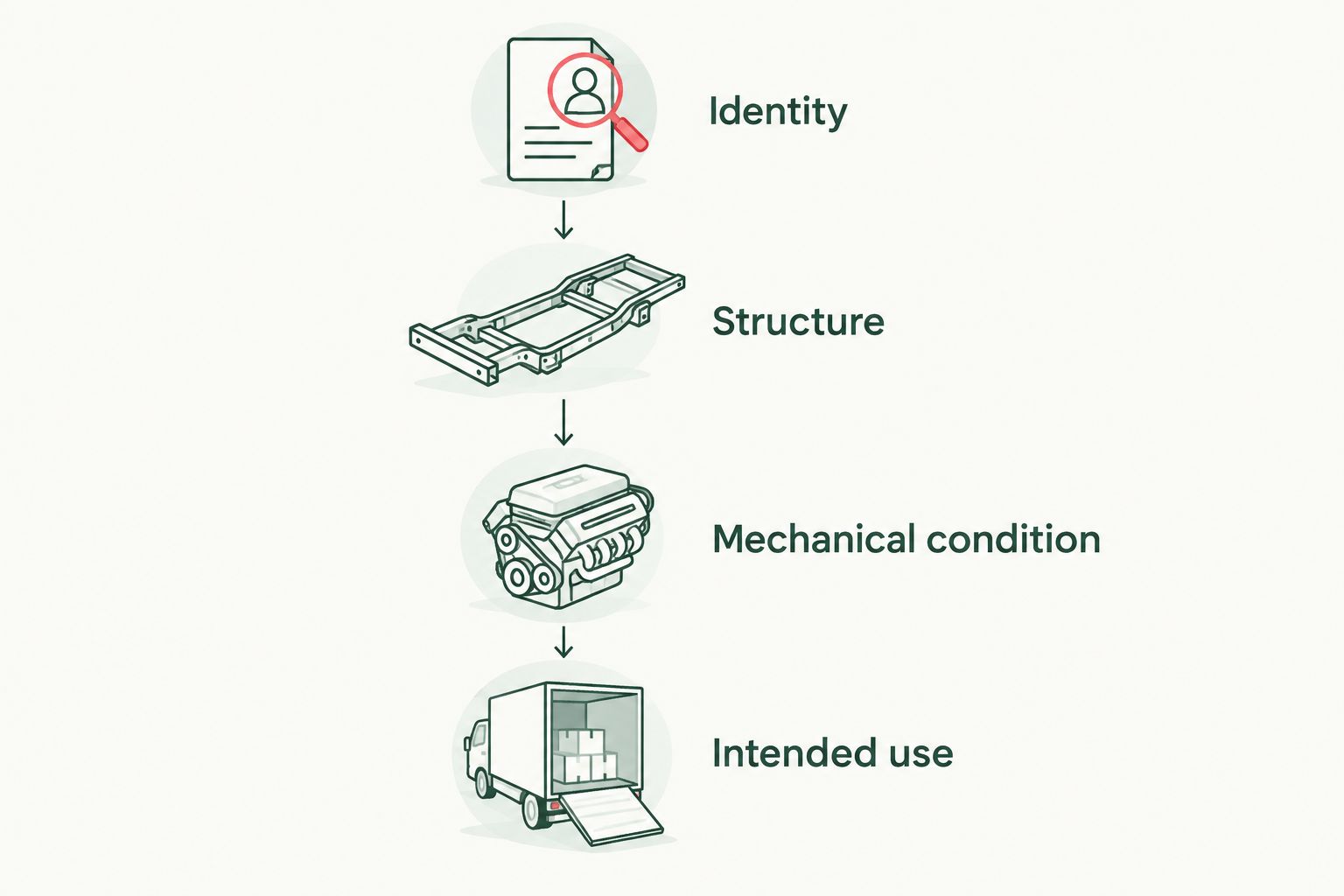
- Identity: chassis markings, registration documents and service history should tell a consistent story.
- Structural condition: inspect the chassis, bulkhead, outriggers and previous repairs before judging the bodywork.
- Mechanical condition: assess cold starting, cooling, steering, braking and transmission operation.
- Useful configuration: choose wheelbase, roof and load area around what you actually carry.
- Completeness: missing military fittings matter particularly when originality is your goal.
- Ownership fit: be honest about your workshop space, mechanical skills and tolerance for an older utility vehicle.
Do not treat surplus clothing grades as an engineering assessment of a vehicle. Ask for a vehicle-specific description, supporting photographs and an independent inspection.
Which ex-military Land Rovers belong on your shortlist?
The table ranks buying priorities by use case, not advertised prices. Its order matches the detailed picks below. In 2026, a sound example of the right configuration deserves priority over a more desirable badge with unresolved faults.
| Rank and vehicle | Best for | Standout feature | Key limitation |
|---|---|---|---|
| 1. Land Rover 110 utility | Camping kit and general load carrying | Longer load area than a comparable 90 | More vehicle to park and store |
| 2. Land Rover 90 utility | Buyers needing a compact vehicle | Shorter body and wheelbase | Less room for bulky kit |
| 3. Land Rover Series III | Hands-on restoration | Traditional leaf-sprung construction | Older driving controls and refinement |
| 4. Land Rover Lightweight | Military display and collecting | Distinctive military-specific body | Specialist body parts need careful checking |
| 5. Land Rover Wolf 110 | Collecting a later military specification | Recognisable military configuration | Originality and electrical details need scrutiny |
1. Land Rover 110: best for carrying camping kit
An ex-military Land Rover 110 utility is the sensible starting point when load space matters. The nominal 110-inch wheelbase gives it a different role from the shorter 90, but the actual body configuration decides how useful the space is.
Check the rear compartment in person. Seats, equipment racks, wheel boxes and partitions all affect where your camping kit fits. Do not plan a sleeping platform from exterior photographs alone.
Land Rover 110 pros:
- More load length than a comparable Land Rover 90.
- Useful starting layout for camping equipment and tools.
- A practical choice when carrying kit matters more than compact parking.
Land Rover 110 cons:
- Longer dimensions need more storage space.
- Military fittings can obstruct a proposed camping layout.
- A long body does not guarantee suitable seating or payload for your plans.
Best for: outdoor buyers carrying bulky gear rather than building a period-perfect display.
Verdict: Buy a structurally sound Land Rover 110 utility with a layout you can use without major rebuilding.
2. Land Rover 90: best for compact ownership
The Land Rover 90 suits buyers who want a shorter utility vehicle and can travel with less kit. Inspect the rear load area with your actual equipment in mind. A compact vehicle stops being practical when everything needs to live outside it.
Check the driving position too. Seat adjustment, steering clearance and pedal space matter more on a viewing than photographs of a tidy dashboard.
Land Rover 90 pros:
- Shorter overall package than a comparable 110.
- Suits a modest camping load or day-trip equipment.
- Less body length to accommodate in a garage or parking space.
Land Rover 90 cons:
- Limited load length for sleeping arrangements.
- Bulky equipment quickly competes with passenger space.
- Roof storage adds mounting and load considerations rather than solving every space problem.
Best for: buyers who prioritise a compact vehicle and pack accordingly.
Verdict: Buy a Land Rover 90 for its size; skip it if your plans already depend on a longer load bay.
3. Land Rover Series III: best for hands-on restoration
An ex-military Land Rover Series III is a restoration choice first, not a shortcut to modern utility transport. Leaf springs and an older driving environment are part of the ownership experience. Drive an example before committing to a project.
Series III vehicles include different body and wheelbase configurations, including the 109-inch long-wheelbase version. Establish exactly what you are viewing rather than treating every military Series vehicle as interchangeable.
Land Rover Series III pros:
- Traditional construction suits an interest in mechanical restoration.
- A strong fit for a period-focused military collection.
- Restoration can retain its original utility character.
Land Rover Series III cons:
- Older controls and road manners require adjustment.
- Structural work demands proper facilities and skills.
- Missing period fittings complicate an authenticity-led rebuild.
Best for: an owner who wants the restoration itself, with workshop space and a clear scope.
Verdict: Hold until an inspection establishes the structural work and completeness. Buy the project you can finish, not merely the one you can bring home.
4. Land Rover Lightweight: best for military display
The Land Rover Lightweight is a distinct military vehicle, not simply a normal Land Rover with some weight removed. Its body makes it a different collecting proposition from a standard utility model.
For a display-led purchase, check the specification against the vehicle's identity and history. Distinguish service modifications from later civilian changes. Neither an olive finish nor military-style fittings establish provenance; the same evidence-first approach applies when identifying genuine military surplus.
Land Rover Lightweight pros:
- Distinctive bodywork suits a military display.
- A focused choice for an authenticity-led collection.
- Offers a different restoration subject from a standard utility Land Rover.
Land Rover Lightweight cons:
- Military-specific body parts deserve a completeness check.
- Civilian alterations can conflict with restoration goals.
- The name does not establish the vehicle's present weight or carrying capacity.
Best for: collectors who want a recognisably military Land Rover rather than a general camping base.
Verdict: Buy a documented, complete Lightweight for collecting; skip one chosen only because the name sounds suitable for an expedition build.
5. Land Rover Wolf 110: best for later military specification
The Land Rover Wolf 110 suits buyers interested in a later British military Land Rover configuration. Wolf vehicles are associated with the 2.5-litre 300Tdi diesel, but identity and installed equipment still need checking on the individual example.
Military electrical arrangements need particular attention. Establish whether the vehicle has a 24-volt system, how accessories are supplied and what previous owners have changed. Do not assume civilian accessories connect directly.
Land Rover Wolf 110 pros:
- Suits a collection focused on later military vehicles.
- The 110 configuration provides useful load length.
- Military equipment details give collectors a defined inspection focus.
Land Rover Wolf 110 cons:
- Badges and external fittings do not prove identity.
- Altered wiring requires careful assessment.
- Missing specification-specific equipment matters to originality.
Best for: collectors who specifically want a Wolf and understand the specification they are inspecting.
Verdict: Hold until identity, electrical layout and modifications are clear. Buy on documented condition, not the Wolf name alone.
How should you inspect an ex-military Land Rover in 2026?
Start with evidence, then structure, then operation. Leave accessories and cosmetic improvements until the vehicle passes those checks. An independent Land Rover specialist should assess anything beyond your own competence.
Identity and structure
Match chassis identification to the documents. Ask about replacement chassis, engine changes and previous repairs, then look for records supporting the answers. A replacement component is not automatically a fault; an unexplained mismatch needs resolving.
Inspect chassis rails, crossmembers, outriggers and spring or suspension mounting areas. Examine the bulkhead, footwells and door pillars. Look closely at repairs rather than assuming a coating proves the metal underneath is sound.
Mechanical condition
Ask to see a genuinely cold start. Watch for warning lights, unusual noises and fluid leaks, and have the cooling system assessed. During an authorised, insured test drive, check steering, braking and gearbox operation.
Have the four-wheel-drive controls and transfer box checked using a suitable procedure and surface. Do not experiment with unfamiliar controls on the seller's forecourt. Inspect tyres for age, cracking, damage and suitability, not just tread depth.
Suspension and intended use
Assess springs, dampers, bushes and mounting points before discussing modifications. When planning expedition suspension upgrades, the intended loaded vehicle matters more than its empty appearance. Roof equipment, tools and camping gear all belong in that assessment.
Restore a sound baseline before modifying it. Raising the vehicle does not repair worn steering or establish that it can safely carry your proposed load.
How do you compare vehicles without a misleading price league table?
For each vehicle on your 2026 shortlist, write down the same categories: structural repairs, mechanical work, tyres, missing equipment, paperwork and transport. Obtain assessments for the work rather than guessing from photographs.
Keep essential work separate from optional changes. Brakes and structural repairs belong in the first group. Paint colour, storage boxes and display fittings usually belong in the second.
Ask the seller:
- What is the exact model and body configuration?
- What evidence supports its military history?
- Which major components have been replaced?
- What faults and unfinished repairs are known?
- Which loose equipment and fittings form part of the vehicle?
- Can an independent specialist inspect it?
Military Mart sells military vehicles and spares, but a general surplus description is not a substitute for these vehicle-specific answers. Record the answers against each example so you compare like with like.
How were these Land Rovers ranked?
This is a use-case ranking, not a road test or a live sales league table. The Land Rover 110 leads for general load carrying, the 90 for compact use, the Series III for restoration, the Lightweight for display and the Wolf 110 for later military collecting.
Identity, structural condition, mechanical condition, configuration and completeness decide whether an individual example deserves your attention. A failed structural inspection overrides every position in the table.
Which ex-military Land Rover should you choose?
Choose a sound Land Rover 110 utility unless you have a clear reason to choose something else. It is the default shortlist entry for carrying outdoor kit. Choose the 90 when space at home matters more, or a Series III, Lightweight or Wolf when the specific military vehicle is the point of ownership.
For a film production, event or static display, consider the required role before buying a restoration project. Military Mart also supplies military vehicles and equipment for those hire purposes.
FAQ
What's the best ex military land rover for sale for camping?
A structurally sound Land Rover 110 utility is the default shortlist choice for carrying camping kit. Check the actual rear layout, seating and permitted loads before planning a conversion.
Which ex-military Land Rover is cheapest?
No model is consistently the cheapest across different conditions and specifications. Compare individual vehicles and the essential work each needs rather than assuming a fixed model order.
Is an ex-military Land Rover 90 better than a 110?
The Land Rover 90 is better when a shorter vehicle matters more than load length. The 110 is the stronger shortlist choice when bulky camping equipment or a longer rear compartment is central to your plans.
Is a Land Rover Wolf the same as a standard Defender?
A Land Rover Wolf is a military specification, not simply a standard Defender with military paint. Confirm identity, electrical arrangements and equipment on the individual vehicle.
Can I drive an ex-military Land Rover on UK roads?
Yes, an ex-military Land Rover can be driven on UK roads when it meets the applicable registration, insurance, roadworthiness and other legal requirements. Former military service does not itself establish road legality.
What should I check before buying an ex-military Land Rover?
Check identity documents and structural condition first, then mechanical operation and modifications. Arrange an independent specialist inspection before committing to an unfamiliar vehicle.
Is an ex-military Land Rover a good first restoration project?
An ex-military Land Rover suits a first restoration only when its work matches your skills, facilities and time. A complete vehicle with understood faults is a clearer starting point than an incomplete project with unexplained repairs.
One last thing
Bring your largest piece of camping kit to the viewing, or make a cardboard template of it. Check that it passes through the rear opening and sits where you planned. A useful load bay needs a useful opening, not just enough room inside.
For a 2026 purchase, settle identity and structural condition first. Then choose the Land Rover that fits your real plans.


Leave a comment