

Best for bulk capacity: a 20-litre fuel jerry can. Best all-round size: a 10-litre fuel jerry can. Best for a small reserve: a 5-litre metal can. This 2026 Military Mart guide ranks military jerry cans by capacity, then explains the condition, compatibility and handling checks that matter before you buy.
- Choose 20-litre military jerry cans for bulk capacity, provided you can lift and secure the filled container.
- Choose a 10-litre fuel jerry can when manageable handling matters more than maximum capacity.
- The Pro User 5L metal jerry can is the compact option; confirm fuel compatibility and closure details before buying.
- Keep drinking water in dedicated potable-water containers, never in former fuel cans.
Military jerry cans at a glance
| Capacity ranking | Option | Best for | Standout feature | Key limitation |
|---|---|---|---|---|
| 1 | 20-litre fuel jerry can | Bulk vehicle-supported reserves | Largest capacity in this comparison | Heaviest liquid load when filled |
| 2 | 10-litre fuel jerry can | General-purpose handling | Middle ground between capacity and lifting effort | Half the nominal capacity of the largest option |
| 3 | Pro User 5L metal jerry can | Small fuel reserves | Compact nominal capacity | More containers needed for a larger reserve |
Why does capacity matter?
A larger can holds more liquid. It also puts more weight in your hands when you lift, position and pour it. Choose around the job, not the military appearance.
Military Mart's military jerry cans guide separates capacity from authenticity: a military-style container is not automatically genuine issue kit. This 2026 ranking compares size classes, not tested performance between manufacturers.
What makes the best military jerry cans?
- Correct intended use: choose a container expressly suitable for the fuel or drinking water you intend to carry.
- Manageable filled load: judge the can when full, including the awkward lift into its holder.
- Sound condition: inspect the body, seams, closure and internal surfaces. Fresh paint does not establish serviceability.
- Compatible pouring gear: check the neck, seal and spout together. Similar-looking fittings are not proof of compatibility.
- Secure carriage: confirm the actual external dimensions against your holder and its restraint system.
- Clear identification: look for readable capacity, manufacturer and applicable approval markings, rather than relying on colour.
1. A 20-litre fuel jerry can: best for bulk capacity
A 20-litre fuel jerry can takes first place on nominal capacity in this comparison. It suits vehicle-supported use where a larger reserve has a defined purpose and the filled container can be secured properly.
The trade-off is handling. A full can is a different proposition from an empty one, particularly when you need to raise it towards a filler neck or remove it from a holder.
20-litre fuel jerry can pros:
- Largest nominal capacity among the three sizes compared.
- Fewer individual containers for a given total volume.
- Suits a reserve carried principally by vehicle rather than by hand.
20-litre fuel jerry can cons:
- Greatest liquid load to lift in a single container.
- Awkward pouring positions demand more handling effort.
- A damaged closure affects a larger share of your reserve.
Best for: vehicle-supported trips with a planned fuel requirement and suitable carriage arrangements.
Before choosing this size, rehearse the movement with an equivalent safe load. Can you lift it from ground level, place it in the holder and remove it without twisting awkwardly? Do not discover the answer beside a hot vehicle.
Verdict: Buy for bulk capacity only when you can handle and secure the filled can. Skip it if lifting is already a concern.
2. A 10-litre fuel jerry can: best for general-purpose handling
A 10-litre fuel jerry can sits between a small reserve and the largest size compared here. It carries half the nominal volume of a 20-litre can, reducing the liquid load you handle at once.
That makes it the practical default for someone choosing by handling rather than maximum capacity. It is not automatically the right size for an existing vehicle bracket; measure the actual container before committing.
10-litre fuel jerry can pros:
- Lower filled liquid load than the largest option.
- More capacity per container than a small reserve can.
- Lets you divide a larger reserve into separate, manageable loads.
10-litre fuel jerry can cons:
- Requires more individual containers to match a larger can's capacity.
- Still needs a compatible spout and secure restraint.
- Capacity alone does not establish holder fit.
Best for: buyers who need a useful reserve without handling the largest filled can.
For a 2026 vehicle kit, start with the amount of fuel the journey actually requires. Then check whether this middle size meets that requirement without creating unnecessary storage or lifting problems.
Verdict: Buy as the default size when manageable handling is your main priority.
3. Pro User 5L metal jerry can: best for a small reserve
The Pro User 5L metal jerry can is the named compact option in this comparison. Its nominal capacity makes it a candidate when a small reserve is enough and you want to keep each individual load down.
Do not confuse its military-style format with documented military issue provenance. Military Mart sells genuine surplus alongside other clearly identified kit; the individual product description is what counts.
Pro User 5L metal jerry can pros:
- Smallest nominal capacity in this comparison.
- Lower liquid load per filled container than either larger size.
- A defined option for buyers who do not need a bulk reserve.
Pro User 5L metal jerry can cons:
- Limited capacity for a vehicle with a larger planned requirement.
- Multiple small cans mean more closures and containers to manage.
- The size designation does not establish spout or bracket compatibility.
Best for: a small, planned fuel reserve rather than bulk storage.
Check the current product information for intended fuel use, supplied fittings and operating instructions. Where approval is relevant, check the marking on the actual container and its scope; a listing title does not replace those checks.
Verdict: Buy if a small reserve meets your requirement. Skip it if you already know you need substantially more capacity.
How is this capacity ranking decided?
The order is largest to smallest: bulk reserve, general-purpose handling, then compact reserve. It is not a durability league table, and it does not claim that larger military jerry cans are better made.
The buying verdict uses the criteria above: intended use, filled handling, condition, pouring compatibility, secure carriage and clear identification. A container that fails those checks loses its place in your kit regardless of capacity.
What should you inspect on a surplus jerry can?
Condition comes before paintwork. A tidy exterior does not tell you whether the base is corroded, the seal is damaged or the interior contains residue.
Use this inspection order for a 2026 purchase, whether the can is described as used, unissued or new old stock:
- Body condition: check the base, seams and neck for damage, deep corrosion and signs of repair.
- Closure condition: examine the cap or latch, gasket and retaining parts for damage or missing components.
- Internal condition: establish previous contents and look for contamination or deterioration, following safe inspection instructions.
- Fitting compatibility: confirm that the specified spout and holder suit the exact container.
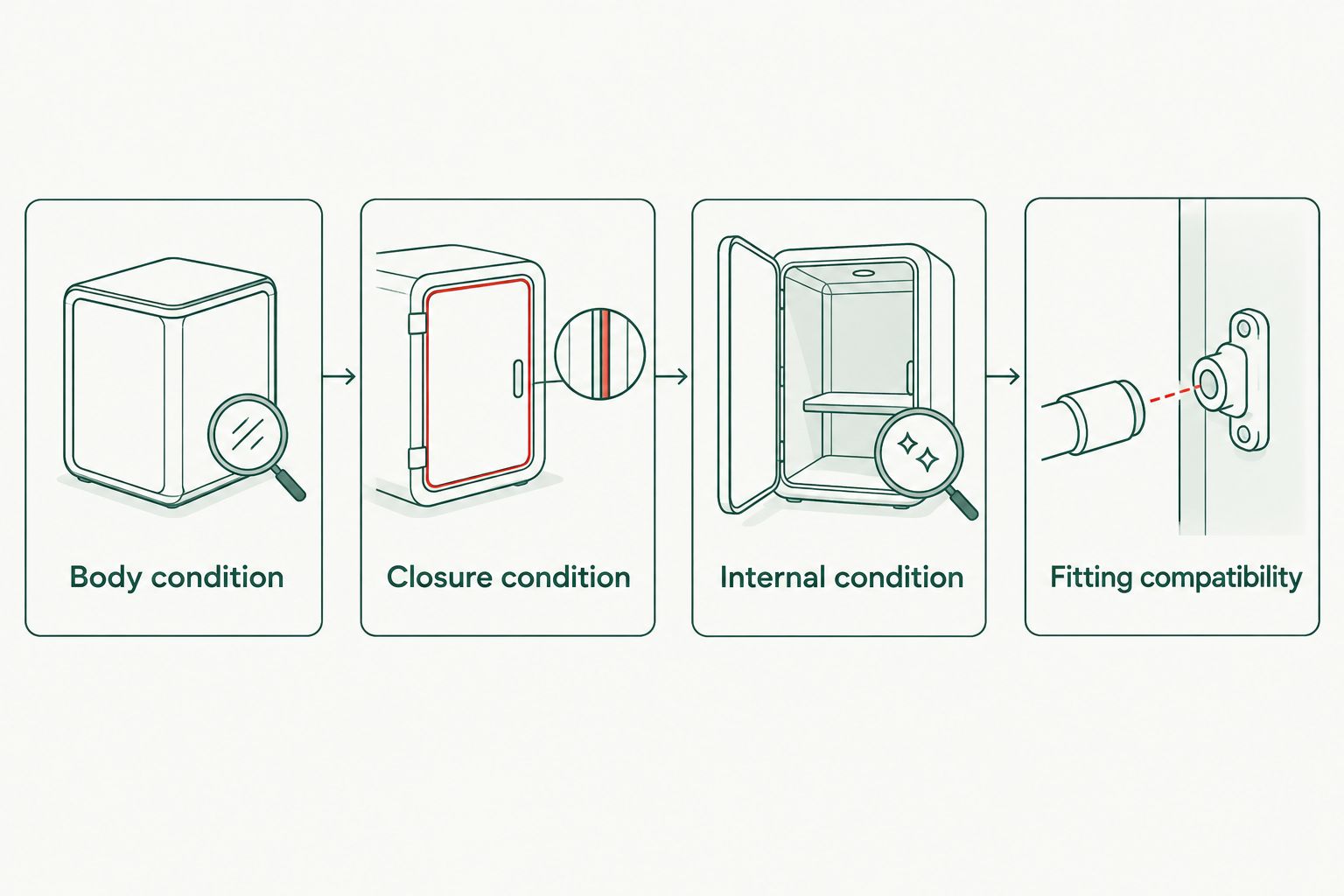
A condition grade describes the seller's assessment; it does not replace checks for the proposed use. New old stock means stored, unissued kit, not proof that every seal or component remains suitable indefinitely.
For collectible cans, keep originality separate from operational suitability. Stamps, paint and period fittings matter to militaria collectors, but authenticity does not establish that an old container is safe for fuel carriage.
Should you choose metal or plastic?
Choose by the container's declared purpose and condition, not a blanket rule about material. Both fuel containers and water containers exist in different constructions; their appearance does not make them interchangeable.
| Material option | Best for | Practical advantage | Limitation to check |
|---|---|---|---|
| Purpose-made metal container | Buyers choosing a traditional rigid format | Metal body suited to that container's specified use | Corrosion, seam condition and coating compatibility |
| Purpose-made plastic container | Buyers choosing a container specified for their liquid | Body does not suffer steel rust | Damage, ageing and compatibility with the intended contents |
Neither option earns a pass on condition. Reject damaged containers rather than assuming thick walls or military styling compensate for deterioration.
Replacement parts also need to match. Fit a gasket specified for the container and contents, not simply one that appears to sit in the cap.
Can military jerry cans hold drinking water?
Use a dedicated container explicitly suitable for potable water. Never repurpose a former fuel can for drinking water. Cleaning away an obvious smell does not establish that a contaminated container is safe.
When comparing emergency water storage containers, capacity is only part of the decision: potable-water suitability, cleanable closures and controlled dispensing also determine whether the container fits the job. Those checks belong ahead of military styling.
Keep water and fuel equipment separate, including spouts and funnels. Mark the intended contents clearly and store the containers so that somebody else cannot mistake one for the other.
For a 2026 household water plan, choose a size you can lift and dispense from without spilling. A large container that stays put needs a workable dispensing arrangement; a smaller one is easier to move but holds less.
How do you match a jerry can to a vehicle or stove?
Start with the equipment manufacturer's fuel specification. A can's capacity does not tell you whether its contents are suitable for an engine, generator or camping stove.
Next, check the physical arrangement. Measure the holder, examine its restraint and confirm that you can reach the closure without an awkward lift. Nominal litre capacity is not a universal set of external dimensions.
Finally, check the pouring connection. A spout must fit the can and work with the receiving filler; a loose or improvised connection defeats the point of choosing sound kit.
For stove use, follow the stove's refuelling instructions and keep fuel handling away from ignition sources. Never refuel a hot or operating stove, and never treat a general-purpose jerry can as a substitute for a specified pressurised fuel bottle.
What about petrol storage rules in Great Britain?
Check the current rules for your premises, quantity and container type before buying fuel-storage kit. Petrol storage and transport are separate questions; a container marking does not grant permission for every storage arrangement.
Domestic premises, workplaces and journeys can involve different requirements. Ferry operators and other carriers also set their own conditions, so confirm those before loading the vehicle.
Do not treat a capacity ranking as legal clearance. Buy an appropriate container, follow its instructions and establish the rules that apply to your intended use.
Which military jerry can should you choose in 2026?
Choose a 10-litre fuel jerry can if you want the default balance between capacity and handling. Move to the largest size only when you have a defined need for the extra volume and a suitable way to carry it.
Choose the smallest size when a small reserve genuinely covers the job. Military Mart's military jerry cans guidance puts intended use and condition ahead of buying the biggest can you can fit.
For drinking water, leave this fuel-can decision tree and choose dedicated potable-water kit. The right contents specification matters more than the capacity ranking.
FAQ
What's the best capacity for military jerry cans?
A 10-litre fuel jerry can is the default choice when you want a balance between capacity and handling. Choose a larger or smaller size around your actual reserve requirement, lifting ability and carriage arrangements.
Is a 20-litre jerry can better than a 10-litre one?
A 20-litre jerry can is better for bulk capacity, not automatically for everyday handling. It holds twice the nominal volume, so you must handle more liquid weight in one container.
Is a 5-litre jerry can enough for a vehicle emergency kit?
A 5-litre jerry can is enough only if that volume meets your planned fuel requirement. Work from the vehicle's fuel consumption and intended journey rather than assuming a small reserve guarantees a particular distance.
Can I put drinking water in an old military fuel can?
No. Use a dedicated potable-water container rather than a former fuel can. Removing visible residue or smell does not establish drinking-water safety.
Does an olive-green jerry can mean genuine military issue?
No. Colour and military styling do not establish issue provenance. Check the manufacturer's markings, documented origin and individual product description.
Will any jerry can spout fit my can?
No. Match the spout to the exact neck and closure system, then check compatibility with the receiving filler. Similar-looking fittings are not enough.
Are new old stock jerry cans ready to use without inspection?
No. Stored, unissued kit still needs inspection before use. Check the body, closure, seals, interior and manufacturer's instructions for the intended contents.
One last thing
Before buying, picture the final pour rather than the can sitting neatly in a bracket. The best capacity is the one you can lift, control and secure throughout the job—not just squeeze into the vehicle.


Leave a comment