

Best overall: WEB-TEX XT BASE LAYER BLACK LONG SLEEVE TOP. Best for adjustable neck coverage: CLIMATE-X LONG-S ZIP NECK POLO BASE LAYER. Best for a simple pull-on option: CLIMATE-X LONGS T-SHIRT BASE LAYER. This 2026 guide compares military thermal base layers by their stated features, intended use and place in your cold-weather kit.
- WEB-TEX XT is the default military thermal base layers pick: its description specifies thermal, moisture-wicking performance for cadet exercises.
- CLIMATE-X ZIP NECK suits buyers who want adjustable neck coverage rather than a T-shirt neckline.
- CLIMATE-X T-SHIRT suits buyers wanting a straightforward long-sleeved base layer beneath other clothing.
- The Italian Army Norgie-style thermal top is described as a mid-layer, not a direct substitute for these underlayers.
Why does your base layer matter in cold weather?
A base layer sits next to your skin. Its job is different from the fleece that adds insulation or the outer layer that handles wind and rain. Getting that distinction right matters more than choosing the thickest garment labelled thermal.
Military Mart's WEB-TEX XT military thermal base layers option is best for cadets wanting a thermal, moisture-wicking long-sleeved underlayer. That recommendation follows the product description, which explicitly names cold-weather operations and cadet exercises.
Army issue and military-style clothing are not interchangeable descriptions. Before buying for authenticity, read the guide to identifying genuine military surplus. A manufacturer's name or an olive colour does not establish government issue.
What makes the best military thermal base layers?
For a cold-weather kit list in 2026, judge the garment by its role before its appearance. These are the buying criteria that separate a useful underlayer from an awkward extra top:
- Stated function: look for an explicit base-layer description. A thermal mid-layer belongs elsewhere in the clothing system.
- Moisture management: favour a stated moisture-wicking function for active exercises and walking. Do not assume every thermal top has it.
- Neck design: choose adjustable coverage if you want to open the neckline without removing the garment.
- Working fit: check chest, sleeve and body length. The top must stay comfortable when you bend, reach and carry a rucksack.
- Condition and origin: distinguish branded outdoor clothing, genuine issue, used surplus and NOS. Read the individual description rather than applying one label to everything.
- Care instructions: check the garment label before washing or drying. Fibre content and construction determine suitable care.
No base layer replaces weather protection. Keep insulation and a suitable outer layer in the plan, especially when your day includes both hard movement and long stops.
Which base layer wins at a glance?
The shortlist gives each top a separate job. The order reflects the strength of the stated use case, not a measured warmth or drying-speed league table.
| Item | Best for | Standout stated feature | Key limitation |
|---|---|---|---|
| WEB-TEX XT BASE LAYER BLACK LONG SLEEVE TOP | Cadet field exercises | Thermal, moisture-wicking underlayer | Not an insulating jacket or weatherproof shell |
| CLIMATE-X LONG-S ZIP NECK POLO BASE LAYER | Adjustable neck coverage | Zip-neck base-layer design | Zip position needs checking beneath other collars |
| CLIMATE-X LONGS T-SHIRT BASE LAYER | Simple pull-on layering | Long-sleeved T-shirt base-layer format | No zip-neck adjustment identified in the product name |
These are upper-body choices. Check your legwear separately rather than assuming a top completes a cold-weather clothing system.
1. Web-Tex XT: best for cadet field exercises
The WEB-TEX XT BASE LAYER BLACK LONG SLEEVE TOP is described as a genuine Web-Tex thermal, moisture-wicking underlayer. Its stated uses include cold-weather operations and cadet exercises. That gives it the clearest match to an active field-training brief.
Moisture management matters when you work hard beneath a smock or waterproof. Start with an underlayer intended for that job, then adjust the layers above it as your effort changes. Do not treat the word thermal as permission to keep every layer fastened throughout an uphill walk.
WEB-TEX XT pros:
- The description explicitly identifies a thermal underlayer.
- Moisture-wicking performance is stated rather than inferred.
- Cadet exercises are a named intended use.
- The long-sleeved format provides arm coverage beneath other kit.
WEB-TEX XT cons:
- It does not replace a fleece or other insulating layer.
- It does not replace an outer layer for wind and rain.
- Genuine Web-Tex branding does not, by itself, establish army-issue provenance.
Best for: cadets and outdoor users whose priority is a stated thermal, moisture-wicking function.
Check your unit's clothing requirements before choosing an underlayer for cadet use. A product described for exercises still needs to suit the uniform, fit and instructions for that particular activity.
Verdict: Buy WEB-TEX XT for active cold-weather layering when moisture management is your main requirement.
2. Climate-X zip neck: best for adjustable neck coverage
The CLIMATE-X LONG-S ZIP NECK POLO BASE LAYER is named as a zip-neck base layer. Its clearest distinguishing feature is that neckline. Choose it for adjustable coverage, not an unverified claim that it is warmer than the other tops.
A neck opening gives you another way to manage comfort while wearing the garment. Open or close it to suit your activity, then check how the zip sits beneath your fleece, smock or jacket collar.
CLIMATE-X ZIP NECK pros:
- The zip provides adjustable neck coverage.
- The product is explicitly named as a base layer.
- The neckline offers an alternative to a T-shirt format.
CLIMATE-X ZIP NECK cons:
- The zip needs a comfort check beneath stacked collars.
- Neck adjustment does not replace venting your outer clothing.
- Do not assume moisture-wicking performance or a particular fibre from the product name.
Best for: walkers and field-kit users who specifically want an adjustable neckline.
Try the top with your actual outer clothing. A comfortable zip worn alone is not enough if the pull or seam presses against your throat when the rest of your kit is fastened.
Verdict: Buy CLIMATE-X ZIP NECK for neckline adjustment; hold if your decision depends on an unconfirmed fabric specification.
3. Climate-X T-shirt: best for simple pull-on layering
The CLIMATE-X LONGS T-SHIRT BASE LAYER is a long-sleeved T-shirt-format base layer. It is the straightforward choice when you prefer that shape beneath your other clothing. The product name does not establish a particular fibre blend or tested temperature range.
Choose this format when an adjustable neck is not on your kit list. Keep the decision practical: check the fit and care label, then assess how it feels beneath your usual shirt or fleece.
CLIMATE-X T-SHIRT pros:
- The product is explicitly named as a base layer.
- The long-sleeved format provides arm coverage.
- The T-shirt format suits buyers who do not want a zip-neck style.
CLIMATE-X T-SHIRT cons:
- It offers no zip-neck adjustment identified in the product name.
- It does not replace insulation or weather protection.
- Do not infer moisture-wicking performance from the base-layer label alone.
Best for: buyers who want a simple long-sleeved underlayer without choosing a zip-neck design.
For a 2026 kit refresh, make this a fit-led purchase. There is no reason to choose a more complicated neckline if you do not need it, but simplicity alone does not establish better cold-weather performance.
Verdict: Buy CLIMATE-X T-SHIRT for a simple format; hold if you need a confirmed moisture-wicking specification.
Which products should you compare before buying?
Military Mart's military thermal base layers shortlist separates a stated moisture-wicking option from two neckline choices. Compare the individual details with your intended activity before deciding. The cards below identify the exact products discussed above.


How should a military thermal base layer fit?
Start with 2 body measurements: chest circumference and height, recorded in centimetres. Compare them with the individual garment's sizing information. Do not transfer your size from another surplus top without checking.
Then try the garment through the movements your day requires. Reach overhead, bend forward and put on your rucksack. The hem should remain comfortable, and the sleeves should not pull tightly when you extend your arms.
- Chest: avoid restrictive tension across the front and underarms.
- Body length: check coverage while bending, not just standing.
- Sleeves: check wrist coverage with arms extended.
- Neck: fasten your outer collars and check for pressure.
- Waist: try the top with your normal trouser waistband.
A base layer should sit close enough to work comfortably beneath your kit, without squeezing you. Loose folds can bunch under straps; a tight top can restrict movement. Neither problem is solved by adding another garment.
Is a Norgie-style thermal top a base layer?
The Italian Army "Norgie" Style Thermal Top – Brand New Old Stock is described as a cold-weather mid-layer. Keep that role separate from the base-layer shortlist. The word thermal does not make every garment a next-to-skin underlayer.
Its stated NOS condition also means something different from used surplus. NOS means new old stock, not newly manufactured clothing. Inspect stored garments and follow their care labels rather than assuming age has no relevance to condition.
| Option | Best for | Useful distinction | Limitation |
|---|---|---|---|
| Named base-layer tops | Next-to-skin layering | Designed or named for the underlayer role | Still need insulation and weather protection |
| Italian Army Norgie-style thermal top | Adding a cold-weather mid-layer | Description explicitly identifies its middle-layer role | Not a like-for-like replacement for a moisture-wicking base layer |
Verdict: Buy the Italian Army Norgie-style thermal top for a mid-layer role; skip it as a direct substitute for the WEB-TEX XT underlayer.
How do you build a cold-weather layering system?
Use 3 clothing roles as your starting point: Base layer, Insulating layer and Outer layer. Those are roles, not a rule that you must always wear exactly three garments. Adjust the system to your effort and conditions.
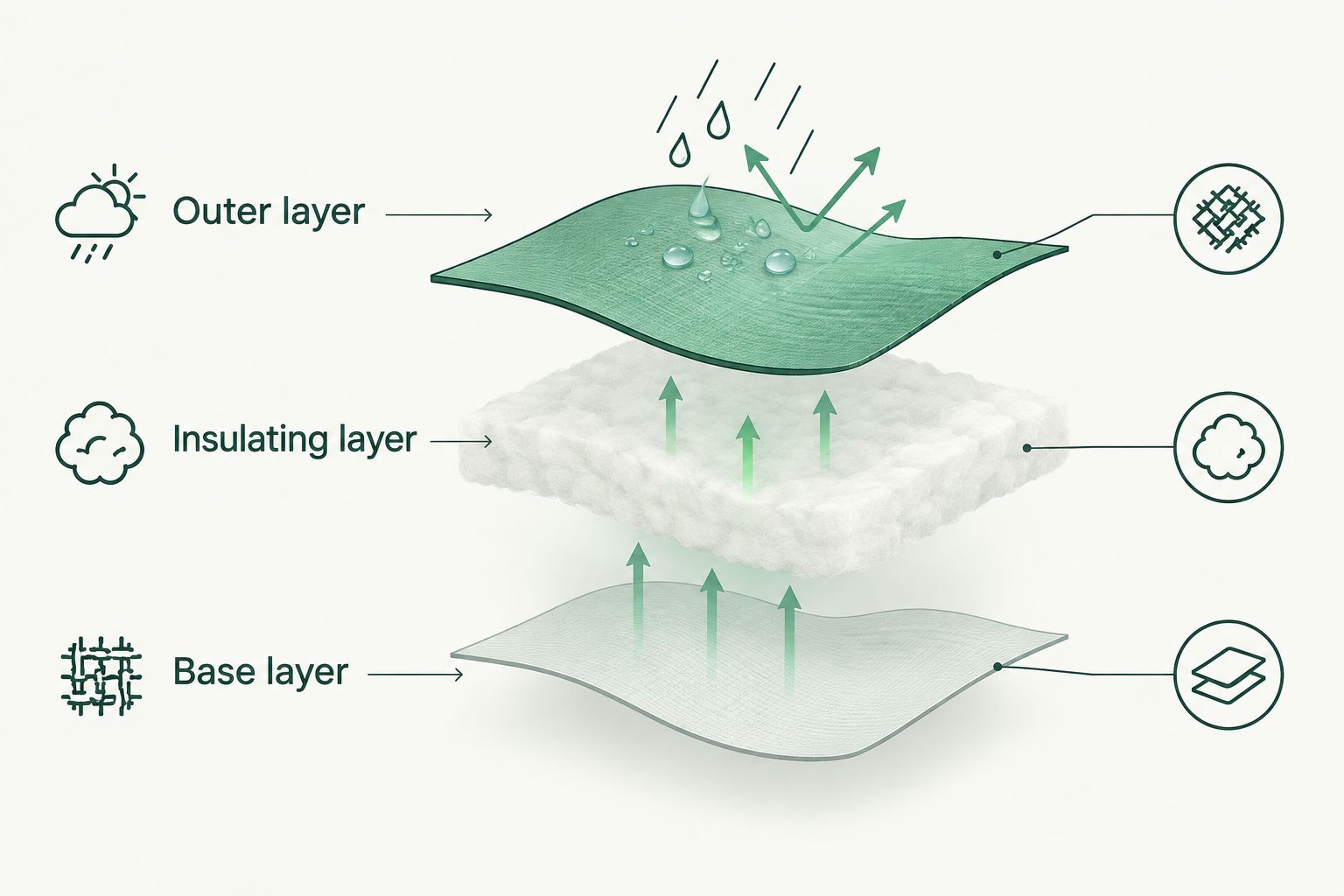
The base layer manages comfort next to your skin. The insulating layer adds warmth, while the outer layer addresses exposure to wind or rain. Open or remove insulation before hard effort leaves the whole system damp.
For a wild camp in 2026, pack 1 separate dry sleeping top in waterproof storage. Keep it apart from clothing used during the walk. That gives you a deliberate dry change rather than relying on a worn top being ready for bed.
What should you check on surplus thermal clothing?
Check the individual condition description before choosing used, new or NOS kit. Military Mart grades surplus honestly, but a general grade is not a substitute for reading the details of the garment you are considering.
Look closely at cuffs, seams, underarms and any zip. Check for holes, stretched areas or repairs that affect how the top sits beneath other clothing. For used garments, wash according to the care label before wearing next to your skin.
Avoid improvised care instructions. A hot wash or tumble-drying programme suitable for one garment is not automatically suitable for another. Record the label information before it becomes difficult to read.
How are these base layers ranked?
The 2026 ranking prioritises stated function, a distinct use case and practical fit. WEB-TEX XT comes first because its description expressly identifies thermal, moisture-wicking performance and cadet exercises. The Climate-X tops occupy separate slots for adjustable neck coverage and T-shirt-format simplicity.
This is a buying guide, not a laboratory warmth comparison. No temperature threshold, drying time or fabric weight is assigned to these products without a stated specification. That keeps the recommendation tied to what each garment actually claims to do.
Which military thermal base layer should you choose?
Choose WEB-TEX XT by default for active cold-weather use where a stated moisture-wicking function matters. Choose CLIMATE-X ZIP NECK when adjustable neck coverage is your deciding feature. Choose CLIMATE-X T-SHIRT when you want the simpler format.
For your 2026 kit list, settle the activity first and the garment second. A cadet exercise, a hill walk and a stationary camp task place different demands on the layers above your skin.
FAQ
What's the best military thermal base layer for cadets?
WEB-TEX XT BASE LAYER BLACK LONG SLEEVE TOP is the default choice here for cadets because its description names thermal, moisture-wicking performance and cadet exercises. Check your unit's clothing requirements and the garment's fit before choosing it.
Is the Climate-X zip-neck base layer better than the T-shirt version?
CLIMATE-X ZIP NECK is the better choice for adjustable neck coverage; CLIMATE-X T-SHIRT suits buyers who prefer a simple T-shirt format. The product names do not establish a warmth or drying-speed advantage for either garment.
Can I wear a military thermal top without a jacket?
A military thermal base layer does not replace a jacket for wind or rain protection. Choose the insulating and outer layers separately according to the activity and conditions.
Is an Italian Army Norgie-style top a base layer?
The Italian Army Norgie-style thermal top discussed here is described as a cold-weather mid-layer. Use it for that role rather than treating it as a direct replacement for a stated moisture-wicking underlayer.
How tight should military thermal base layers fit?
Military thermal base layers should fit comfortably beneath your other clothing without restricting movement. Check chest, hem, sleeve and neck comfort while bending, reaching and wearing your rucksack.
Does genuine Web-Tex mean genuine army issue?
Genuine Web-Tex identifies the branded product; it does not by itself establish government issue. Use the individual origin and provenance details when army-issue authenticity matters.
How should I wash a military thermal base layer?
Wash a military thermal base layer according to its garment care label. Do not assume the same wash temperature or drying programme suits different materials or constructions.
One last thing
The thickest underlayer is not automatically the best choice. If it makes you overheat during movement, adding more thermal clothing misses the problem. Sort out fit, moisture management and adjustable insulation before buying extra thickness.


Leave a comment