

Best overall: Bushcraft Survival Kit. Best compact backup: Combat Survival Kit type 2. Best shelter-repair option: Stormsure Tent and Groundsheet Repair Kit. Military Mart’s Bushcraft Survival Kit is the best survival gear kit here for bushcraft campers who want signalling, tinder and repair items together; this 2026 guide explains where each option fits and what you still need to pack.
- Military Mart’s Bushcraft Survival Kit wins this survival gear kit shortlist for its mix of signalling, tinder and repair items.
- Combat Survival Kit type 2 suits campers wanting a tin-based backup, not a complete overnight loadout.
- Stormsure Tent and Groundsheet Repair Kit targets shelter damage; Compact Sewing Kit handles buttons and stitching.
- First Aid Kit - Pouch covers minor cuts and grazes, not every outdoor medical emergency.
Why does your choice of survival kit matter?
A survival tin and a camping loadout do different jobs. Neither a miniature compass nor a handful of matches replaces shelter, insulation, drinking water, food and a reliable way to call for help.
The useful choice for a 2026 wild camp is the kit that fills a real gap in your existing gear. Military Mart carries both mixed survival kits and task-specific sets, so this shortlist separates emergency backups from repair and first-aid additions. Buy for the problem you need to solve, not the number of objects in the packet.
What makes the best survival gear kit?
Use these criteria before comparing the options. A longer contents list does not automatically make a better kit.
- Relevant contents: Prioritise signalling, weather protection, water provision, first aid and repairs according to your route.
- Usable tools: Choose items you can handle confidently. A tool you have never practised with is not a dependable plan.
- Known limitations: Check exactly what is included. A repair set is not a shelter, and a survival bag is not a rated sleeping system.
- Condition and consumables: Read the condition description, inspect packaging and check dated or perishable contents before use.
- Access and organisation: Keep urgent items reachable without unpacking your shelter and spare clothing.
- Fit with existing kit: Avoid duplicating equipment while leaving a more important gap, such as ground insulation or lighting.
For a 2026 kit refresh, lay out what you already own first. Then compare the contents below against the jobs still uncovered.
Which survival gear kits are best at a glance?
These options serve different purposes. The first two combine several emergency functions; the remaining three are focused additions to a camping setup.
| Rank and item | Best for | Standout contents | Key limitation |
|---|---|---|---|
| 1. Bushcraft Survival Kit | Mixed bushcraft backup | Mini compass, signalling mirror, Tinder Card, needles and survival bag | Does not replace your main shelter or sleeping system |
| 2. Combat Survival Kit type 2 | Tin-based emergency backup | Water-resistant tin, matches, purification tablets and flint with striker | Includes a knife; contents need checking against your skills and intended use |
| 3. Stormsure Tent and Groundsheet Repair Kit | Shelter fabric repairs | Flexible adhesive, TUFF Tape strip and repair patches | Does not provide shelter, insulation or emergency signalling |
| 4. Compact Sewing Kit | Buttons and stitched repairs | Buttons, tabs, thread, needles and scissors | Stitching alone does not restore waterproof fabric performance |
| 5. First Aid Kit - Pouch | Minor cuts and grazes | Tape, bandage and dressing items | Not a complete response to serious injury or illness |
1. Bushcraft Survival Kit: best survival gear kit for mixed backup
The Bushcraft Survival Kit lists a mini compass, Mayday signalling mirror, Tinder Card, dental floss, sail needles, needle threader, wire saw with loops, fishing kit and survival bag. That gives it the broadest mix of signalling, tinder and repair functions among these picks.
Its appeal is the combination rather than any single item. You can keep several small backup tools together, then add the equipment your route and conditions demand.
Bushcraft Survival Kit pros:
- Includes a dedicated signalling mirror.
- Combines tinder with small repair items.
- Lists a survival bag alongside the smaller tools.
- Provides a starting point for a personalised backup kit.
Bushcraft Survival Kit cons:
- The listed survival bag does not establish a sleeping temperature rating.
- Fishing equipment and a wire saw do not address every camper’s priorities.
- A mini compass is not a substitute for a suitable navigation setup and the skill to use it.
Keep the distinction clear: mixed emergency contents are useful, but they do not make this a complete wild-camping package. Pack your planned shelter, sleeping bag, mat, waterproofs, water and food separately.
Best for: Bushcraft campers building a mixed emergency backup around an established camping loadout.
Verdict: Buy if you want several small emergency functions together and will practise with the contents before relying on them.
2. Combat Survival Kit type 2: best survival gear kit for a tin-based backup
Combat Survival Kit type 2 lists a water-resistant tin, vinyl tape, knife, matches, pencil, purification tablets, snare wire, candle and fireball flint with striker. Its main difference is the tin format and the combination of fire-lighting and water-treatment consumables.
Treat the tin as a backup container, not proof that its contents will survive immersion. Water-resistant and waterproof are not interchangeable descriptions.
Combat Survival Kit type 2 pros:
- Keeps the listed contents together in a tin.
- Includes matches and a flint with striker.
- Lists purification tablets for a separate water-treatment function.
- Includes tape and a pencil for practical small tasks.
Combat Survival Kit type 2 cons:
- The knife brings age-restriction and lawful-carry considerations.
- Snare wire is not a routine wild-camping essential.
- A tin cannot replace bulkier essentials such as warm clothing and ground insulation.
Check the tablet packaging, instructions and expiry before a trip. Treatment methods have limits, and tablets do not make every water source suitable for drinking.
Follow applicable age-verification requirements when buying restricted items. Buying a kit does not give you permission to carry or use every item everywhere; leave wildlife-trapping equipment out of ordinary camping plans.
Best for: Campers who specifically want a tin-based emergency backup and understand the contents.
Verdict: Buy for that role; skip if you want a ready-to-go overnight camping kit.
3. Stormsure Tent and Groundsheet Repair Kit: best for shelter repairs
Stormsure Tent and Groundsheet Repair Kit contains a 5g tube of Flexible Repair Adhesive, a 20cm strip of TUFF Tape and two 75mm TUFF Tape repair patches. It is a focused repair set, not a general survival tin.
That focus is useful when your main concern is damage to a tent or groundsheet. Check the repair product’s instructions against the fabric and coating before applying anything.
Stormsure Tent and Groundsheet Repair Kit pros:
- Combines adhesive with tape and patches.
- Gives you different repair formats in one set.
- States the supplied quantities and patch dimensions.
Stormsure Tent and Groundsheet Repair Kit cons:
- The supplied tape and patches limit the area you can cover.
- Fabric compatibility and application conditions need checking.
- It adds no signalling, first-aid or insulation equipment.
Inspect the adhesive tube before departure and follow the curing instructions. Do not assume that a hurried field repair is ready to bear tension immediately, or that the same method suits every coated fabric.
Best for: Tent campers adding a dedicated shelter-repair set to their existing emergency kit.
Verdict: Buy if the materials and repair instructions match your shelter; skip as a standalone survival kit.
4. Compact Sewing Kit: best for buttons and stitched repairs
The Compact Sewing Kit contains buttons, tabs, thread, needles and scissors in a folding 600D Tac-Poly case. It suits small clothing repairs and stitching jobs rather than waterproof patching.
A missing button or an opened seam calls for different tools from a torn groundsheet. Keep sewing and adhesive repairs separate in your planning, even if both sets travel in the same pouch.
Compact Sewing Kit pros:
- Includes both sewing tools and thread.
- Supplies buttons and tabs for small replacements.
- Keeps the contents in a folding case.
Compact Sewing Kit cons:
- Requires basic sewing skills.
- A stitched repair can leave needle holes in waterproof fabric.
- It is not a suitable basis for repairing safety-critical equipment.
Practise a simple repair on spare fabric before taking the kit away. Check that you can thread the needle and handle the scissors comfortably, rather than discovering problems outside in poor light.
Best for: Campers and cadets maintaining clothing and making non-safety-critical stitched repairs.
Verdict: Buy if your existing kit lacks sewing tools; skip if you already carry an equivalent set.
5. First Aid Kit - Pouch: best for minor cuts and grazes
First Aid Kit - Pouch is described for treating minor cuts and grazes. Its listed contents include microporous tape, a bandage and a non-woven dressing.
That makes it a small first-aid addition, not an all-purpose medical kit. Match the full contents to your activity, group and training before packing it.
First Aid Kit - Pouch pros:
- Has a clearly stated minor-injury purpose.
- Includes tape, bandage and dressing items.
- Keeps basic supplies together in a pouch.
First Aid Kit - Pouch cons:
- Does not establish coverage for serious injuries or illness.
- Personal medication and individual medical needs require separate planning.
- Used or expired contents need replacing.
Keep first-aid supplies somewhere everyone in your group can identify. A pouch buried below your sleeping kit is poorly placed when someone needs help.
Best for: Walkers and campers adding basic minor-wound supplies to a trip-specific first-aid setup.
Verdict: Buy for minor cuts and grazes; skip as your only preparation for a remote trip.
How should you build these kits into your pack?
For a 2026 wild camp, organise equipment by function rather than spreading small items across unrelated pockets. Keep the survival backup distinct from the equipment you expect to use throughout the trip.
- Weather protection: Pack your shelter, waterproof layers and emergency weather protection.
- Warmth: Match your sleeping bag, ground insulation and spare clothing to the forecast and location.
- Water: Carry drinking water and a suitable collection or treatment plan.
- Signalling: Keep your whistle, phone and other appropriate signalling equipment accessible.
- First aid: Match supplies to your training, companions and personal needs.
- Repairs: Select sewing, tape or adhesive tools that suit the gear you carry.
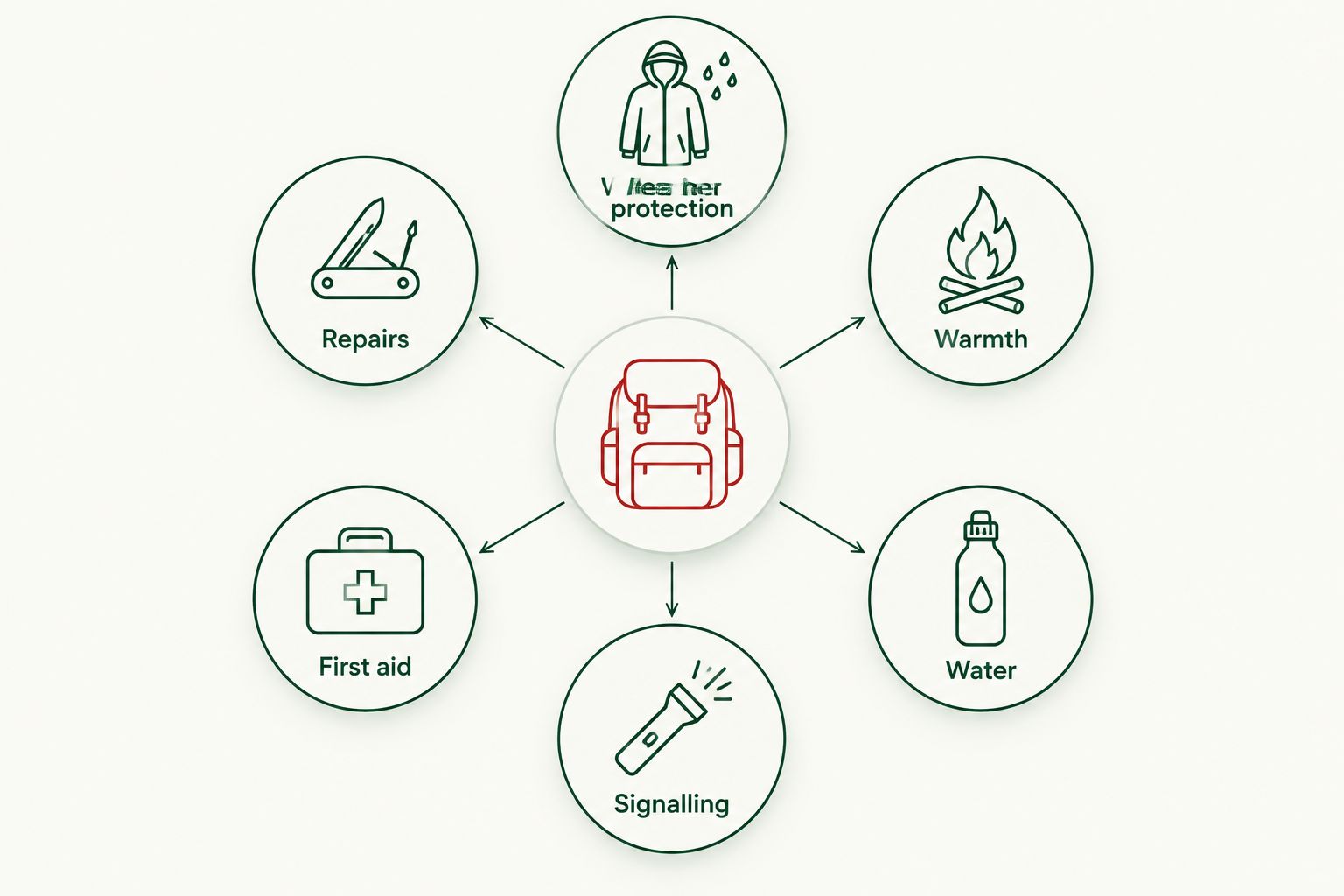
Open each kit at home and identify every component. Remove unnecessary duplication, but do not remove a useful independent backup simply because two items share a function. Keep instructions with consumables and protect items according to their packaging requirements.
Useful kits to compare
These three sets cover different jobs: mixed emergency backup, shelter repairs and sewing. Choose the missing function rather than automatically adding all three.


How were these survival kits ranked?
This 2026 Military Mart survival gear kit shortlist ranks the listed contents against practical camping functions, clear limitations and compatibility with an existing loadout. It is a contents-based buying guide, not a field-test scorecard.
The Bushcraft Survival Kit takes the mixed-backup slot because its listed contents span signalling, tinder, repairs and a survival bag. The specialist sets earn separate places because repairing shelter fabric, stitching clothing and treating minor wounds are different jobs.
Which survival gear kit should you choose?
Choose the Bushcraft Survival Kit as the default mixed backup. Choose Combat Survival Kit type 2 only when the tin format and its particular contents suit your plans.
If you already have emergency signalling and backup equipment, fill a narrower gap instead. Stormsure Tent and Groundsheet Repair Kit suits compatible shelter repairs; Compact Sewing Kit suits stitching; First Aid Kit - Pouch suits minor cuts and grazes.
For your next 2026 trip, check the forecast, route, permissions and emergency plan before buying more kit. Better preparation is more useful than another unopened pouch.
FAQ
What is the best survival gear kit for bushcraft and wild camping?
Military Mart’s Bushcraft Survival Kit is the best mixed-backup choice in this shortlist. Its listed contents combine signalling, tinder, repair items and a survival bag, but you still need your main camping equipment.
Is a survival tin enough for an overnight wild camp?
No, a survival tin is not enough for a planned overnight wild camp. Pack suitable shelter, sleeping insulation, waterproof clothing, water, food, lighting and navigation equipment separately.
Is Combat Survival Kit type 2 better than Bushcraft Survival Kit?
Combat Survival Kit type 2 is the better fit when you specifically want a tin-based backup with matches, purification tablets and a flint with striker. Bushcraft Survival Kit is the mixed-backup pick for its listed signalling mirror, tinder, repair items and survival bag.
Which repair kit should I carry for a tent or groundsheet?
Stormsure Tent and Groundsheet Repair Kit is the shelter-repair option in this shortlist. Check the adhesive and tape instructions against your shelter’s fabric and coating before use.
Can I use a sewing kit to repair waterproof clothing?
A sewing kit can mend stitching, but stitching alone does not restore waterproof performance. Needle holes and damaged coatings require a repair method suitable for the garment.
What should I check before using a pre-packed survival kit?
Check the contents, condition, instructions and any expiry dates before using a pre-packed survival kit. Practise with unfamiliar tools and add anything your route or personal needs require.
Do survival kits containing knives have restrictions?
A knife inside a survival kit still requires attention to age restrictions and lawful carry. Follow applicable age-verification requirements and check the rules for where you intend to take and use it.
One last thing
Try opening and repacking your emergency kit while wearing the gloves you expect to use outside. You will find awkward closures, inaccessible tools and loose components before they become a problem on a wet hillside. Fix those details at home, then put the kit somewhere reachable.


Leave a comment