

Do not machine wash a military surplus rucksack unless its care label or the maker’s instructions explicitly allow it. A gentle cycle is not automatic permission: the bag’s coating, padding, frame and fittings all need to tolerate the wash. For unidentified surplus kit, remove loose dirt and spot-clean by hand, using only cleaning products suitable for its materials.
- Can you machine wash a military rucksack? Only when its own care instructions explicitly permit machine washing.
- Military Mart military surplus condition grading describes condition; it does not replace the item's care instructions.
- Spot-clean unidentified surplus rucksacks rather than choosing a washing temperature or cycle by guesswork.
- Dry pockets, padding and seams completely before storing the bag or packing it for a wild camp.
Can you machine wash a military surplus rucksack?
The care instructions decide, not the camouflage pattern or country of issue. A rucksack combines fabric, thread, fastenings and sometimes coatings, foam, leather or a rigid frame. Permission to wash one fabric does not establish that the complete bag is machine washable.
For your 2026 kit-care checklist, use the comparison below to choose the least intensive suitable method. If the label is missing, start with dry brushing and a damp cloth rather than a full wash.
| Method | Best for | Main advantage | Main limitation |
|---|---|---|---|
| Dry brushing and spot-cleaning | Local mud and unidentified surplus | Targets dirt without soaking the complete bag | Does not thoroughly clean inaccessible padding |
| Hand washing, where permitted | More widespread dirt on suitable bags | Gives you control over rubbing and wetting | Still risks damage if materials cannot tolerate immersion |
| Machine washing, where explicitly permitted | Bags with clear machine-wash instructions | Follows a documented cleaning route | Unsuitable as a default for unlabelled surplus |
A laundry sack does not change that decision. It contains straps but does not make coatings, leather trim or frame components washable.
Why this matters
A dirty bergen is not necessarily a damaged bergen. Cleaning should remove contamination without turning ordinary wear into failed stitching, a damaged lining or distorted padding.
Surplus also needs inspection before treatment. The guide to identifying military surplus quality helps you separate condition checks from assumptions about age or appearance.
Military Mart sells genuine ex-military kit with honest condition grading, but a grade is not a laundry instruction. Used, unissued and NOS items still need care appropriate to their construction; none of those descriptions grants permission to put a rucksack in a drum.
What should you check before cleaning a surplus rucksack?
Empty every compartment before adding water. Look behind dividers, inside lid pockets and beneath any removable liner, then inspect the bag in good light.
Use these 3 checks before cleaning:
- Care instructions: find the sewn-in label and identify the exact model where possible. Read restrictions on washing, drying and cleaning agents.
- Construction: check for a frame, stiffeners, foam padding, leather, coated surfaces and removable components. Follow the maker’s instructions for dismantling.
- Condition: look for loose stitching, cracked buckles, torn fabric, corrosion and sticky or flaking internal surfaces. Do not scrub damaged areas harder to make them look newer.
For a bag bought in 2026, previous use still matters more than the purchase date. Photograph existing wear before cleaning so you can distinguish old damage from any change during treatment.
If you cannot identify the bag, keep the first clean conservative. A readable issue label is useful evidence; a camouflage pattern alone is not enough to select a care method.
How do you clean a military rucksack safely by hand?
Use these 6 steps as a cautious routine, subject to the bag’s own instructions. Hand cleaning gives you control, but it is not permission to soak every type of surplus bag.
1. Empty
Remove all kit and shake out loose debris. Open the pockets fully and check corners for grit, food crumbs and small sharp objects before putting your hand inside.
Remove detachable pouches and other components only where their attachment allows it. Take a photograph first if you need a reminder of how the harness or straps fit together.
2. Inspect
Check seams, strap anchors and closures before cleaning. Support any weak area rather than pulling against it, and stop if a coating comes away on your fingers.
Separate repair work from cleaning work. Washing does not restore a failing buckle or repair a load-bearing seam.
3. Brush
Let ordinary mud dry, then loosen it gently with a soft brush. Work carefully around stitching, mesh and coated surfaces rather than scrubbing the whole bag with a stiff brush.
Brush grit away from zip teeth before operating the zip. Do not force a slider through a pocket edge packed with dirt.
4. Spot-clean
Test a damp cloth on an inconspicuous area first. If a cleaner is needed, choose one explicitly suitable for the bag’s materials and follow its directions.
Work on the dirty patch without saturating neighbouring padding. Do not assume a technical-clothing cleaner, down wash or waterproofing treatment is suitable for a rucksack simply because it is sold for outdoor kit.
5. Rinse
Remove cleaner as its instructions require, using clean water without unnecessary soaking. Check folds and webbing where residue collects.
Only progress to a full hand wash if the bag’s care instructions permit immersion. Avoid bleach, fabric conditioner and improvised chemical mixtures.
6. Air-dry
Open compartments and allow air to circulate around the bag. Support it securely, keep it away from direct heat and follow any specific drying instructions.
Check the padding, pocket bottoms and seams before storage. A dry outer face does not prove the entire rucksack is dry.
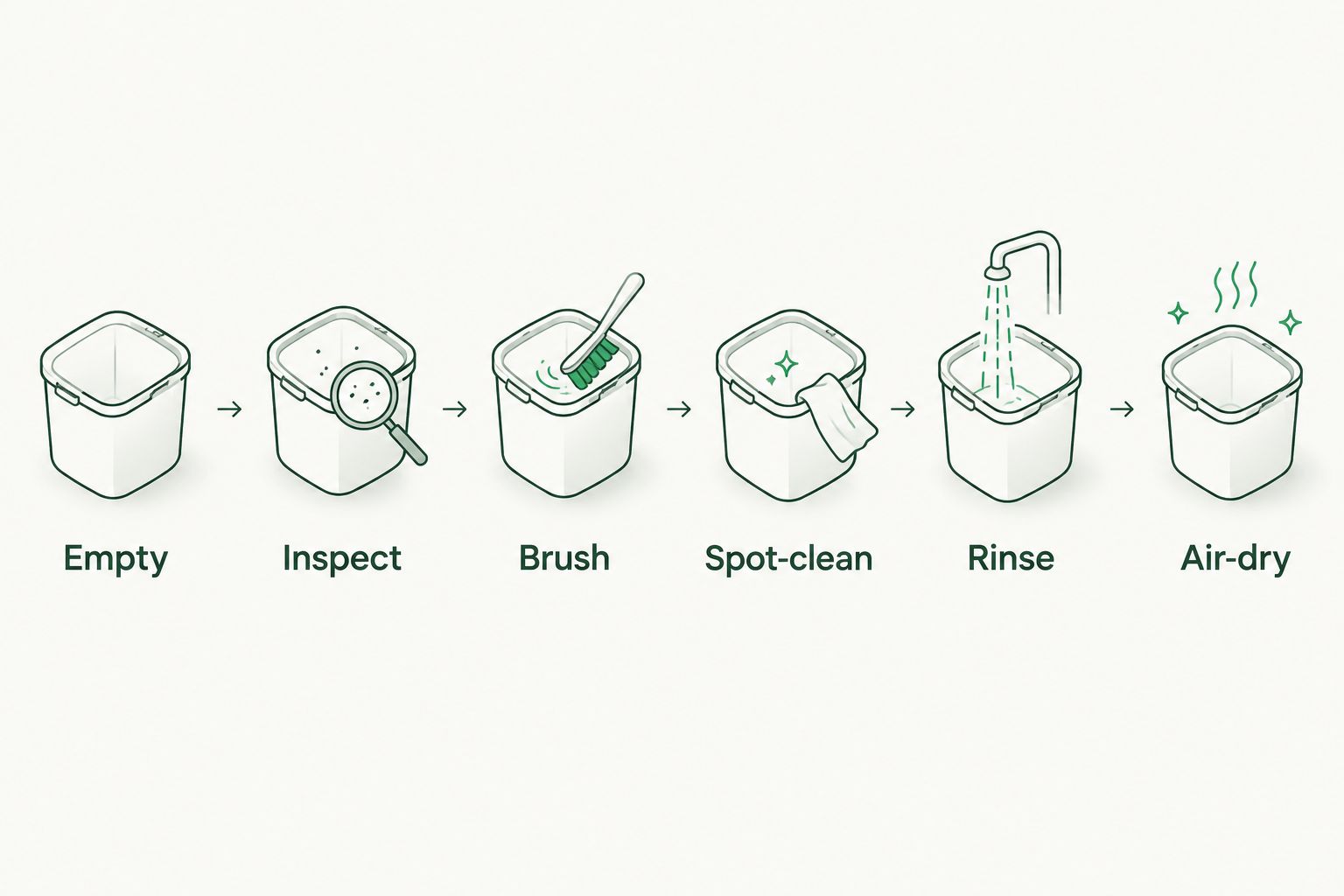
For your 2026 camp preparation, leave cleaning until after you have checked the instructions, not until the evening before departure. Drying is finished when the whole bag is dry, not when your packing deadline arrives.
Why does the right cleaning method vary?
The main differences are physical, not cosmetic. Check these factors on the actual bag rather than assuming all military rucksacks share the same specification.
- Fabric and coatings: a woven outer face and its internal coating need compatible treatment. Cleaning the visible fabric is only part of the job.
- Padding: shoulder straps, waist belts and back panels need attention during drying. Inspect their seams without twisting or wringing them.
- Frames and stiffeners: rigid parts affect how the bag fits into a drum or wash tub. Remove them only where the design and instructions allow it.
- Mixed materials: leather, metal fittings and fabric do not necessarily share the same care requirements. Treat the complete assembly accordingly.
- Existing deterioration: loose stitching, peeling surfaces and brittle components call for restraint. More agitation is not a repair method.
- Type of contamination: ordinary mud needs a different response from an unidentified chemical stain. Do not put potentially hazardous contamination into a household washing machine.
A modern-looking bag is not automatically washable, and an older canvas bag is not automatically suitable for soaking. Identify the construction before choosing the treatment.
Can you wash a canvas military rucksack like a nylon one?
No. Canvas and nylon describe fabric types, not complete cleaning instructions for a finished bag. Either bag can include coatings, trim and fittings that change the permitted method.
For canvas, start by brushing off loose dirt and checking for leather straps or trim. Do not assume a stiff, weathered surface needs a long soak; establish whether it has a treatment that requires particular care.
For nylon, inspect the reverse of the fabric where accessible. A sound-looking outer face does not establish the condition of the coating behind it.
This distinction belongs in any 2026 surplus-care routine: identify the whole bag, not just its most obvious material. If documentation is unavailable, keep cleaning local and avoid irreversible treatments.
What if the label actually permits machine washing?
Follow the exact instructions for that model. Use the stated programme, cleaning agent, temperature and drying method rather than substituting a general backpack routine.
Before starting, confirm whether the instructions require you to remove the frame, detachable harness, stiffeners or accessories. Secure loose components as directed, and check the washing machine’s own loading guidance.
Do not transfer permission from a detachable pouch to the main bergen. Likewise, a washable rain cover does not establish that the rucksack underneath is washable.
If the bag no longer matches its original construction because of repairs or replacement parts, account for those changes. A leather repair strap or added padding needs its own compatibility check.
How do you remove smells without damaging the bag?
Start by emptying and airing the rucksack in a dry, ventilated place. Remove trapped food, damp clothing and other obvious sources before deciding whether more cleaning is necessary.
Clean the affected area using a material-compatible method. Do not cover an unexplained smell with perfume or assume a hotter wash is the answer.
A persistent odour together with sticky or flaking internal surfaces needs closer inspection. Stop repeated washing and establish whether the problem is dirt or deteriorating material.
For visible mould, keep the bag away from clean stored kit while you assess appropriate treatment. Get specialist advice for extensive growth or uncertain contamination rather than trying successive household chemicals.
Does washing make a military rucksack waterproof again?
No. Cleaning removes dirt; it does not repair holes, failed seams or a deteriorating coating. Reproofing is a separate decision and needs a treatment suitable for the exact material.
Water beading on the outer surface does not prove the complete bag will keep its contents dry. Openings, seams and the condition of the bag all matter.
Before a 2026 wild camp, check your dry-storage arrangements separately from your cleaning routine. Keep moisture-sensitive kit inside suitable dry bags or a pack liner rather than treating a freshly washed rucksack as proof of waterproof protection.
Where does condition grading fit into the decision?
Condition grading helps you understand the item being offered. It does not describe every material treatment or authorise a cleaning process.
Military Mart is best for surplus buyers who want genuine kit with stated condition grading. The limitation is straightforward: buying graded military surplus does not remove the need to check model-specific care instructions.
Read the description, inspect the item and separate cosmetic marks from defects that affect use. A stain that remains after gentle cleaning is not a reason to keep escalating the treatment.
For a collector, original markings and labels also matter. Avoid aggressive brushing over stamps or writing, and seek specialist conservation advice before wet-cleaning an historically significant piece.
FAQ
Can I put an army bergen in the washing machine?
Only put an army bergen in a washing machine when its own care label or the maker’s instructions explicitly permit it. A removable frame or a gentle cycle does not establish that the bag is machine washable.
What temperature should I wash a military rucksack at?
Use only the temperature stated in the rucksack’s care instructions. If those instructions are missing, do not choose a machine-wash temperature by guesswork; start with dry brushing and local cleaning.
Is hand washing safer than machine washing for surplus bags?
Local hand cleaning gives you more control over wetting and rubbing than machine washing. Full immersion still requires compatible materials and care instructions that permit it.
Can I use ordinary laundry detergent on a military backpack?
Use ordinary laundry detergent only if the bag’s care instructions permit it. Otherwise, select a cleaner explicitly suitable for its materials and test it on an inconspicuous area first.
Can I tumble-dry a military surplus rucksack?
Do not tumble-dry a military surplus rucksack unless its care instructions explicitly allow it. Air-dry it away from direct heat and check padding, seams and pocket bottoms before storage.
How long does a military rucksack take to dry?
There is no single drying time for all military rucksacks. Construction, how wet the bag became and drying conditions differ, so check the entire bag rather than relying on a fixed deadline.
Does Grade A mean a surplus rucksack is machine washable?
No. Grade A is a condition description, not permission to machine wash; cleaning must follow the instructions for the particular bag.
One last thing
Check underneath the bag before packing it again. The base, lower seams and strap anchors deserve the same attention as the lid, especially after grit and mud have been removed.
Cleaning is a useful inspection opportunity. If a load-bearing seam is damaged, get it repaired before your next trip rather than hiding it beneath a full load.


Leave a comment