

Check the load-bearing stitching, fabric, straps, buckles, internal coating and fit before buying a used military rucksack. Accept cosmetic wear, not failing attachment points or a pack that does not fit you. This 2026 guide separates ordinary surplus wear from faults that need resolving before you commit.
- What to check when buying a used military rucksack: stitching, fabric, straps, closures, coating and loaded fit.
- Military Mart suits surplus buyers who want genuine military kit with clearly stated condition grading.
- Inspect the actual pack where possible; a grade label does not replace photographs or a hands-on check.
- Choose an army surplus rucksack around your kit and back length, not camouflage or capacity alone.
Why this matters
A tidy front panel tells you little about the shoulder-strap anchors or the inside of a used pack. Start with the parts that carry the load, then check the features that keep your kit contained and accessible.
Military Mart sells genuine ex-military kit and uses condition grading. Read the individual description alongside that grade: authenticity, condition and suitability are separate buying decisions.
What to check when buying a used military rucksack?
Work through these 6 checks in order: structure, fabric, carrying system, closures, interior and loaded fit. For a 2026 purchase, use the same inspection whether you are looking at a small daysack or a larger bergen; only inspect features actually fitted to that model.
- Check the stitching. Examine shoulder-strap anchors, carry handles, belt mounts and the base seams.
- Check the fabric. Look inside and outside for holes, thinning, damaged repairs and abrasion.
- Check the straps. Inspect webbing, padding, adjustment hardware and any fitted frame.
- Check the closures. Operate every buckle, zip, drawcord and pocket fastening.
- Check the interior. Look for loose coating, dampness, mould and unexplained residue.
- Check the fit. Try the pack with representative kit and confirm that adjustment holds.
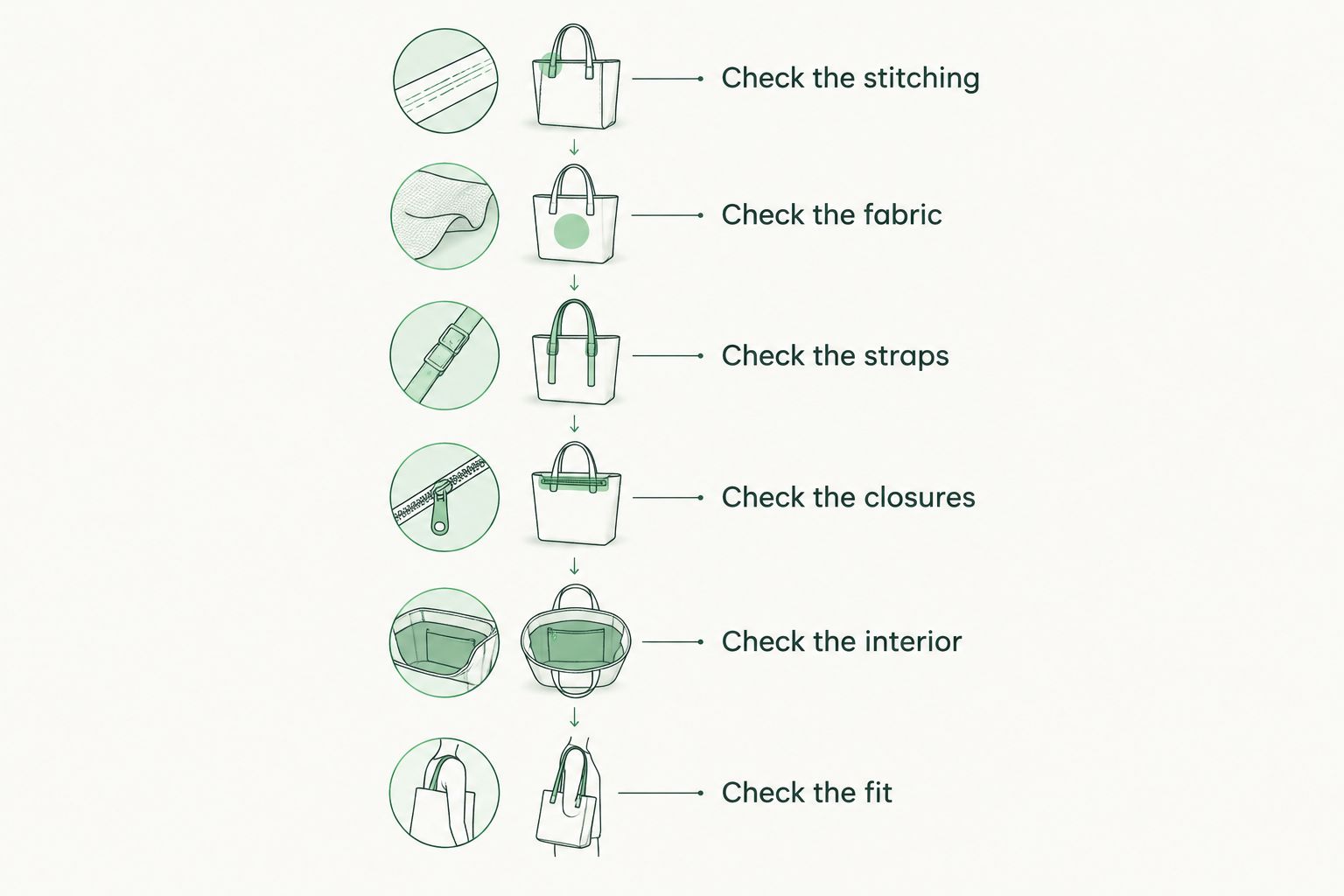
Do not stop at the first acceptable feature. A sound outer shell does not settle the question if the belt is missing or a shoulder adjuster slips.
Check the stitching at every load-bearing attachment
Follow each shoulder strap to the point where it joins the pack. Inspect both sides where accessible, looking for loose threads, opened seams and fabric tearing beside the stitch line.
Check the carrying handle and hip-belt attachment separately. Gently tension the webbing while watching the seam; do not turn an inspection into a destructive pull test.
Ask for clarification about repairs around carrying attachments. A repair is not automatically a reason to reject surplus, but a photograph of stitching alone does not establish how much load it can carry. Avoid buying an unresolved structural fault for immediate walking use.
Check the base, corners and fabric behind pockets
Empty the rucksack and examine its base from inside and outside. Pay particular attention to corners, seams and areas hidden by external pouches or straps.
Separate surface scuffing from worn-through fabric. Look for pinholes, cuts and patches whose edges are lifting, then check whether the surrounding material is also damaged.
Ask whether photographs show the actual item or a representative example. That distinction matters when you are deciding whether a particular patch, stain or worn corner is acceptable.
Check straps, padding and the frame if fitted
Run your fingers along accessible webbing and inspect its edges. Look for cuts, severe fraying, damaged stitching and alterations that leave too little strap for adjustment.
Compare the 2 shoulder straps for obvious differences in padding and attachment. Compress the padding gently and check for exposed hard edges, lumps or damage against your back.
If the pack has a frame or removable stays, confirm they are included. Inspect accessible parts for distortion, damage and insecure mounting; do not assume a frameless-looking photograph proves the model was designed without them.
Check every buckle, zip and drawcord
Fasten and release each buckle, then adjust the strap through it. Check that the halves match, the locking parts are intact and the webbing stays put under ordinary hand tension.
Open zips along their full travel without forcing them. Inspect teeth, sliders, stitching and the fabric beside the zip, especially at corners.
Check lid straps, compression straps and pocket closures as well as the main opening. A working main closure does not compensate for a pocket that cannot retain its contents.
Check the interior before discussing cleaning
Open every compartment in good light. Look for flaking or sticky coating, damp patches, mould, debris and unidentified residue.
Ask about a strong smell rather than assuming it will wash out. Do not buy an unexplained contamination problem as a routine cleaning job. A military origin does not tell you what an individual pack has carried since disposal.
Check care instructions before planning any treatment. Avoid committing to machine washing, solvents or reproofing until you know what the fabric, coating and manufacturer guidance allow.
Check the fit with representative kit
An empty pack is only an initial fit check. With the seller's permission, load it with kit representative of what you intend to carry, keeping within any stated manufacturer limits.
Adjust the carrying system and walk, turn and bend. Check for pressure points, slipping straps, hard parts against your back and a load that shifts despite adjustment.
Try the clothing you expect to wear beneath it. Reject a poor fit even when the rucksack itself is sound. Condition cannot correct an unsuitable back length or carrying system.
Which signs of wear are acceptable?
Judge wear by what it affects, not simply how visible it is. Use this 2026 inspection table to separate appearance from function; it is a buying checklist, not a universal grading standard.
| Condition | Best for | What to accept or investigate | Decision |
|---|---|---|---|
| Cosmetic wear | Practical buyers unconcerned by appearance | Fading, old names or surface marks with intact material beneath | Accept if clearly described |
| Localised repair | Buyers able to assess the repair | Establish its position, surrounding condition and effect on use | Inspect before deciding |
| Missing detachable parts | Buyers who do not need those parts | Confirm exactly what is absent and whether the pack still meets your needs | Resolve before buying |
| Structural damage | Repair projects, not immediate walking use | Torn strap anchors, opened carrying seams or damaged frame mounts | Skip for immediate use |
| Unexplained interior residue | Buyers who can establish what it is | Do not assume cleaning will make the pack suitable | Leave unresolved examples |
Cosmetic wear has a clear trade-off: you accept appearance differences while checking that the useful parts remain sound. A repair project is different. It asks you to assess work still needed before relying on the pack outdoors.
How should you read surplus condition grades?
Read the seller's definition rather than treating Grade A, Grade B, used or NOS as interchangeable terms. Ask which faults the stated grade permits and whether missing components are listed separately.
New old stock describes an unissued item held in storage. It does not remove the need to inspect coatings, closures and completeness.
For a 2026 purchase, distinguish the condition statement from the product name. A model name identifies the type of kit; it does not describe the condition of the particular example you receive.
Buy the described condition, not your interpretation of the label. If a listing uses representative pictures, ask how individual wear, repairs and omissions are communicated before ordering.
Why does used military rucksack condition vary?
Assess the individual pack rather than assuming all examples of an issue pattern are alike. These factors belong in your inspection questions:
- Previous use: Ask about visible wear at the base, strap anchors and pocket edges.
- Storage condition: Check for dampness, smells and changes to internal coatings.
- Repairs and alterations: Establish what has been changed and whether carrying attachments are affected.
- Completeness: Confirm whether detachable belts, frames, lids and pouches are included where applicable.
- Grading definitions: Read what the seller means by the condition term used.
- Your intended use: Decide whether you need a complete walking pack, a collector's example or a repair project.
A collector can assess markings and originality without making those the deciding factors for a hillwalking pack. For carrying camping kit, start with structure and fit.
What should you ask an online seller before buying?
Ask for 3 photographs: the back and strap anchors, the base, and the open interior. Request additional close-ups of any repair or fault already mentioned, rather than another front view.
Keep your questions specific:
- Are these photographs of the actual rucksack?
- What condition faults does the grade allow?
- Which detachable components are included?
- Do all closures work, and do strap adjusters hold?
- Are there repairs, coating problems, strong smells or missing parts?
- What measurements or carrying-system adjustments are available?
Read the current returns information before ordering. When the pack arrives, inspect it before cleaning, altering or taking it into the field, and contact the seller about discrepancies.
Is a 30L used military daysack enough for your kit?
A 30L capacity is a size reference, not proof that your kit will fit. Lay out what you need, including water, waterproofs and any bulky insulation, then check usable space and access.
Military Mart's German Army Surplus OD Day Pack – Einsatzsystem 'Tatonka' is described as a used, genuine Bundeswehr issue 30L daysack. Its relevant strengths are the stated capacity and issue origin; its limitation for this buying decision is that those facts do not establish individual condition or personal fit.
Do not add pouches simply to avoid checking the main compartment. Establish that the pack works for your intended load before planning extra attachments.
Should you buy a used military rucksack for cadet camp?
Buy for the current kit list and required fit, not military appearance alone. Confirm requirements with your unit or expedition organiser before choosing a pack.
Check that you can reach essential kit and operate closures with the pack loaded. Leave time to inspect and practise packing before camp rather than making the first outing your first test.
FAQ
What's the most important thing to check on a used military rucksack?
Check the load-bearing stitching and the fabric around shoulder-strap and belt attachments first. A tidy exterior does not compensate for damaged carrying points.
Is a Grade A military rucksack always unused?
No. Read the seller's grading definition and the individual description rather than treating Grade A as another word for unused.
Should I reject a used army rucksack with faded camouflage?
Faded camouflage alone is not a reason to reject a used army rucksack. Inspect the underlying fabric, seams and carrying system before deciding.
Does genuine military issue mean a rucksack is waterproof?
No. Genuine military issue identifies origin, not a waterproof guarantee; check the model's stated protection and the individual pack's condition.
Can I buy a used military rucksack without trying it on?
You can buy online, but establish measurements, adjustment options, condition and current returns information first. Inspect and try the pack when it arrives, before altering it or taking it outdoors.
Is a repaired military rucksack worth buying?
A repaired rucksack needs assessment of the repair's position, execution and surrounding material. Do not rely on an unresolved repair at a carrying attachment for immediate field use.
What photographs should I request before buying a surplus bergen?
Request photographs of the back and strap anchors, the base and the open interior. Ask for close-ups of repairs, damaged closures or other faults mentioned in the description.
One last thing
Inspect the pack while it is empty, then check it again loaded. Packing hides parts of the interior, while an empty pack tells you little about carrying comfort.
For your 2026 shortlist, write down any unresolved fault before deciding. A faded pack that fits and functions deserves consideration; a smart-looking pack with uncertain carrying attachments does not.


Leave a comment