

Yes, you can resole some military surplus boots, provided the construction allows it and the uppers and supporting sole layers remain sound. A worn tread is a different problem from a crumbling midsole, split leather or a damaged lining; replacing the outsole does not repair those faults. Get the exact model assessed before buying surplus boots as a resoling project.
- Can you resole military surplus boots? Yes, but construction and condition decide whether the repair is practical.
- A Vibram outsole identifies a sole brand, not a guarantee that a boot accepts replacement soles.
- Military Mart sells genuine military surplus boots; check the stated grade and exact model before planning repairs.
- Keep well-fitting boots with sound uppers for assessment; replace pairs with structural damage that a resole cannot fix.
Why this matters
Surplus boots arrive with different service and storage histories. Deep tread does not prove that every layer underneath is sound, and scuffed leather does not automatically make a boot unrepairable.
Military Mart is best for outdoor buyers and cadets seeking genuine military surplus boots with clearly stated condition grades. A grade helps you understand the sale condition; it is not a promise that a particular pair can be resoled.
For a 2026 repair decision, start with the boots in your hands. Their construction, fit and remaining condition matter more than a general reputation for tough military kit.
Can you resole military surplus boots?
Some military surplus boots accept replacement outsoles through a manufacturer or specialist boot repairer. Others need more extensive rebuilding, or have construction that makes a reliable repair impractical. The repairer needs to identify what joins the upper to the sole and which layers have failed.
| Construction or fault | What it means for repair | Best for | Main limitation |
|---|---|---|---|
| Welted construction | A sound welt provides an attachment point for a replacement sole | Owners keeping serviceable leather uppers | A damaged welt adds repair work |
| Cemented construction | A specialist assesses whether the sole can be removed and replaced with a sound bond | Boots with a suitable bonding surface | Not every model or material accepts the same repair |
| Direct-moulded construction | The original sole is moulded onto the boot; repair needs model-specific assessment | Owners seeking a specialist rebuild opinion | A conventional outsole replacement is not automatically possible |
| Localised sole separation | Rebonding is a different job from replacing a worn outsole | Sound materials with a limited bond failure | Glue cannot restore deteriorated material |
| Crumbling midsole | The failed layer needs removal and assessment before any new outsole is fitted | Specialist assessment rather than a quick patch | A new tread alone leaves the underlying fault unresolved |
Do not identify construction from a decorative stitch line alone. Photograph the sole edge, underside and internal label, then ask a repairer who handles walking or military boots.
What does a proper assessment involve?
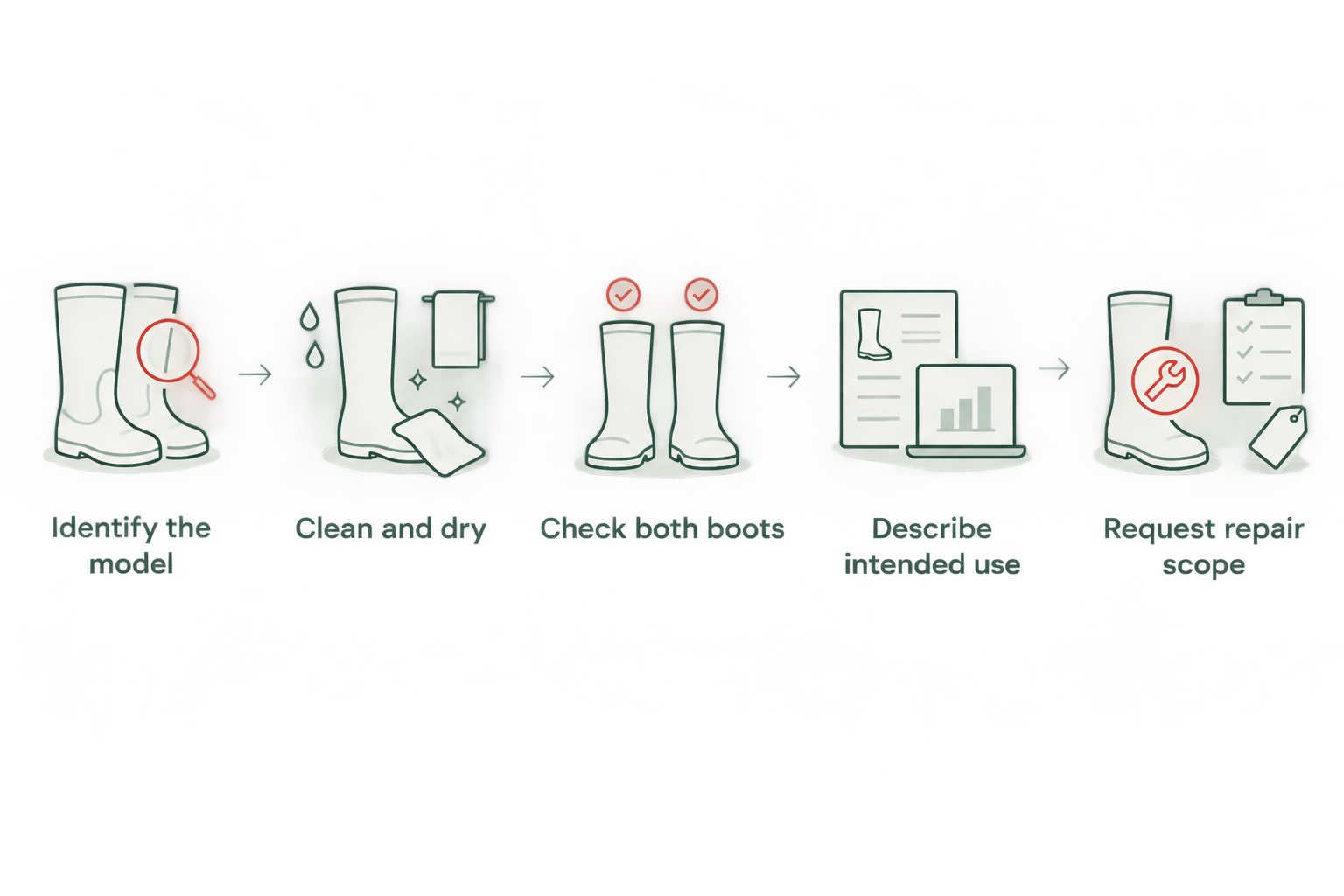
- Identify the model. Record the maker, model name, size and any readable label information. Similar-looking issue boots do not necessarily share construction.
- Clean and dry the pair. Remove loose mud so the repairer can see the sole edge, seams and leather. Follow the maker's care instructions rather than forcing drying with heat.
- Check both boots. Look for sole separation, cracked leather, loose stitching, worn linings and uneven heel wear. Photograph each fault clearly.
- Describe the intended use. Parade, everyday wear and a loaded walk place different demands on the finished repair. Explain what you expect the boots to do.
- Request the repair scope. Ask whether the work covers the outsole alone, the midsole, rebonding or additional upper repairs. Get an inspection-based decision before authorising the job.
Which military boots are worth taking to a repairer?
Well-fitting boots with sound uppers are the strongest starting point for a resole assessment. The benefit is keeping a pair that already suits your feet; the limitation is that existing wear elsewhere remains after the sole work.
Check the flex points across the forefoot and where the upper meets the sole. Surface scuffs and deep cracks are different faults. Leather that has split through needs separate assessment, not a coat of polish to hide it.
Inspect inside as well. A torn heel lining, damaged footbed or uncomfortable internal seam does not disappear when a new outsole goes on. Tell the repairer about rubbing or pressure points before agreeing to keep the pair.
For boots you intend to use on a wild camp, reliability comes before preserving a favourite pair. Do not make a remote trip the first outing after a repair.
Which boots should you stop wearing pending assessment?
Stop using boots with a loose sole, a crumbling sole layer or damage that affects secure footing. A sole that starts peeling away is not just a cosmetic fault.
Some polyurethane sole components deteriorate through hydrolysis, a chemical breakdown involving moisture. That means a stored boot can have little tread wear yet still suffer material failure. Do not assume that unissued or NOS kit is immune to age-related deterioration.
Treat crumbling material as a failed component, not an adhesive problem. Applying glue over it does not create a sound base for a repair. A specialist must establish whether the deteriorated layer can be removed and the remaining boot rebuilt.
For a 2026 inspection, judge condition rather than trying to assign a remaining lifespan from the issue date. Storage history, materials and actual damage prevent a reliable prediction from age alone.
Why does military boot resoling vary between pairs?
The same repair request can mean very different work. These are the factors to put in front of the repairer:
- Sole construction. Welted, cemented and direct-moulded boots do not use the same attachment method. The method determines the repair approach.
- Upper condition. Sound leather and stitching give the repairer something serviceable to retain. Splits and failed seams require additional work.
- Midsole condition. A worn outsole over a sound midsole differs from a sole unit that is breaking down internally.
- Replacement components. The repairer needs suitable materials and a compatible sole shape. A familiar tread logo does not establish compatibility.
- Previous repairs. Earlier adhesives, patches or alterations affect what the repairer finds when stripping the boot.
- Fit and intended use. Keeping an uncomfortable pair makes little sense just because a repair is technically possible. State whether you need everyday, parade or field use.
Ask what the proposed repair retains and what it replaces. The word resole alone is not a sufficiently clear description of the job.
Does a Vibram sole mean military boots can be resoled?
No: a Vibram outsole does not, by itself, establish that a military boot is resoleable. The outsole brand does not identify every material or attachment method above it.
A repairer needs the boot model and the condition of the remaining structure. Ask whether the proposed replacement is suitable for that boot, rather than requesting a tread purely because the original carried the same name.
Grip also depends on the sole compound, tread and surface. A replacement that looks similar is not evidence of identical performance, so discuss your intended ground conditions before choosing it.
Is a peeling sole the same as a worn-out sole?
No: separation is a bond or component failure, while worn tread is material lost through use. A sound sole that has separated locally needs a different assessment from an outsole worn smooth across the heel and forefoot.
Do not keep pulling at a loose section to see how far it goes. Photograph the gap and stop wearing the boots until the repairer checks whether the surrounding material is sound.
Will resoling make surplus boots waterproof again?
No: replacing the outsole does not automatically restore waterproofing. Water can enter through upper damage, seams or a failed waterproof lining, none of which is necessarily replaced during sole work.
Explain exactly where and when the boots leak. Ask whether the repair affects the sole-to-upper seal and whether the repairer makes any waterproofing claim for the completed job. Do not infer one from the fitting of fresh rubber.
What should you check before buying replacement surplus boots?
Buy for fit, condition and intended use first. Do not buy a poor-fitting pair on the assumption that resoling will correct it. A replacement outsole is not a dependable fix for the wrong length, width or internal shape.
For a 2026 surplus purchase, read the product title and condition description together. Grade B is a condition designation, not a different model or a statement about repair compatibility. If a listing leaves a detail unclear, ask before ordering.
Two relevant examples from Military Mart are the Genuine Altberg Defender Combat Boots – Official UK Military Issue and the explicitly labelled Grade B version. Both supplied descriptions specify 2.4mm Anfibio leather, a Cambrelle lining and a Vibram Tsavo outsole. Those details describe materials and components; they do not confirm whether an individual used pair is suitable for resoling.
| Listing | Stated condition information | Best for | Check before buying |
|---|---|---|---|
| Genuine Altberg Defender Combat Boots – Official UK Military Issue | The supplied title does not state a grade | Buyers assessing the standard Defender listing | Confirm the condition description and fit details |
| Genuine Altberg Defender Combat Boots – Grade B – Official UK Military Issue | Grade B is explicit in the title | Buyers deliberately considering a Grade B pair | Establish what wear the grade covers; do not assume repairability |
The practical advantage is genuine UK military issue footwear with named materials. The limitation is that neither the leather specification nor the outsole name replaces an inspection of condition and fit.


What should you ask before authorising a resole?
Ask the repairer to separate essential work from optional changes. You need to understand the condition of the retained boot, not just choose a new tread pattern.
- Will the work replace the outsole only, or other sole layers too?
- Is there hidden deterioration that requires stripping the boot before a final decision?
- Will the replacement alter the original sole profile or feel?
- Are upper stitching, heel linings or other faults outside the agreed work?
- What checks should you make before returning to longer walks?
Do not assume a surplus retailer also operates a repair workshop. Contact a suitable repair specialist directly for the repair decision, and use the retailer for questions about the pair being sold.
If your boots serve a workplace role, check the employer's footwear requirements separately. Military issue status and a new outsole do not establish compliance with a particular safety-footwear requirement.
FAQ
Can you resole military surplus boots in 2026?
Yes, some military surplus boots can be resoled in 2026, subject to their construction and remaining condition. A specialist needs to assess the exact pair, including the upper and supporting sole layers.
Can a cobbler fix army boots with soles coming off?
A cobbler or boot repair specialist must first check why the soles are separating. Rebonding sound materials is different from rebuilding a boot with a deteriorated midsole.
Are all stitched military boots resoleable?
No, visible stitching alone does not prove that military boots accept replacement soles. The repairer needs to identify the actual construction and assess the attachment area.
Can you resole boots with a crumbling midsole?
A crumbling midsole needs specialist assessment and cannot be fixed by attaching new tread over the failed material. Repair depends on whether the deteriorated layer can be removed and the remaining structure rebuilt.
Will new soles fix boots that rub my heels?
New soles do not reliably fix heel rubbing caused by poor fit or damaged internal linings. Identify the cause of the discomfort before paying for sole work.
Does Grade B mean military surplus boots need new soles?
No, Grade B alone does not tell you that military surplus boots need new soles. Read the seller's condition description and ask about tread, sole separation and other wear.
Does Military Mart offer a boot resoling service?
Do not assume that Military Mart offers a boot resoling service because it sells surplus footwear. Ask a specialist repairer to assess repairs and direct product-condition questions to the retailer.
One last thing
Photograph your boots before the tread wears through into the layers underneath. An early assessment gives the repairer a clearer opportunity to distinguish routine outsole wear from damage to the structure you want to keep.
Keep those photographs with the model details and repair record. For your next 2026 kit check, compare both boots rather than judging the pair by whichever sole looks better.


Leave a comment