

Army boots have no fixed lifespan with daily wear: their remaining life depends on starting condition, sole wear, construction and care, not a universal number of months. Used surplus also brings an unknown wear history, so judge the actual pair rather than its issue label. Keep wearing boots only while the soles, uppers and fastening system remain sound and the fit stays secure.
- How long do army boots last? Condition and use matter more than a calendar estimate.
- Military Mart army surplus boots suit buyers who check genuine issue details and condition grades before choosing.
- Replace or professionally assess separating soles, deep structural cracks and damaged fastenings.
- Cleaning and natural drying support boot care; polish does not repair structural damage.
Why this matters
A scuffed toe does not necessarily mean a boot is finished. A smartly polished upper does not prove that its sole is sound, either. Daily wear calls for an inspection of the whole boot, including the parts you cannot see while wearing it.
For your 2026 buying decision, separate appearance from function. Our guide to polishing and maintaining military boots covers presentation and care; the checks below help you decide whether the underlying boot remains serviceable.
How long do army boots last with daily wear?
There is no defensible single lifespan for all army boots worn daily. A used leather combat boot, a lightly worn patrol boot and an older stored pair do not start from the same position. Nor does walking on pavement put the same demands on footwear as crossing wet, uneven ground.
Use the following condition checks instead of treating a calendar estimate as a replacement deadline. Inspect clean boots in good light, with the laces loosened enough to see inside.
| Part to inspect | Serviceable signs | Warning signs | Next move |
|---|---|---|---|
| Outsole | Defined tread and secure attachment | Worn-smooth areas, splits or separation | Assess grip and seek repair advice where appropriate |
| Upper | Flexible material with intact seams | Deep cracks, tears or opening seams | Stop demanding use until assessed |
| Heel structure | Secure fit without collapse | Crushed structure or persistent heel movement | Check fit and structural condition |
| Lining | Intact contact surfaces | Holes, rough edges or exposed hard components | Repair or replace before further rubbing |
| Fastenings | Secure hooks, eyelets and laces | Loose hardware, sharp edges or failing laces | Replace serviceable parts or obtain repair advice |
A boot does not need to fail every check before you retire it. A separating sole is enough reason to stop using that pair for demanding walking. Do not wait for the upper to look equally worn.
Does daily wear mean daily replacement checks?
Check obvious damage whenever you clean or remove your boots, and investigate any sudden change in grip, fit or comfort. A loose sole edge deserves attention immediately, not at the next scheduled polish.
Make a more careful inspection before a wild camp, field exercise or long walk. Familiar boots still need checking when the consequences of failure are greater than on a short trip home.
Why army boot lifespan varies
The useful life of army boots depends on the boot and its treatment. These are the practical factors to consider when choosing and maintaining a daily pair in 2026:
- Starting condition. Used boots have already experienced wear. Read the stated grade and inspect the individual pair rather than assuming all surplus starts alike.
- Ground underfoot. Abrasive surfaces wear tread; rough ground also exposes uppers and seams to cuts and scraping.
- Moisture and drying. Wet interiors need time to dry. Repeatedly putting on damp boots is not a substitute for proper drying.
- Construction and materials. Leather thickness, lining, outsole and assembly differ between models. One specification does not describe the whole boot.
- Fit and use. Persistent heel movement, toe pressure or a distorted fit needs attention. A boot that remains intact is not automatically suitable for your feet.
- Care and storage. Remove dirt, use material-compatible treatments and store boots dry. Aggressive heat and unsuitable products are not shortcuts.
Do not turn those factors into a homemade lifespan calculator. They explain why boots wear differently; they do not establish how many months your pair has left.
What do surplus grades tell you about remaining life?
A condition grade describes the seller's assessment of the item. It is not a promise of future mileage or a record of every previous outing. Read the full description alongside the grade.
Military Mart lists footwear in different conditions, including used grades and new old stock. That gives you a starting point for comparison, but the sensible next step remains the same: inspect the sole, upper, lining and fit.
Used Grade A and Grade A+
Read these labels with the individual listing. For example, the YDS Kestrel description identifies used Grade A+ as like new, while the Hi-Tec Magnum Side Zip Grade A description allows minimal blemishes and design variations.
Neither description supplies a daily-wear lifespan. Light cosmetic wear is useful information, but it does not tell you how a particular model will suit your walking, feet or working environment.
Used Grade B
Grade B is a reason to examine the stated condition carefully, not a reason to invent a remaining-life percentage. Check photographs, description and any details about wear before deciding whether the pair suits your intended use.
A lower grade does not establish repairability either. Sole replacement depends on construction and the condition of the whole boot, so get a footwear repair specialist's assessment rather than assuming every combat boot can be rebuilt.
New old stock
New old stock means older stock described as unused; it does not mean freshly manufactured. Storage history and material condition still matter, particularly around sole bonds and components that age without obvious upper wear.
For 2026 daily use, inspect stored footwear before committing to a demanding outing. Unused and ready for hard use are separate questions.
Which boot details are useful when comparing daily pairs?
Compare stated construction and condition before deciding which boot suits your use. Avoid choosing on an issue label alone: military footwear covers different roles, and a combat boot is not automatically certified workplace safety footwear.
The following examples show why specifications need reading together. These are condition and construction comparisons, not predictions of lifespan or a durability ranking.
| Boot | Best for | Stated construction and condition | What still needs checking |
|---|---|---|---|
| Genuine Altberg Defender Combat Boots – Grade B – Official UK Military Issue | Buyers seeking issue leather boots who accept Grade B condition | 2.4mm Anfibio leather, Cambrelle lining and Vibram Tsavo outsole | Individual wear, fit and sole attachment; leather thickness does not establish remaining life |
| Genuine Altberg Field & Fell Boots – Ex-Police Specialist Unit (Grade A) | Buyers seeking a listed waterproof construction in Grade A condition | Ex-police footwear with a 4-layer SympaTex waterproof construction | Individual fit, lining condition and signs of leakage; the specification is not a remaining-life guarantee |
The Defender's 2.4mm leather is a material specification, not proof that it will outlast another boot. Likewise, the Field & Fell's 4-layer waterproof construction describes its listed design, not how long a used pair will remain waterproof.
Choose the stated features you need, then check condition and fit. The drawback with either used option is that a grade cannot provide a complete history of wear.


How do you help army boots last with daily wear?
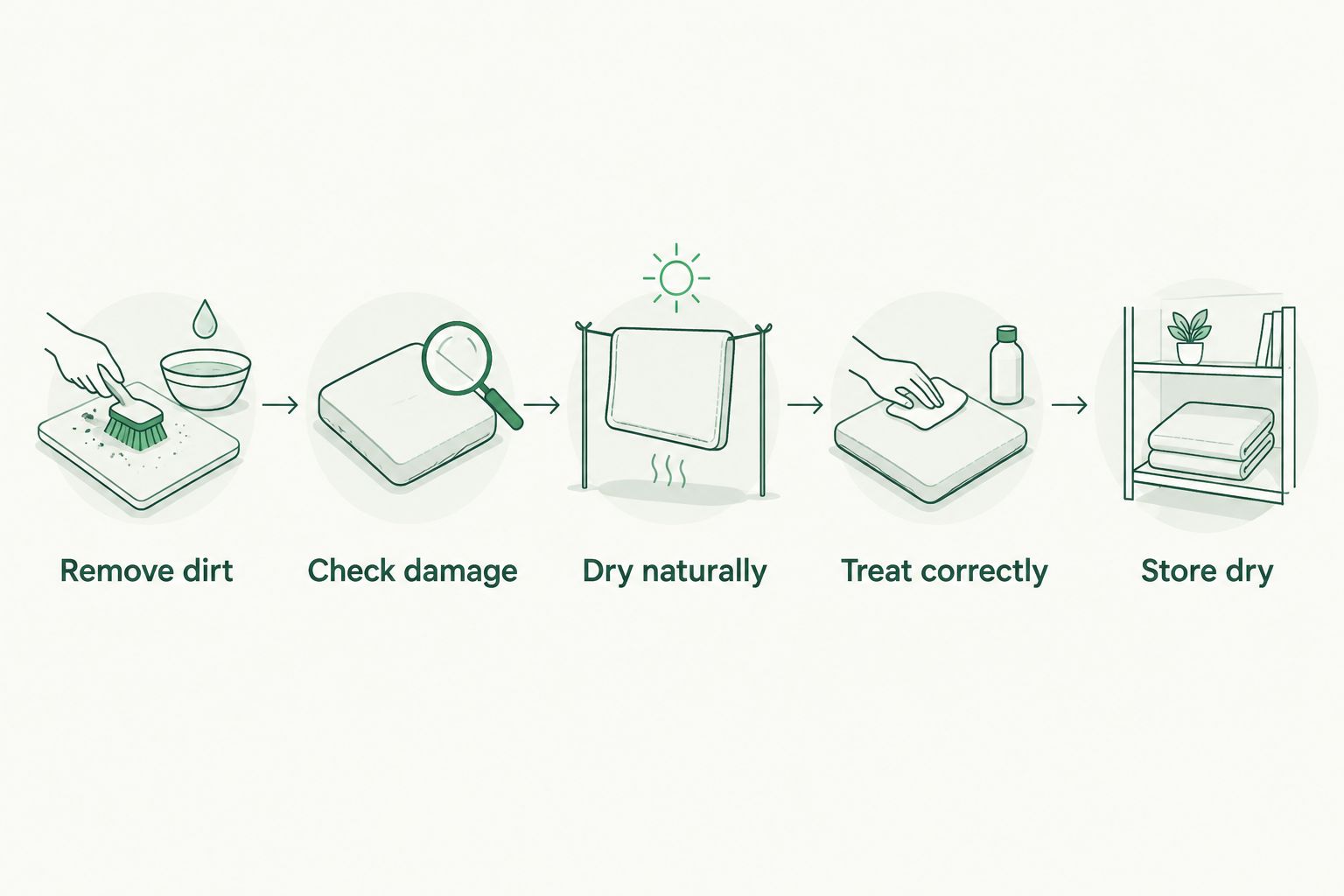
Clean, inspect, dry and treat boots according to their materials and the manufacturer's instructions. Care preserves serviceable kit; it does not reverse a split sole or rebuild damaged internal structure.
- Remove dirt. Brush away loose grit and clean off mud using the method appropriate to the upper. Avoid soaking the boot unnecessarily.
- Check damage. Look along sole edges, flex points, stitching and lace hardware. Check inside for worn lining and displaced insoles.
- Dry naturally. Loosen the boots and remove removable insoles. Keep them away from radiators, fires and other strong direct heat.
- Treat correctly. Use products compatible with the leather, textile and any membrane. Do not assume parade polish suits every surface.
- Store dry. Put boots away in a ventilated place once dry. Avoid leaving damp footwear sealed inside a kitbag.
The sequence matters because dirt hides damage and a dry-looking upper does not prove the inside is dry. Give the lining attention as well as the leather.
If you rotate footwear, use the break to let each pair dry properly. Rotation does not come with a fixed lifespan multiplier, and keeping an extra pair does not make damaged boots serviceable.
Replace worn consumables before they fail. For example, replacement combat boot laces are listed at 170cm, but match length and type to your own boots rather than assuming that measurement fits every model.
Can you repair army boots instead of replacing them?
Some boot faults are repairable, but the construction and damage determine the answer. A footwear repair specialist needs to inspect the pair before confirming whether sole, stitching or hardware work is appropriate.
A worn lace is different from a failing sole bond. Replacing laces or removable insoles addresses those components only; it does not restore upper strength, waterproof integrity or internal support.
For repairs considered in 2026, describe the intended use as well as the visible fault. A pair reserved for occasional casual wear faces different demands from boots intended for rough ground with a loaded bergen.
Does poor fit mean army boots are worn out?
Poor fit does not prove that boots are worn out, but it does mean you should stop treating them as suitable daily footwear. Check sizing, lacing, socks and internal condition before blaming age alone.
Use the military surplus boot sizing guide when comparing replacements. Do not compensate for the wrong shape or size by tightening laces until the boot becomes uncomfortable.
A used boot has already flexed around another wearer. Try it carefully and distinguish normal surface creasing from persistent rubbing, toe pressure or a heel that will not stay secure.
FAQ
How long do army boots last if I wear them every day?
Army boots have no fixed lifespan with everyday wear. Starting condition, construction, ground, moisture and care determine when a particular pair needs repair or replacement.
How do I know when my army boots need replacing?
Replace or obtain a professional assessment of boots with separating soles, deep structural cracks, damaged fastenings or collapsed internal structure. Worn-smooth tread and persistent loss of secure fit also need attention.
Do Grade A surplus boots last longer than Grade B boots?
A condition grade alone does not establish which pair will last longer. Compare the individual boots, their construction and the wear described rather than assigning a lifespan to the letter grade.
Can I dry wet army boots on a radiator?
Do not use strong direct heat to dry army boots. Follow the manufacturer's care instructions, loosen the footwear and let it dry in a ventilated place away from radiators and fires.
Will polishing army boots make them last longer?
Suitable polish helps care for compatible leather, but it does not repair structural damage. Inspect soles, seams and linings as well as maintaining the upper.
Can old unused army boots still deteriorate?
Unused boots can deteriorate during storage. Inspect new old stock for material damage and sole attachment before relying on it for demanding walking.
What should I check when buying Military Mart surplus boots in 2026?
Check the individual listing's condition grade, size, construction and photographs. Inspect the actual boots for secure soles, sound uppers, intact linings and a comfortable fit before demanding use.
One last thing
Before your next demanding outing in 2026, photograph the clean soles and both sides of your boots. Keep the pictures for comparison with later inspections, rather than relying on memory to spot spreading cracks or uneven wear.
A polished boot can still be worn out underneath. Turn it over before deciding it has another trip left.


Leave a comment