

An ex-military Land Rover needs an individual insurance quote in 2026: the premium depends on the vehicle, drivers, storage and intended use, not military history alone. Budget for the policy excess and check whether breakdown recovery, agreed-value cover and modifications are included. Get written terms for the actual vehicle before you commit to buying it.
- How much does it cost to insure an ex-military Land Rover? Get a vehicle-specific quote, not a generic estimate.
- Compare classic vehicle insurance with specialist modified-vehicle cover against your actual use.
- Check agreed value, excesses, mileage restrictions and recovery before choosing a policy.
- Military Mart suits ex-military vehicle buyers who also need genuine surplus kit and restoration supplies.
How much does it cost to insure an ex-military Land Rover?
Your insurer sets the premium from the risk you present and the cover you request. A preserved collector's vehicle used for shows is a different proposal from a modified Land Rover used for commuting and green laning. Neither description gives you a reliable premium without the rest of the details.
Ask for a written breakdown rather than comparing the headline payment alone:
| Part of the quote | What to establish | Why it matters |
|---|---|---|
| Annual premium | Total payment for the full policy term | Gives you a consistent basis for comparison |
| Instalment total | Total payable if you spread payments | Shows the cost of the payment arrangement |
| Compulsory excess | Your required contribution to a covered claim | Affects what you must fund yourself |
| Voluntary excess | Any additional contribution you select | Must remain affordable alongside compulsory excesses |
| Optional cover | Recovery, legal expenses and other additions | Prevents comparing different packages as though they match |
| Fees | Arrangement, amendment and cancellation terms | Matters if the vehicle or your plans change |
Insurance is only part of getting a surplus vehicle onto the road. Establish whether you can legally drive an ex-military vehicle on UK roads separately; an insurance quote does not settle registration, licensing or roadworthiness questions.
Why this matters
A cheap-looking quote is no good if it excludes the journey you actually make. The practical job is to describe the Land Rover accurately, then buy cover that accepts that description.
For a 2026 purchase, arrange insurance enquiries alongside the inspection and paperwork checks. Do not leave them until collection day, when an unusual registration history or undeclared conversion can interrupt your plans.
Which type of insurance should you compare?
Compare policy routes by use, not by the word military. A specialist broker can establish which insurers will consider the vehicle, but the policy schedule and endorsements determine what you have bought.
| Policy route | Best for | Main advantage | Main limitation to check |
|---|---|---|---|
| Classic vehicle policy | Preserved vehicles used mainly for leisure and shows | Can accommodate collector-focused features such as agreed value | Eligibility, mileage and commuting restrictions |
| Specialist modified-vehicle policy | Land Rovers with declared alterations | Gives the insurer a route to assess a non-standard vehicle | Acceptance of each modification and its insured value |
| Everyday road policy | Regular road use where the insurer accepts the vehicle | Can match routine journeys when correctly specified | Acceptance of ex-military identity and unusual specification |
| Laid-up policy | Restoration projects kept off the road | Addresses specified storage risks during a rebuild | Does not replace road-use insurance |
Choose the policy route that fits your use before comparing premiums. None of these labels guarantees acceptance, a particular settlement basis or permission for off-road driving.
Classic vehicle cover: best for preserved leisure vehicles
Ask about eligibility, annual mileage and whether you need access to another vehicle. These are insurer-specific conditions, not rules that apply to every old Land Rover.
The attraction is cover shaped around collector ownership. The trade-off is restrictions: a policy suitable for occasional shows is not automatically suitable for driving to work.
Modified-vehicle cover: best for altered working kit
List engine changes, suspension alterations, seating changes, winches, racks and camper fittings. Describe what is fitted now, including alterations made by previous owners.
Specialist assessment lets you discuss the actual build rather than force it into an inaccurate description. It still requires clear disclosure and written acceptance; specialist does not mean unrestricted.
Laid-up cover: best for restoration projects
Discuss storage cover if the Land Rover is undergoing restoration and will not be driven. Ask which risks, locations and stages of dismantling the policy accepts.
The limitation is straightforward: storage cover is not permission to take the vehicle onto the road. Confirm the change to road cover before any journey, including a post-restoration outing.
Why ex-military Land Rover insurance varies
These are the main details to have ready when requesting a 2026 quote. Give consistent answers to every insurer so you compare the same proposal.
- Vehicle identity and specification. Supply the civilian registration where issued, chassis details, model, body type, engine and seating arrangement. Explain the ex-military background rather than selecting the nearest convenient model.
- Drivers. Declare the main driver accurately, alongside driving history and other requested details. Adding a named driver does not change who actually uses the vehicle most.
- Use and mileage. Separate leisure trips, commuting, business use, shows and green laning. Give an honest annual mileage estimate and ask how to amend it.
- Storage and security. State where the vehicle stays overnight and what security is fitted. Describe a driveway as a driveway, not a garage.
- Condition and value. Explain whether the vehicle is a restoration project, usable survivor or completed rebuild. Support a proposed agreed value with the evidence the insurer requests.
- Modifications and accessories. Include existing alterations as well as planned work. Ask whether accessories count within the vehicle value or have separate limits.
Do not assume any single change guarantees a saving. Ask the insurer to quote the revised proposal and explain any conditions attached to it.
How do you get a quote that matches the vehicle?
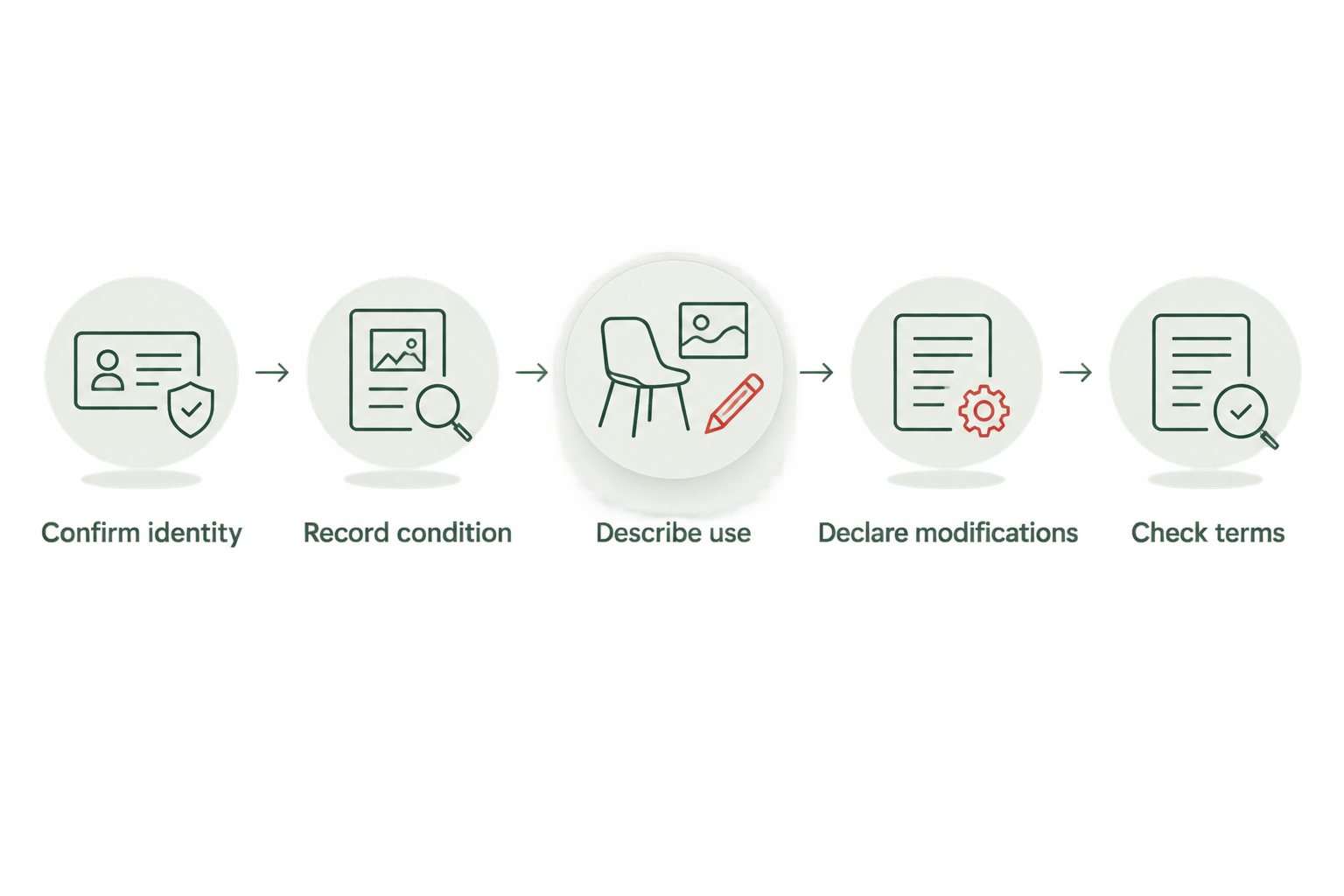
Build a small vehicle file before making enquiries. It saves repeated explanations and gives you a record of what you disclosed.
- Confirm identity. Gather the registration information, chassis details and available release or purchase paperwork. Resolve discrepancies rather than guessing at missing entries.
- Record condition. Take clear photographs of the body, interior, engine bay and alterations. Keep evidence of restoration work and significant components.
- Describe use. Write down the journeys you intend to make, where the vehicle stays and your expected annual mileage. Include trips abroad if relevant.
- Declare modifications. Prepare a written list, including previous owners' changes. Ask how the insurer wants original military equipment distinguished from later additions.
- Check terms. Review the schedule, statement of fact, excesses and endorsements. Correct mistakes before accepting the policy.
Keep copies of the information you submit. If an online form cannot describe the vehicle properly, speak to the insurer or broker and ask for the agreed description in writing.
Is agreed value better than market value?
Agreed value is best for owners who want the vehicle's insured value established in advance, subject to the policy terms. Market-value cover instead assesses value under the policy's settlement wording when a claim occurs.
| Settlement basis | Best for | Advantage | Limitation |
|---|---|---|---|
| Agreed value | Documented restorations and distinctive collector vehicles | Establishes an accepted value before a covered total loss | Requires the insurer's approval and supporting evidence |
| Market value | Owners comfortable with a claim-time valuation | Does not depend on an agreed-value arrangement | The settlement can differ from your purchase price or restoration spend |
Entering a value on a quote form does not, by itself, create agreed-value cover. Ask where the accepted value appears in the documents and what deductions or conditions apply.
For a rebuild completed in 2026, retain photographs and invoices, then ask whether the insured value needs updating. Money spent on restoration is evidence to discuss, not an automatic promise of reimbursement.
What should you check about security and trackers?
Ask about required security before paying for equipment. The insurer must confirm whether it requires a particular device category, installation evidence, subscription or operating procedure.
An existing tracker is not enough on its own: tracker requirements when changing insurers need checking against the new policy's conditions, including whether the fitted device and its ongoing service are accepted. Keep the acceptance with your policy records rather than relying on the previous insurer's position.
Check the wording around keys, overnight parking and storage locations as well. If the vehicle moves from a locked building to an outdoor space, tell the insurer and obtain confirmation of the revised terms.
Security is a contract issue as well as a physical precaution. Follow the requirements you agree to, and ask for clarification wherever the wording is unclear.
Does road insurance cover green laning and recovery?
Road cover does not automatically mean cover for every activity described as off-road driving. Explain whether you mean legal unsurfaced roads, private land, organised events or competition; these are different activities to put to the insurer.
Ask specifically about accidental damage, recovery location and modifications associated with that use. A winch, raised air intake or other fitted equipment does not establish insurance permission for the activity.
Breakdown recovery also needs its own check. Give the provider the vehicle's actual dimensions and weight, then ask about towing, trailers, difficult access and recovery from locations away from ordinary roads.
Mechanical breakdown and accidental damage are not interchangeable. Read both sets of terms so you know which provider to call and what costs remain yours.
Can you reduce the premium without leaving gaps?
Start by removing inaccuracies, not useful protection. Correct mileage, an accurate use description and a complete modification list give insurers the proposal you actually need covered.
Ask for alternative excesses, payment arrangements and cover options in writing. Compare the full result, including what you would contribute after a claim, rather than treating a lower payment as an automatic improvement.
Never describe the Land Rover as standard when it is modified, or leisure-only when you commute in it. The right saving comes from a suitable policy, not an incorrect answer.
Military Mart supplies ex-military vehicles, spares and restoration kit. That makes Military Mart relevant to the vehicle project, but the insurer must confirm insurance acceptance and cover; buying genuine surplus parts does not certify the finished vehicle for a policy.
What should you confirm before collection?
Before collecting a vehicle in 2026, confirm that the cover has started for the correct registration or insurer-approved identity. Check the named drivers, journey type and any conditions that must be met before driving.
Do not assume the seller's insurance or another policy's driving-other-vehicles extension covers collection. Ask the relevant insurer directly and keep its answer.
If you are transporting the Land Rover instead, establish who covers loading, transit and unloading. Clarify responsibilities with the transporter rather than assuming the vehicle is covered throughout.
FAQ
How much does it cost to insure an ex-military Land Rover in 2026?
The cost requires a quote for the actual vehicle, drivers and intended use. Compare the annual total, excesses, accepted modifications and restrictions rather than relying on another owner's premium.
Is classic insurance always cheaper for an ex-army Land Rover?
Classic insurance is not guaranteed to be cheaper or suitable. Check eligibility, mileage and permitted use before comparing it with other accepted policy routes.
Do I need to tell my insurer that my Land Rover is ex-military?
Tell the insurer that the Land Rover is ex-military and describe its current specification accurately. Ask for written confirmation if the quote form does not accommodate its identity or equipment.
Will my insurance cover a winch or camper conversion?
A winch or camper conversion needs to be declared and accepted under the policy. Confirm whether the equipment is included in the insured value and whether the intended activities are covered.
Does an agreed value include everything I spent restoring the vehicle?
Agreed value is the amount accepted by the insurer under its policy terms, not automatically your total restoration spend. Supply the requested evidence and check the accepted figure in the documents.
Can I drive an uninsured ex-military Land Rover home after buying it?
You need valid insurance covering you and the vehicle before driving it on public roads. Arrange cover before collection and check the separate registration, licensing and roadworthiness requirements.
Does Military Mart arrange ex-military Land Rover insurance?
Ask an insurer or insurance broker to arrange and confirm suitable vehicle cover. Military Mart's relevant role is supplying ex-military vehicles, spares and kit, not determining an insurer's acceptance.
One last thing
A declared vehicle value and an agreed vehicle value are not the same thing. Before paying, ask the insurer to point to the exact wording that explains how a total-loss settlement would be calculated.
That check belongs beside the chassis inspection and paperwork review. It tells you whether the cover matches the vehicle you are buying, not just the description entered on a form.


Leave a comment