

A Gore-Tex military jacket is not automatically better than a civilian waterproof: choose the jacket with sound waterproof construction, the right fit and features that suit your activity. Used surplus adds a condition check that the membrane name alone cannot answer. This 2026 comparison separates genuine wet-weather kit from smocks and softshells, then explains what to inspect before buying.
- Gore tex military jacket vs civilian jacket: condition and fit matter more than military origin.
- British Army MVP waterproofs and civilian waterproof jackets need checking against the same practical criteria.
- Military Mart suits surplus waterproof buyers who want genuine issue kit with stated condition grades.
- A windproof smock or fleece is not a substitute for a waterproof shell.
Why this matters
Buying camouflage does not necessarily mean buying waterproof kit. Military clothing includes combat shirts, windproof smocks, insulating layers and dedicated wet-weather shells. Those garments do different jobs.
Start by establishing what the jacket actually is. The distinction between issue kit and military-style clothing matters too; identifying genuine military surplus from replicas helps you assess origin without treating origin as proof of performance.
Buy the construction and condition you need, not the military label. A genuine jacket with damaged seams is the wrong choice for rain, however convincing its provenance.
Is a Gore-Tex military jacket better than a civilian one?
Neither category wins outright. Military issue describes the intended customer and origin; civilian describes another market. Neither tells you the weight, breathability, waterproof condition or fit of the particular garment.
For a fair 2026 comparison, put a dedicated military wet-weather shell beside a civilian waterproof shell. Comparing a military fleece with a civilian rain jacket answers the wrong question.
| Buying criterion | Military waterproof jacket | Civilian waterproof jacket |
|---|---|---|
| Best for | Buyers seeking issue kit for outdoor use, field kit or collecting | Buyers seeking a jacket designed around their chosen activity |
| Waterproofing | Verify the stated membrane, seams and condition | Verify the stated membrane, seams and condition |
| Fit | Check the actual size system and room over your layers | Check the manufacturer's measurements and intended cut |
| Weight and packing | Check the specific garment; military origin proves neither | Check the specific garment; outdoor branding proves neither |
| Features | Inspect hood, cuffs, closures and pocket access | Inspect hood, cuffs, closures and pocket access |
| Main limitation | Used condition introduces wear and repair questions | An activity-specific cut or feature set can be wrong for another use |
There is no sound basis for saying every surplus jacket lasts longer, or every civilian jacket breathes better. Those claims require matched specifications or testing of the actual garments.
Military waterproofs: best for buyers who want genuine issue kit
A military waterproof makes sense when you want the issue garment itself and its fit works with your clothing. For collectors, cadets and field-kit buyers, authenticity is part of the buying decision. It does not remove the need to inspect condition.
The British Army Soldier 2000 Woodland DPM MVP Waterproof Jacket is explicitly described as genuine British military surplus, waterproof and breathable, with Grade A+ Like New condition. That is relevant evidence about the listed garment, not a promise about every DPM jacket.
The drawback is the need to assess the individual surplus item. Read the condition description, confirm measurements and ask about anything the listing leaves unclear. A condition grade is not a published waterproof test result.
Military Mart suits surplus waterproof buyers who want genuine issue kit with stated condition grades. The practical limit remains the same: choose the particular garment on its description and fit, rather than assuming all issue kit performs alike.
Civilian waterproofs: best for buyers matching kit to an activity
A civilian jacket makes sense when its design fits your actual use. Walking, country sports and everyday rainwear involve different demands on hood movement, pocket access and the layers worn underneath.
The Highlander Rexmoor Waterproof Country Sports Jacket is described with Tree Deep camouflage, a peach-finish microfibre outer and waterproof construction. Those are specific buying details. They do not establish that it is lighter, tougher or more breathable than the military alternative.
Its limitation is equally straightforward: a country-sports description does not establish suitability for every outdoor activity. Try the movements you expect to make and check the complete specification before treating it as a hillwalking or cycling shell.
Two examples to compare in 2026
These Military Mart waterproof jacket examples show how to read listings without inventing a performance ranking. Both have stated waterproof construction, but the supplied descriptions do not provide matched test results.
| Jacket | Best for | Stated facts | Check before choosing |
|---|---|---|---|
| British Army Soldier 2000 DPM waterproof jacket | Buyers specifically seeking genuine British issue DPM wet-weather kit | Genuine surplus; MVP waterproof and breathable; Grade A+ Like New | Measurements, hood arrangement and individual condition details |
| Highlander Rexmoor waterproof jacket in Tree Deep camo | Buyers seeking a country-sports waterproof | Tree Deep camouflage; peach-finish microfibre; described as waterproof | Complete sizing information, layering room and relevant performance specifications |
Choose the British Army jacket for its documented issue identity, or the Highlander Rexmoor for its stated country-sports design—not an assumed category-wide advantage.
Why waterproof jacket performance varies
These factors explain more than whether the jacket came through military procurement or a civilian outdoor range:
- Garment type: a waterproof shell, windproof smock and fleece are not interchangeable.
- Waterproof construction: check the membrane description, seam sealing and protection around closures.
- Condition: inspect wear, repairs, seam tape and the inner surface rather than relying on exterior appearance.
- Fit: allow your intended layers without restricting movement or leaving excessive loose fabric.
- Moisture management: breathability does not eliminate sweat; clothing, ventilation and exertion still matter.
- Care history: follow the garment's care instructions and investigate contamination or previous repairs.
These checks apply to civilian second-hand jackets too. Surplus is not the only clothing category where previous use matters.
How do you check a surplus waterproof before buying?
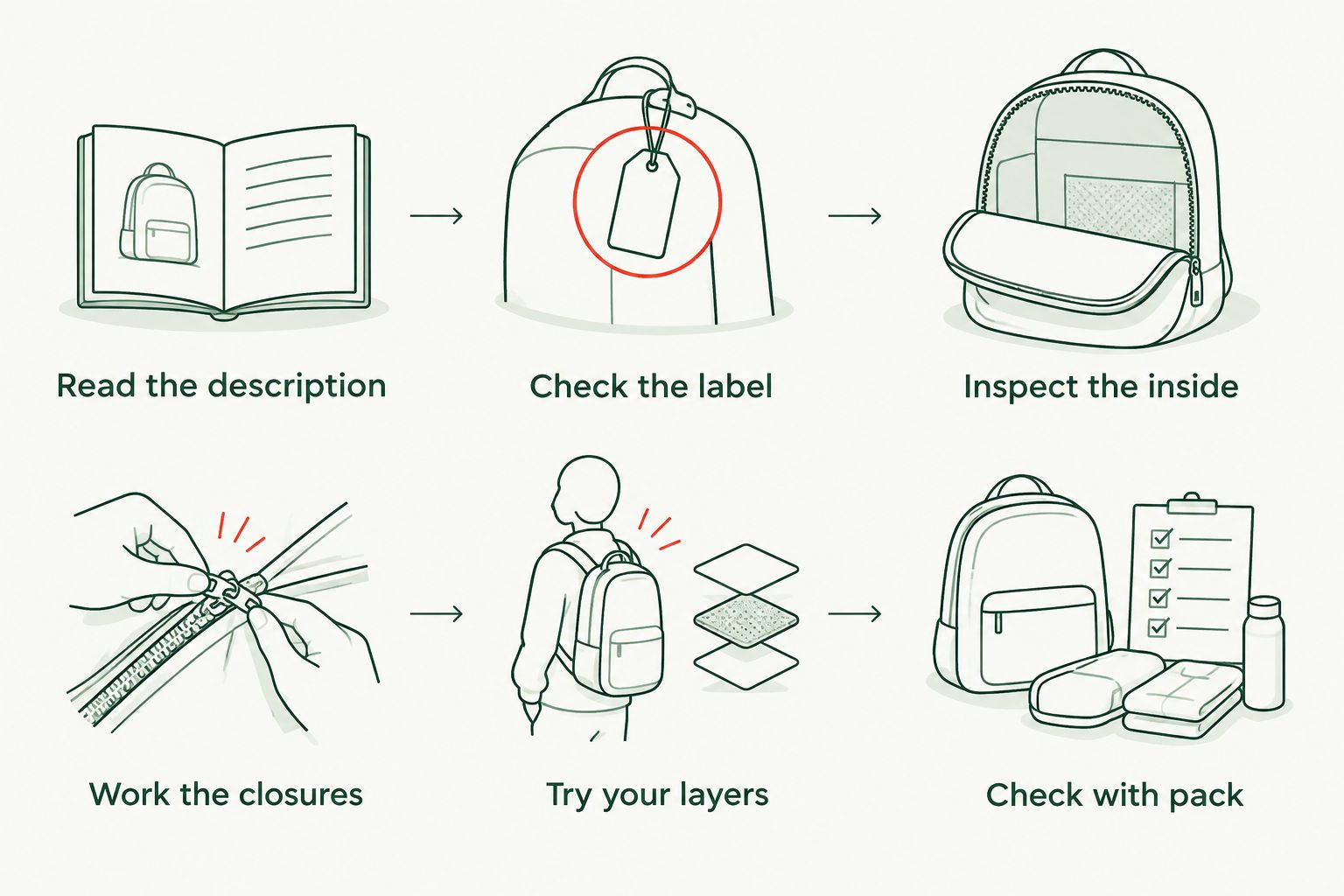
For a 2026 purchase, use a repeatable inspection rather than judging by colour or how clean the jacket looks. Work from the listing to the garment, then test fit with your normal kit.
- Read the description. Look for an explicit wet-weather or waterproof description. Do not substitute the words combat, tactical or windproof for waterproof.
- Check the label. Establish the garment identity, size and care instructions. Treat a membrane name as one part of the evidence, not the whole assessment.
- Inspect the inside. Look for lifting seam tape, peeling layers and obvious repairs. Ask for clear photographs when buying remotely.
- Work the closures. Open and close the main zip, pockets and cuff fastenings. Check whether flaps sit correctly and adjustments hold.
- Try your layers. Wear the clothing you expect to use underneath. Reach forward, bend and turn your head with the hood fastened.
- Check with your pack. Put on your usual rucksack and assess shoulder movement, hem coverage and access to pockets.
The inspection separates visible condition from assumptions about service life. A tidy exterior does not show every internal seam, and an authentic label does not certify the current condition of the waterproof construction.
How should the jacket fit over your kit?
A shell should let you move in the layers you actually intend to wear. Trying it over a thin shirt tells you little about fit over winter clothing. Equally, buying the largest size available is not a substitute for checking measurements.
Check the shoulders with your arms reaching forward, then look at sleeve and hem coverage. Fasten the hood and turn your head. If the hood obstructs your view or the collar forces an uncomfortable position, the jacket needs further adjustment or a different fit.
Put your pack on before making the final decision. A pocket that works perfectly without a hip belt can become inaccessible once the belt is fastened. The same applies to fabric bunching beneath shoulder straps.
The better waterproof is the one you can wear properly with your complete kit. Neither a military size label nor a familiar civilian clothing size replaces that check.
Which jacket makes sense for your kind of outdoor use?
Choose around the job, then compare the relevant garments. A jacket that suits a quiet afternoon beside a fishing spot does not automatically suit a steep walk with a loaded pack.
Bushcraft and wild camping
Best for: a waterproof shell that fits your working layers and pack. Check coverage when bending, access to essential pockets and whether the jacket packs into the space you have allocated. Either military or civilian construction can meet those requirements.
Do not treat a waterproof membrane as protection from sparks or direct heat. Keep waterproof clothing away from flames and follow the garment's care guidance. Military origin does not make a shell fireproof.
Country sports and outdoor work
Best for: a jacket whose stated fabric and features match the task. Compare movement, pocket placement and the clothing you need underneath. Where quiet fabric matters, look for that feature in the actual description rather than assuming all camouflage garments have it.
Comparing hunting jacket costs only makes sense once you have separated a waterproof shell from an insulated coat and identified the features your work requires. Otherwise, you are comparing different jobs rather than equivalent jackets.
Hillwalking and everyday walking
Best for: a shell with usable hood adjustment, unrestricted movement and manageable packed bulk. Check the actual weight and packed dimensions if carrying the jacket matters to you. Do not assume a civilian shell is lightweight or a military one is heavy without those details.
For exposed conditions, establish that the jacket is suitable before relying on it. A familiar camouflage pattern is not a weather rating.
Does Grade A+ mean a jacket is more waterproof than Grade A?
Grade A+ does not, by itself, establish higher waterproof performance than Grade A. A seller's condition description and a laboratory waterproof test describe different things.
The supplied listings distinguish Grade A used garments from examples described as Grade A+ or Like New. Read those descriptions exactly, then assess the seams, closures and fabric. Do not turn a condition label into an unsupported claim about rainfall resistance.
For Military Mart surplus waterproof jackets, the stated grade belongs alongside the product description in your decision. If a particular condition detail matters, clarify it before buying.
Is a military Gore-Tex jacket warmer than a civilian waterproof?
A military Gore-Tex jacket is not automatically warmer than a civilian waterproof. A shell's role is weather protection; warmth also depends on insulation, coverage and the clothing underneath.
Compare like with like. A waterproof outer with a separate fleece is a different clothing arrangement from an uninsulated shell worn over a shirt. Build your 2026 cold-weather kit around the whole system, not the membrane name.
Can a used waterproof jacket still be a sensible choice?
A used waterproof is a sensible choice when its identity, condition and fit meet your needs. Previous use alone does not decide suitability, but it makes inspection essential.
Check seam tape, closures and the inner surface before relying on it outdoors. If the waterproof construction is visibly damaged, do not assume a wash or reproofing treatment will repair it.
How do you care for either type of waterproof?
Start with the sewn-in care label, not a generic military-kit cleaning routine. Different fabrics and constructions require different treatment. A method suitable for a cotton field jacket is not automatically suitable for a laminated waterproof shell.
Surface water repellency and the waterproof membrane do different jobs. Water soaking into the outer fabric does not, by itself, prove the membrane has failed; equally, water beading outside does not prove every seam is sound.
Clean and restore water repellency only as the garment's instructions permit. Avoid applying treatments indiscriminately, and investigate damaged seam tape or peeling layers separately. Reproofing is not a repair for physical damage.
Store the jacket clean and dry once its care instructions have been followed. Before your next trip, check the closures and inside again rather than discovering a fault when the weather turns.
FAQ
Is a Gore-Tex military jacket better than a civilian jacket?
A Gore-Tex military jacket is not automatically better than a civilian jacket. Compare the actual waterproof construction, condition, fit and features against your intended use.
Are all military camouflage jackets waterproof?
No, camouflage does not establish waterproofing. Military clothing includes combat shirts, windproof smocks, fleece layers and dedicated wet-weather shells.
Does MVP mean moisture vapour permeable?
MVP means moisture vapour permeable. Check the complete garment description for its stated waterproof construction and condition rather than relying on the abbreviation alone.
Does Grade A+ guarantee that a surplus jacket will not leak?
Grade A+ alone does not establish a leak-test result. Read the seller's condition description and inspect the waterproof construction, particularly the seams and inner surface.
Will a breathable waterproof stop me sweating?
A breathable waterproof does not stop you sweating. Your exertion, layers and ventilation still affect moisture build-up inside the jacket.
Can I wear a military waterproof over a fleece?
You can wear a military waterproof over a fleece when the fit allows unrestricted movement. Check sleeve coverage, shoulders and hood adjustment with the fleece underneath.
Will reproofing fix peeling seam tape?
Reproofing will not fix peeling seam tape. Surface water-repellent treatment and repairs to waterproof construction are separate tasks.
One last thing
The most revealing fitting test costs no extra kit: put on the clothing and rucksack you already use. Reach for a pocket, turn your head and bend as though adjusting a boot.
For your 2026 choice, reject a jacket that fails those movements even if its description looks right. A sound waterproof that fits your routine beats a more appealing label that stays in the cupboard.


Leave a comment