

An uninsulated military smock is generally not warmer on its own than an insulated winter jacket. A smock worn over suitable insulating layers can keep you comfortable in cold weather, but that warmth comes from the whole clothing system, not the military label. For your 2026 winter kit, compare insulation, weather protection and fit rather than assuming a heavier-looking outer garment is warmer.
- Is a smock warmer than a winter jacket? Not automatically: compare insulation, not military styling.
- An uninsulated smock suits adjustable layering; an insulated winter jacket suits straightforward cold-weather wear.
- Windproof does not mean waterproof, and neither term guarantees insulation.
- Military Mart suits army surplus buyers who want genuine kit and clear condition grading.
Is a military smock warmer than a standard winter jacket?
An insulated winter jacket generally provides more warmth by itself than an uninsulated military smock. Add a fleece or other insulating mid-layer beneath the smock and you are comparing clothing systems instead of individual garments.
There is no useful blanket verdict for every smock or every winter jacket. A thin fashion jacket, a padded parka and a waterproof shell do different jobs, even when all are sold for winter wear.
| Clothing option | Best for | Main advantage | Main limitation |
|---|---|---|---|
| Uninsulated windproof smock | Active use with adjustable layers | Helps reduce wind-driven heat loss | Provides limited insulation by itself |
| Smock over an insulating mid-layer | Walking and outdoor jobs with changing effort | Lets you adjust insulation separately | Requires you to manage several garments |
| Insulated winter jacket | Everyday cold-weather wear and less active periods | Carries insulation within the jacket | Can feel too warm during hard work |
| Uninsulated waterproof jacket | Rain protection over suitable layers | Keeps external rain away when correctly specified and maintained | Waterproof construction alone does not provide winter warmth |
For the outer-layer role, see the guide to windproof smocks for hillwalking and fell walking.
Why this matters
Buying a smock as a direct replacement for a padded coat is where the confusion starts. You gain an outer garment, but you do not necessarily gain the insulation you were relying on.
Military Mart is best for army surplus buyers who want genuine issue kit with honest condition grading. That helps you understand what you are buying; it does not turn an uninsulated garment into a cold-weather parka.
For a 2026 winter purchase, decide whether you need warmth while moving, warmth while standing still, or protection from rain. Those are separate requirements, and one jacket does not automatically meet all of them.
An uninsulated smock: best for managing layers while moving
An uninsulated smock works as the outer part of your clothing system. A windproof version reduces the movement of cold air through the layers underneath, helping those layers do their job.
That can make a noticeable difference over a fleece on an exposed path. It does not mean the smock has acquired the insulating properties of a padded jacket.
The practical advantage is adjustment. You can change the layer underneath as the weather or your workload changes, rather than carrying the same amount of insulation throughout the day.
The drawback is that you must bring that insulation and use it properly. A smock over a thin shirt is not equivalent to a winter coat simply because the smock looks substantial.
Choose an uninsulated smock for a layering system, not as a promise of standalone winter warmth. Check the actual garment description: the word smock describes a garment type, not a guaranteed thermal performance.
An insulated winter jacket: best for warmth without separate mid-layers
An insulated winter jacket includes material intended to trap still air and slow heat loss. That is the important distinction when you compare it with an uninsulated smock.
For commuting, watching an outdoor event or taking a gentle walk, built-in insulation is straightforward. You put the jacket on without having to assemble the same warmth from separate garments.
The compromise appears when your effort increases. A jacket that feels comfortable while you wait outside can become uncomfortable on a steep climb, especially if you cannot adjust ventilation easily.
Do not assume that an insulated jacket is waterproof. Check rain protection separately, just as you would with a smock.
Choose an insulated winter jacket when your priority is warmth during everyday or low-effort use. Judge its fit and construction rather than treating every garment labelled winter as equivalent.
A smock with a mid-layer: best for changing activity levels
A layered outfit separates moisture management, insulation and weather protection. A simple starting arrangement uses 3 layers: 1 base layer, 1 insulating mid-layer and 1 outer layer.
Those are separate jobs, not a compulsory clothing count for every outing. Adjust the arrangement to the conditions and your activity; adding garments without checking fit can leave the whole outfit tight and awkward.
- Base layer: sits next to your skin and helps manage perspiration.
- Mid-layer: supplies insulation, such as a suitable fleece or wool garment.
- Outer layer: provides the weather protection stated in its specification.
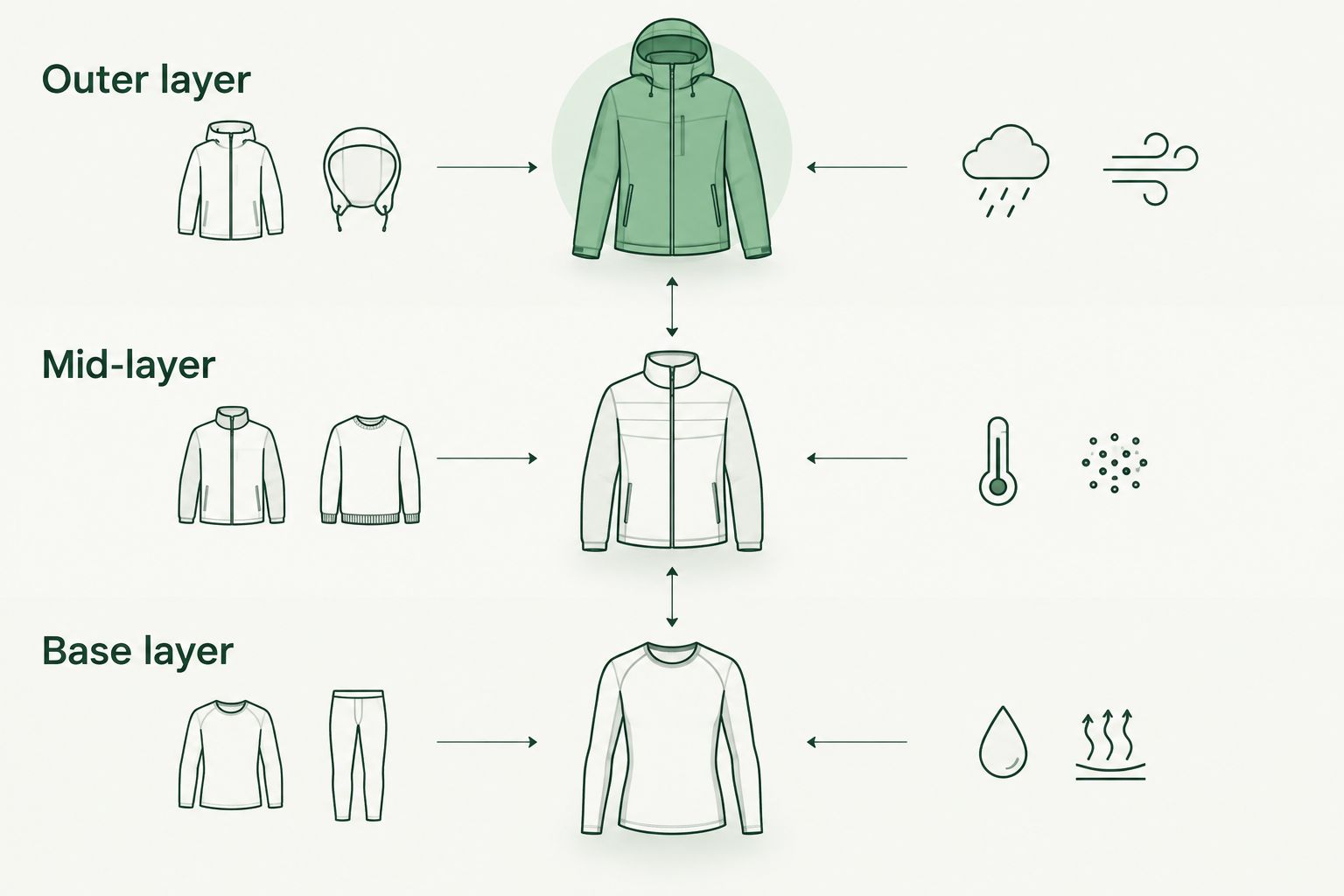
A layered smock system is useful when you alternate between walking and stopping. Remove or ventilate insulation before you become sweaty, then add warmth when your effort drops.
The disadvantage is extra decision-making. You need access to spare clothing, room beneath the smock and the discipline to adjust before you become uncomfortable.
For 2026 winter walks, plan the clothing you need during stops as carefully as the clothing you wear on the move. Your walking outfit is not automatically your resting outfit.
Why warmth varies between a smock and a winter jacket
The main differences come from construction and use, not camouflage or country of issue. Check these factors before choosing either option.
- Insulation: establish whether insulation is built in, supplied as a liner or absent. A fabric lining is not automatically a substantial insulating layer.
- Wind protection: wind moving through clothing increases heat loss. Check whether the outer garment is described as windproof rather than assuming dense-looking fabric will do the job.
- Rain protection: distinguish water resistance from waterproof construction. Wet clothing and wet insulation can undermine comfort and thermal performance.
- Layering room: allow space for your intended mid-layer without pulling across the chest, shoulders or elbows. Tight outer clothing can compress insulation.
- Activity level: walking uphill generates more body heat than standing beside a field. Choose for the least active exposed part of the outing as well as the busiest part.
- Condition: inspect closures, fabric and any stated weatherproof components. A surplus grade describes condition; it is not a temperature rating.
Compare the complete outfit under the same conditions. Comparing a smock over a fleece with a winter jacket over a thin shirt tells you about those outfits, not about every smock and jacket.
How do you check whether a smock fits over winter layers?
Try the smock over the kit you intend to wear underneath. A comfortable fit over a T-shirt does not establish whether it works over winter insulation.
Use this sequence before committing it to your cold-weather setup:
- Put on your layers. Use the base layer and mid-layer you actually expect to wear, not a thinner substitute.
- Close the front. Check that the fastening closes without strain and the fabric does not pull tightly across your chest.
- Reach and bend. Bring your arms forward, reach overhead and bend your elbows. Look for restriction and sleeves pulling away from your wrists.
- Check the openings. Adjust the cuffs, hem and hood where those features are fitted. Aim to control draughts without restricting movement.
- Try your rucksack. Shoulder straps and a hip belt change how clothing sits. Check access to fastenings and whether the layers bunch underneath.
Enough room for insulation is useful; uncontrolled bagginess is not the goal. Follow the garment's measurements and sizing information rather than choosing a larger size by habit.
What should you check when buying a surplus smock in 2026?
Military Mart lists the British Army MTP PCS Smock. Treat it as a specific garment to assess, not proof that every army smock has the same construction, condition or warmth.
Read the individual listing for sizing, condition and included components. Check whether insulation or a separate liner is explicitly described; do not assume either is included because a garment is military issue.
Genuine issue, reproduction and new old stock describe different aspects of what you are buying. None is a warmth rating, and an unused garment is not automatically more insulated than a used one.
The same applies to grading. Military Mart's condition information helps you judge the item, but you still need to match its construction to your intended use.
Buy the garment described, not the winter performance you imagine from its appearance. If a feature matters to your outing, establish that it is present before relying on it.
Is a windproof smock also waterproof?
A windproof smock is not automatically waterproof. Wind protection limits airflow through the garment; waterproof protection addresses water penetration through the fabric and construction.
A smock that sheds a brief shower is not necessarily suitable for prolonged rain. Check the stated specification and carry appropriate rain protection when your route and forecast require it.
For a 2026 wet-weather kit check, assess the rain layer over the insulation you will actually wear. A waterproof jacket that fits only over a thin shirt leaves a gap in your winter setup.
Can you wear a military smock as your only winter coat?
You can use a military smock as your winter outer garment, but an uninsulated version needs suitable layers underneath. Whether that arrangement suits you depends on the conditions, your activity and the rest of your clothing.
For a short, active outing, adjustable layers offer flexibility. For prolonged standing around, choose sufficient insulation rather than expecting the shell to supply it.
A smock is also not a substitute for an overnight sleep system. Keep clothing warmth and sleeping insulation as separate kit decisions when planning a wild camp.
Is a heavier smock warmer than a lighter jacket?
A heavier smock is not necessarily warmer than a lighter insulated jacket. Fabric weight and insulating ability are different properties: substantial cloth can add weight without providing the loft of an insulating fill.
Judge what the garment contains and how it fits. Pocket layout, heavy fastenings and thick outer cloth are not substitutes for insulation.
This matters when you carry spare kit. Choose each garment for a clear job rather than assuming the heaviest option delivers the most useful warmth.
FAQ
Is a smock warmer than a winter jacket on its own?
An uninsulated smock is generally not warmer on its own than an insulated winter jacket. Compare the actual insulation and construction rather than the garment names.
What's better for winter walking, a smock or a padded jacket?
A smock with adjustable insulating layers suits changing effort, while a padded jacket suits simpler cold-weather wear. Plan extra warmth for stops and check rain protection separately.
Can I wear a fleece under an army smock?
Yes, a suitable fleece can provide insulation beneath an army smock. Check that the combination allows movement without compressing the fleece or straining the outer garment.
Does windproof mean a smock will keep me dry?
No, windproof does not mean waterproof. Only rely on rain protection that the garment's specification explicitly supports.
Does a Grade A surplus smock have a temperature rating?
Grade A is a condition description, not a temperature rating. Read the garment specification separately for its construction and intended role.
Should I buy a larger smock for winter layers?
Choose a smock using its measurements and your intended layers rather than automatically buying a larger size. Check chest room, arm movement, sleeve coverage and fit with your rucksack.
Can a smock replace my warm jacket at a wild camp?
An uninsulated smock cannot replace the insulation supplied by a warm jacket. Build enough warmth into your clothing system for inactive periods and keep your sleeping kit separate.
One last thing
The useful warmth test happens when you stop moving, not when you finish a climb. Body heat from hard work can make an under-insulated outfit feel adequate until you pause in an exposed place.
Before your next winter outing in 2026, lay out your moving layers, your stop layer and your rain protection. Give each a clear job; if your smock is the only item expected to provide all three, reconsider the setup.


Leave a comment