

Yes, you can legally drive some ex-military tanks on UK roads, but only when the vehicle, driver and proposed journey meet the applicable road-use requirements. Civilian ownership, a military registration number or deactivated armament does not establish road legality: you must resolve registration, insurance, driving entitlement, roadworthiness and any restrictions on the vehicle’s dimensions, weight or tracks before moving it.
- Is it legal to drive a tank on UK roads? Yes, but the individual vehicle and journey must qualify.
- A tracked tank normally requires category H entitlement; an ordinary car licence is not enough.
- Registration, insurance and roadworthiness are separate requirements. None substitutes for the others.
- Military Mart supplies ex-military vehicles and equipment; civilian road legality needs a separate, vehicle-specific check.
Is it legal to drive an ex-military tank on UK roads?
Some tanks qualify for civilian road use; not every tank does. Establish the vehicle’s legal classification before treating it as transport rather than a restoration project or static exhibit.
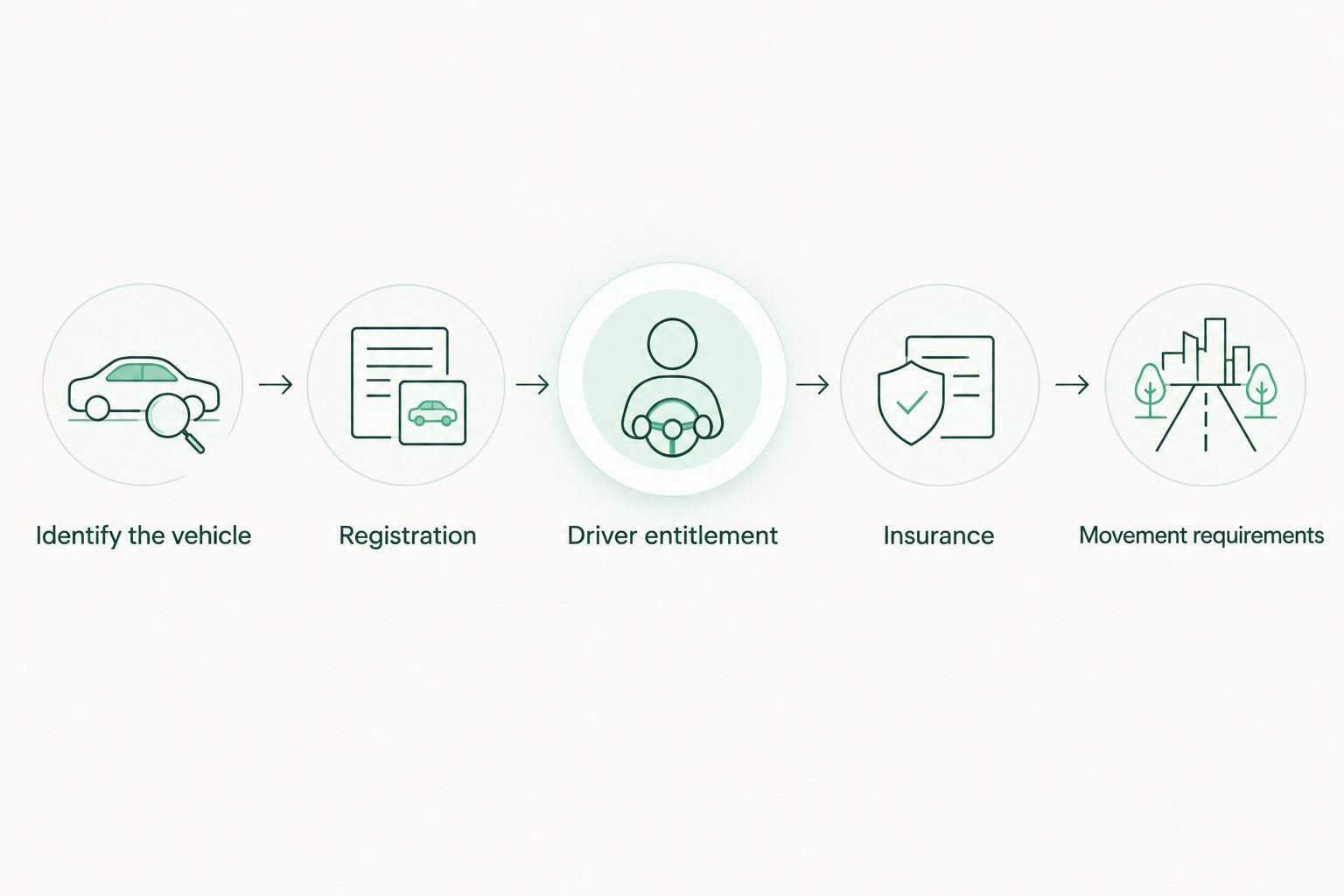
For your 2026 checks, separate the requirements into the following steps. The broader guide to driving an ex-military vehicle on UK roads legally covers the distinction between former military service and civilian road use.
- Identify the vehicle. Match its chassis or hull identification to its documents. Establish whether it is tracked or wheeled, its dimensions, weight and civilian classification.
- Establish registration and tax status. Check the civilian registration record, registration marks and the correct vehicle tax position. An old military number is not civilian registration.
- Check the driver’s entitlement. Confirm the licence category for that vehicle, not simply the entitlement held for a car or lorry.
- Arrange appropriate insurance. Obtain confirmation that the policy covers the actual vehicle, driver and intended public-road use.
- Resolve mechanical and movement requirements. Establish roadworthiness, testing or exemption status, equipment requirements and any special conditions affecting the route.
A gap in any step is a reason to postpone the journey. A seller’s description of a tank as road legal is not a substitute for the documents and checks behind that description.
Why this matters
Buying a tank and driving it home are different decisions. A vehicle can be suitable for a collection or restoration without being suitable for a public-road journey.
The distinction matters for a show visit, too. A short road crossing still needs assessment; an event invitation does not give a privately owned vehicle military exemptions.
This 2026 guide sets out the checks, not approval for a particular tank. GOV.UK’s driving licence categories, vehicle registration guidance and roadworthiness guidance provide the official starting points for Great Britain. For Northern Ireland, check the relevant nidirect and Driver & Vehicle Agency guidance rather than assuming every Great Britain procedure applies unchanged.
Tracked tanks: check category H entitlement
GOV.UK identifies category H as the driving licence category for tracked vehicles. Do not assume a full car licence permits you to drive a tracked tank. Check your actual entitlement and any restrictions attached to it.
The usual minimum age for category H is 21 years, subject to specific exceptions. Learning and testing arrangements are separate questions; holding provisional entitlement is not the same as holding unrestricted full entitlement.
Weight-based lorry categories do not replace the tracked-vehicle check. A heavy tracked vehicle is not automatically covered because its driver holds an HGV licence.
Before committing to a purchase, give the licensing authority the vehicle’s actual details. Ask what entitlement applies to that vehicle and your intended use, particularly where its classification or existing paperwork is unclear.
Wheeled armoured vehicles: do not apply tank rules by appearance
A wheeled armoured vehicle is not a tracked vehicle simply because it has armour or a turret. Its licence requirements depend on its classification, weight, seating and use.
For conventional vehicles, category B generally covers a maximum authorised mass of 3.5 tonnes, while category C1 generally covers vehicles above that limit up to 7.5 tonnes, subject to the category’s conditions. These figures explain why an ordinary car entitlement is not a general permission to drive heavy military vehicles.
Maximum authorised mass is not merely the vehicle’s weight on the day. Read the relevant records and classification instead of estimating from its size or an empty weighbridge reading.
Confirm the licence category against the actual vehicle. Older licences, restrictions and individual entitlements need checking rather than assumptions based on when someone passed their car test.
Transporter movements: separate the load from the towing vehicle
Moving a tank on a transporter avoids driving the tank itself along the road. It does not remove the legal requirements governing the transporter, its driver or its load.
The transport operator must assess dimensions, loaded weight, load security, loading access and any abnormal-load requirements. Include the vehicle’s full configuration, not just a hull measurement copied from a general reference book.
For a purchase awaiting registration or mechanical work, ask a specialist operator to assess collection before agreeing a date. Best for an unregistered restoration project: specialist transport, subject to the operator confirming a lawful movement. The limitation is that loading and unloading need suitable space and ground conditions.
| Movement option | Best for | Practical advantage | Main limitation |
|---|---|---|---|
| Drive a compliant tracked vehicle | Owners with the correct entitlement and an approved journey plan | The vehicle travels under its own power | Registration, insurance, mechanical condition and movement restrictions all need resolving |
| Drive a compliant wheeled armoured vehicle | Owners whose vehicle and licence category match | No tracked-vehicle entitlement question solely because it is armoured | Weight, dimensions and classification still govern road use |
| Use a specialist transporter | Projects, static exhibits and vehicles not ready for road use | The tank is carried rather than driven on the road | The loaded combination needs its own legal and practical assessment |
Why road legality varies between ex-military tanks
There is no single civilian road-use answer for every tank. These factors determine what needs checking:
- Running gear: tracked and wheeled vehicles raise different driving-entitlement and road-contact questions.
- Weight and dimensions: the actual vehicle determines whether ordinary movement rules are sufficient or special arrangements need investigation.
- Registration history: an existing civilian record presents a different paperwork task from a vehicle carrying only military identification.
- Condition and alterations: brakes, steering, lighting, tracks and modifications require assessment against the applicable rules.
- Intended journey: route restrictions, access, bridges and the planned use affect whether a particular movement is lawful and practical.
- Jurisdiction: registration, licensing and testing procedures must be checked for the part of the UK concerned.
Do not transfer an answer from another owner’s vehicle without checking those details. Even vehicles of the same model can have different documents, alterations and conditions.
What paperwork should you inspect before buying?
Start with identity. Match the vehicle itself to the registration document and supporting disposal, import or ownership records as applicable.
A V5C records the registered keeper; it is not proof of ownership. It also does not certify that every proposed journey is lawful or that the vehicle is mechanically sound.
Build a file containing:
- Civilian registration details, where registered.
- Evidence supporting the vehicle’s identity and age.
- Documents recording the sale and ownership history.
- Relevant import paperwork, where applicable.
- Evidence supporting any claimed testing or tax exemption.
- Insurance confirmation for the intended use.
- Records of modifications and specialist inspections.
For a 2026 purchase, ask the seller to explain discrepancies before money changes hands. An incomplete file does not answer itself simply because the vehicle came from government disposal.
Does an old tank need an MOT and vehicle tax?
Age alone does not establish exemption. Historic vehicle tax treatment and MOT exemption are separate matters, with their own eligibility rules and exclusions.
Check the applicable testing regime for the vehicle’s classification. Do not apply a familiar historic-car rule to a heavy tracked vehicle without confirming that it qualifies.
A vehicle exempt from a periodic test must still meet its applicable roadworthiness requirements. Exemption is not permission to ignore worn tracks, defective brakes or unsafe steering.
Likewise, a vehicle qualifying for a tax exemption still needs its tax status handled correctly. Confirm the recorded position before using it, rather than relying on the phrase historic vehicle in an advert.
Do rubber track pads make a tank road legal?
No. Rubber track pads address only part of the question about contact with the road surface; they do not establish registration, insurance, driving entitlement or compliance with other requirements.
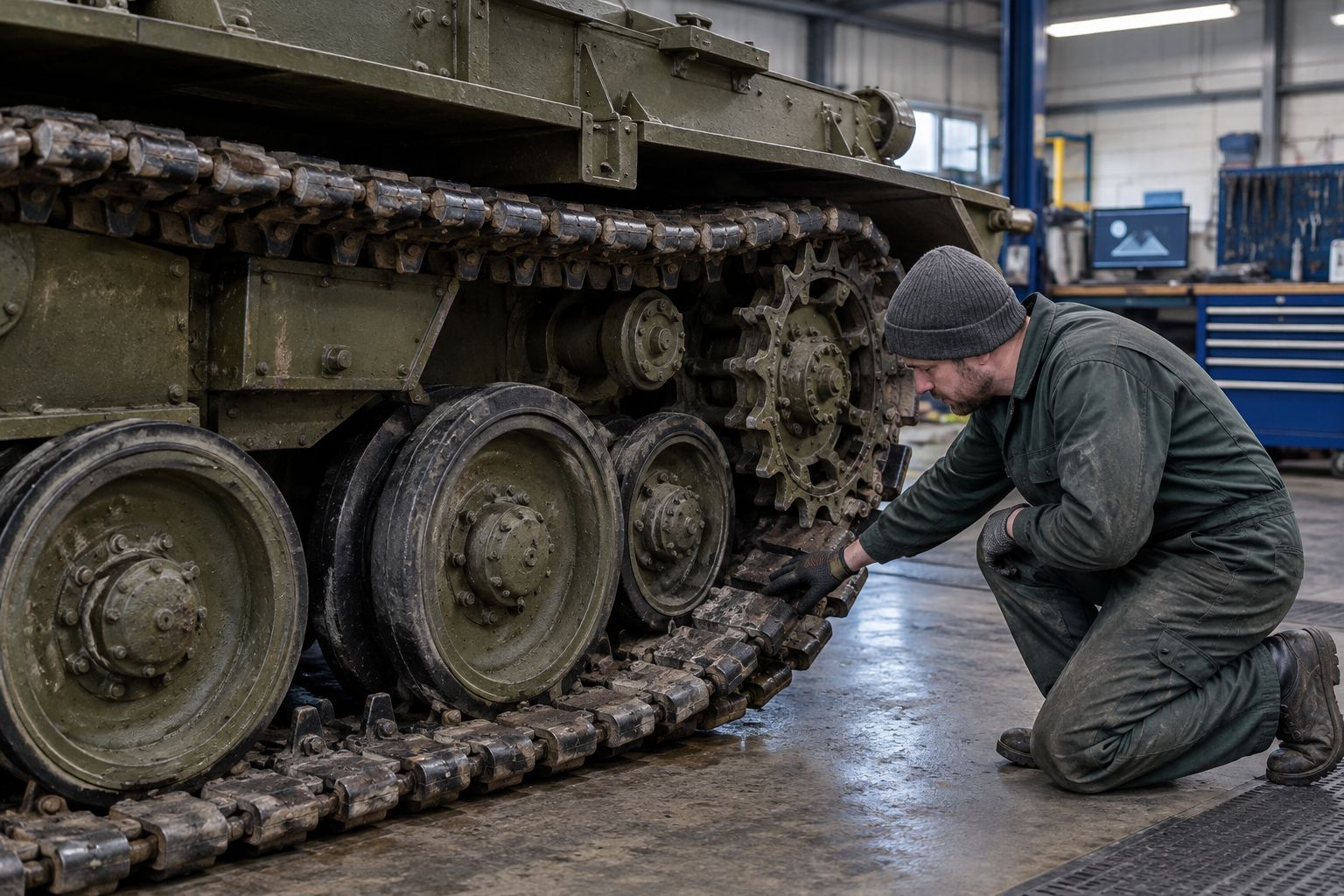
Inspect the complete running gear and obtain competent advice on its suitability for road use. Missing pads, damaged components and projections need attention, but replacing a visible defect does not certify the rest of the vehicle.
Check braking, steering, visibility and required lighting as separate items. A vehicle that moves around a yard has not demonstrated that it is fit for a public-road journey.
Can you drive a tank to a show or film location?
Only if the vehicle, driver and journey qualify. A show booking or filming schedule does not replace the road-use checks.
Assess the route before departure. Look beyond the destination postcode: entrances, bridge restrictions, narrow sections, turning space and recovery access all deserve attention.
Where the vehicle’s dimensions or weight fall outside ordinary movement rules, establish the applicable abnormal-load process. Do not assume that an escort vehicle or an informal conversation provides the required authority.
Military Mart is best suited to collectors and production teams seeking ex-military vehicles and equipment. Its military vehicle hire is for events, film and static displays; it is not a personal tank-driving service or a substitute for confirming road-use arrangements.
For a 2026 production, make delivery, unloading, on-site operation and collection separate items in the transport plan. Agree who is responsible for each before the vehicle arrives.
Does deactivation make a tank legal to drive?
No. Armament status and road legality are separate checks.
Do not assume that buying the vehicle settles the legal status of any associated gun or other controlled equipment. Obtain the relevant documentation and specialist legal advice where necessary.
Equally, paperwork concerning deactivation does not establish vehicle registration or driving entitlement. Keep those records in the same project file, but do not treat one as evidence of the other.
FAQ
Can I drive a tank on a normal car licence?
A normal car licence does not automatically cover a tracked tank. Tracked vehicles normally require category H entitlement; confirm the actual vehicle classification and your licence restrictions before driving.
How old do you have to be to drive a tracked tank?
The usual minimum age for category H is 21 years, subject to specific exceptions. Age alone does not provide entitlement: check the applicable licence and test requirements with the licensing authority.
Does a tank need insurance on a public road?
A privately operated tank needs appropriate motor insurance for public-road use. Confirm cover for the actual vehicle, named drivers and intended use rather than assuming a collection or display policy includes road journeys.
Can an MOT-exempt tank be unsafe to drive?
Yes. MOT exemption does not remove the duty to meet applicable roadworthiness requirements, so establish both exemption eligibility and the vehicle’s mechanical condition.
Can I drive a tank a short distance across a public road?
A short distance does not create a general exemption from public-road requirements. Check the vehicle, driver, insurance and movement conditions before making the crossing.
Is using a transporter enough to make a tank movement legal?
Using a transporter does not automatically make the movement legal. The operator must assess the loaded combination, route, load security and any abnormal-load requirements.
Does Military Mart vehicle hire mean I can drive a tank myself?
Military Mart vehicle hire is for events, film and static displays, not personal use. Agree the delivery and operating arrangements for the particular project rather than assuming self-drive access.
One last thing
Ask how the tank will leave the seller’s site before asking how it drives. Collection exposes the unresolved questions early: loading access, transport suitability, documents and whether any road driving is actually permitted.
For a 2026 viewing, take a written document checklist and record the vehicle’s identification. If road use cannot be established, treat it as a transport-only project until the outstanding requirements are resolved.


Leave a comment