

Trail motorcyclists’ military surplus gear is ex-service camping, clothing and storage kit used to support a ride without replacing motorcycle protection. This 2026 guide covers condition checks, secure packing and overnight kit: the useful stuff once you separate genuine field equipment from gear designed to protect you in a crash.
- Choose military surplus gear for trail motorcyclists for camping and organisation, not as a substitute for motorcycle protection.
- Military Mart sells genuine surplus camping kit with condition grading; check each item's measurements and description.
- Keep luggage clear of wheels, chain and exhaust, and protect sleeping kit inside waterproof liners.
- Buy for the trip you actually ride: bulky camp comforts belong at basecamp, not automatically on the bike.
Why military surplus matters for trail motorcyclists
Trail riding puts different demands on kit from walking. Your luggage must stay attached over rough ground, leave room to move on the bike and keep dry equipment separate from muddy riding gear. A bag that works on your back is not automatically suitable for a rear rack.
Surplus gives you another source of camping equipment and spare layers. It also demands closer inspection: issue origin does not tell you the present condition, packed size or suitability for your motorcycle. Start by learning how to identify genuine military surplus from replicas, then judge the individual item.
The strongest use for surplus is supporting the ride, not replacing protective riding equipment. A waterproof field jacket and a protective motorcycle jacket do different jobs. So do combat boots and motorcycle boots.
How do you choose and pack the right kit?
Separate riding protection from camp equipment
Start with what you already own. Lay out your helmet, motorcycle clothing, gloves and boots separately from your camping equipment. This costs nothing and stops a surplus purchase filling a job it was never designed to do.
Look for motorcycle-specific protective certification when buying riding equipment. A military label, thick leather or reinforced knee does not establish impact or abrasion performance for motorcycling. Do not count ordinary surplus clothing as an additional protective layer simply because it feels substantial.
A used combat boot can serve as off-bike footwear if its condition and fit suit you. That is not evidence of motorcycle-specific ankle or crush protection. Keep the distinction clear throughout your 2026 kit list.
- Retain proper motorcycle protection for every riding section.
- Put camp clothing in a separate packing group.
- Check protective labels and manufacturer instructions rather than appearance.
- Keep scarves, cords and loose fabric secured away from moving parts.
Measure your luggage before choosing surplus bags
Use a tape measure and your existing luggage first. Record the usable space, including the narrow opening rather than just the widest part of the bag. Weigh your packed equipment and check the motorcycle, rack and luggage manufacturers’ load limits.
A large military kitbag is not a ready-made motorcycle luggage system. Handles and shoulder straps are not necessarily suitable attachment points, and a fabric bag still needs a mounting arrangement that prevents movement towards the wheel or exhaust.
Pack heavy equipment low and close to the motorcycle’s centre, within the permitted mounting positions. Leave space for your legs when seated and standing. Do not solve an awkward load by wearing a heavy rucksack that restricts movement.
- Measure the luggage opening and internal length.
- Weigh the complete load, including water and mounting hardware.
- Inspect attachment points for wear and secure mounting.
- Contain every strap end and drawcord.
- Keep hot surfaces, chain travel and wheel movement clear.
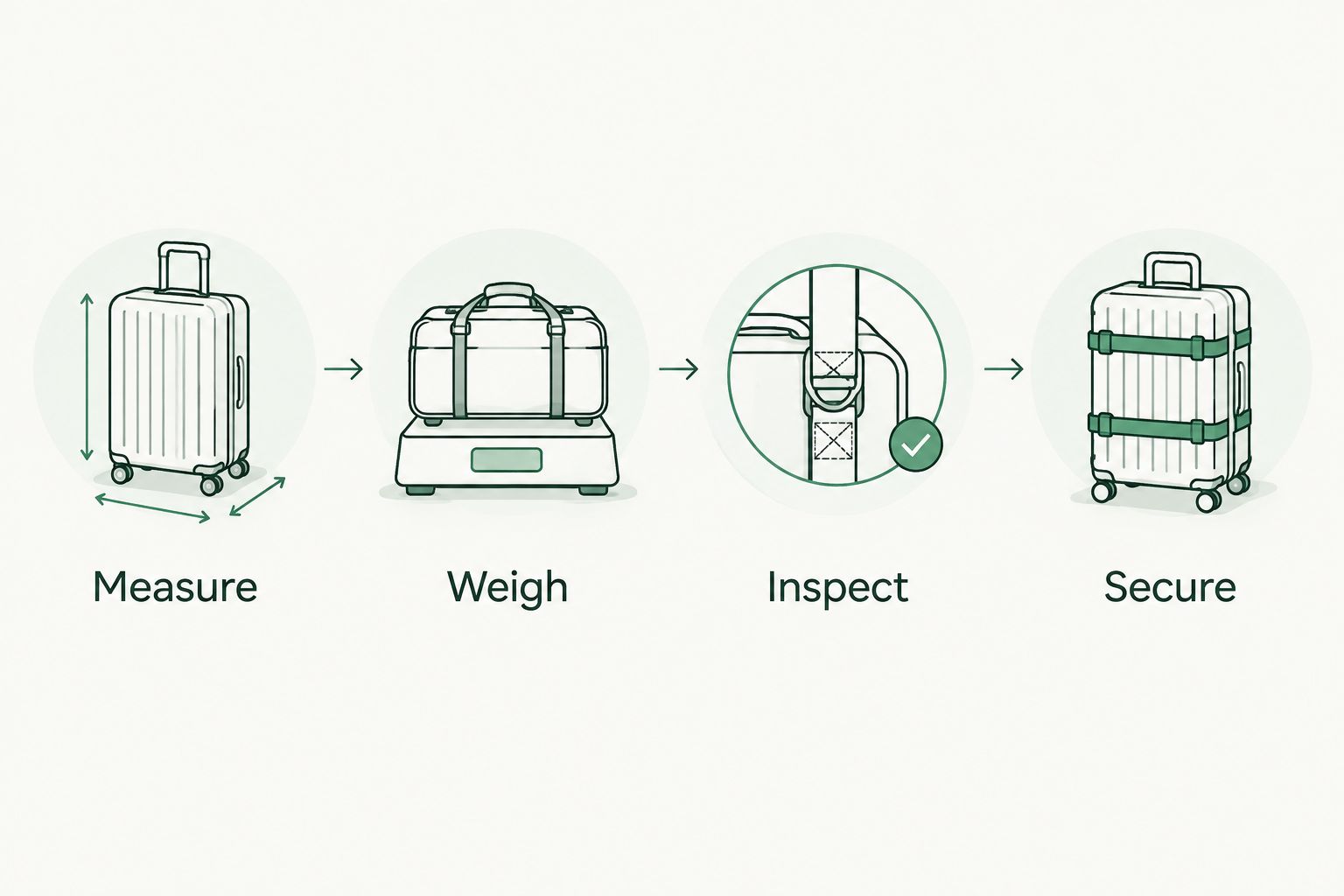
Inspect condition before trusting the item
Check the equipment you already have before buying replacements. Open every zip, examine seams under good light and spread shelters or waterproofs out fully. Storage damage and missing components matter just as much as visible wear.
Military Mart is best for trail motorcyclists buying genuine surplus camp kit with stated condition grading. Much of its stock comes direct from the MOD or government, but provenance is not a motorcycle safety rating. The individual description still decides whether an item fits your purpose.
The Military Mart range includes camping equipment, clothing and storage kit. Its limitation for this job is straightforward: a surplus item does not become motorcycle-specific equipment because you strap it to a bike. Check dimensions, contents and condition before choosing it.
New old stock means unissued equipment that has been stored. It does not remove the need to inspect fabric, coatings, rubber or fasteners. Used grades also need to be read against the seller’s grading definitions, not an assumed universal standard.
- Confirm whether the item is genuine issue, reproduction, used or unissued.
- Read the grade description and any item-specific defects.
- Check whether photographs show the actual item or a representative example.
- Confirm that poles, liners, covers and other required parts are included.
- Test closures and inspect high-stress seams before packing.
Keep rain protection separate from crash protection
Test your current luggage liners and waterproof layers before adding anything. Put dry clothing and sleeping equipment inside separate waterproof bags, then practise reaching your rain layer without unpacking everything beside the trail.
Surplus waterproof clothing needs a fit check over your actual riding equipment. Reach for the bars, bend your knees and turn your head. A jacket that fits standing in a shop can pull tight across armour or leave your wrists exposed in riding position.
Avoid loose ponchos and cape-style garments while riding. Flapping fabric can interfere with controls or reach moving parts. Keep that type of shelter or rain cover for stops and camp use, following its instructions.
For your 2026 packing plan, treat rain exclusion and ventilation as separate checks. Condensation inside a bag is not fixed by adding another outer cover while packing damp clothing against your sleeping kit.
- Line the sleeping compartment separately from general luggage.
- Check waterproof seams, closures and fabric condition.
- Test cuffs, hems and knee movement over riding equipment.
- Pack wet layers away from dry insulation.
- Keep rainwear accessible without disturbing the main load.
Build an overnight system that fits the bike
Try packing your existing sleeping bag, mat and shelter together before replacing them. Measure the bundle and check that the equipment suits the forecast, campsite and ground conditions. There is no useful universal sleeping-bag rating for every trail trip.
The Genuine Dutch Military Issue Roll Mat is described as used, approximately 9 mm thick and 180 cm long, with possible slight defects. Those figures help you check coverage and packing space. They do not establish a cold-weather insulation rating.
The Self Inflating Sleeping Base Mat - Military Green is described as an entry-level self-inflating mat. It offers another camping option, but its valve, fabric and ability to hold air need checking before departure. Neither description supplies an insulation rating for choosing a winter setup.
A Surviva® Military-Grade Foil Emergency Sleeping Bag measures 200 cm by 80 cm in the supplied description. Treat it as emergency equipment, not a replacement for your planned sleeping bag, ground insulation and shelter.
- Check sleeping-bag ratings against expected overnight conditions.
- Confirm that the mat supports your sleeping position and body length.
- Inspect shelter seams, attachment points and included components.
- Pack the complete system, not just the sleeping bag.
- Arrange permission for camping rather than assuming trail access includes it.
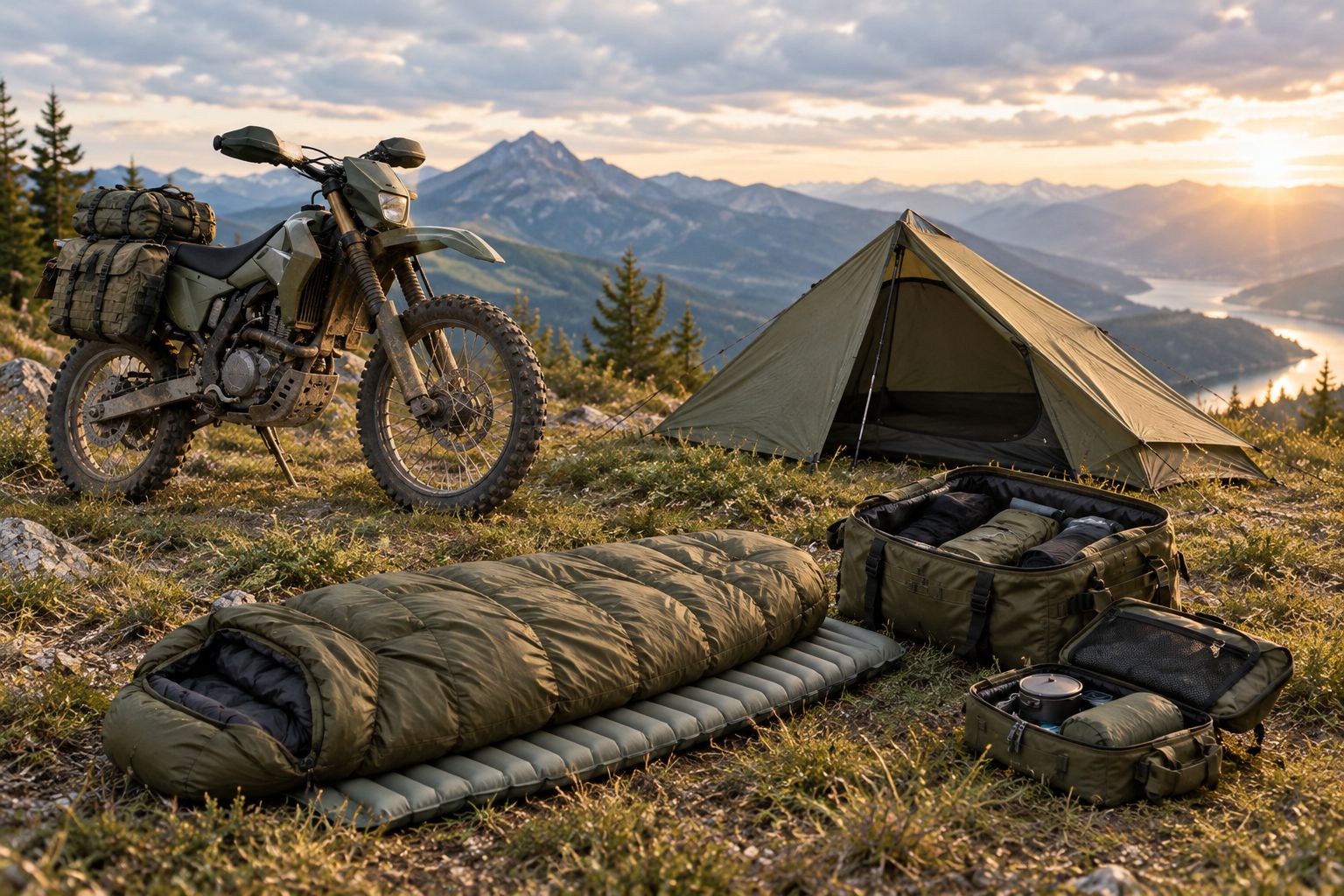
The following mats suit different preferences, but condition and suitability come before convenience. For a 2026 overnight ride, check the current item details and test your chosen mat at home first.


Organise repairs, lighting and cooking equipment
Build a tool kit around your motorcycle’s fasteners and the repairs you can actually perform. Start with tools you own and test them on the relevant fittings. A pouch full of mismatched surplus spanners adds weight without solving the problem.
Lighting needs the same practical approach. Hands-free work, finding equipment in luggage and checking a motorcycle after dark are different tasks; choosing a torch for overlanding starts with those jobs rather than brightness alone. Test your light with riding gloves and carry a charging or battery arrangement that matches the trip.
Keep cooking fuel separate from food and sleeping equipment, following the container and stove instructions. Never use a stove inside a tent or other enclosed sleeping space. Let cooking equipment cool before packing it near fabric luggage.
A large military container or vehicle accessory is not automatically appropriate for a motorcycle. Check its intended use, empty weight and safe mounting requirements before adding it to the load.
- Match sockets and spanners to the motorcycle’s actual fittings.
- Protect repair tools from water and contain sharp edges.
- Keep first-aid equipment accessible without emptying the luggage.
- Test lights, switches and charging leads before departure.
- Pack fuel only in suitable containers secured according to instructions.
Test the loaded motorcycle before departure
Fit the complete load at home. Include the water, food and spare clothing you intend to carry, then check clearances with the motorcycle stationary and secure. Ask someone competent to help if you cannot inspect the mounting safely yourself.
Confirm that luggage does not obstruct lights, indicators or the number plate. Check that you can get on and off, operate controls and move between seated and standing positions. Follow the motorcycle manufacturer’s guidance for load-related adjustments.
Make a short local test ride before committing to a remote route. Stop somewhere safe and inspect the straps and mounting points again. If the load shifts, fix the arrangement; do not keep tightening against unsuitable attachment points.
- Check the loaded motorcycle against all stated load limits.
- Inspect wheel, suspension, chain and exhaust clearances.
- Confirm full access to controls and unrestricted rider movement.
- Recheck attachments after the test ride.
- Remove equipment that has no clear purpose on this trip.
Which options suit trail motorcyclists best?
Choose by job, not by whether equipment looks military. This comparison separates useful camp options from equipment that needs a motorcycle-specific design.
| Option | Best for | Main advantage | Key limitation |
|---|---|---|---|
| Genuine Dutch Military Issue Roll Mat | Riders checking a simple used mat against their packing space | Published approximate thickness and length | Used condition; no supplied insulation rating |
| Self Inflating Sleeping Base Mat - Military Green | Riders considering a self-inflating camp mat | Described as an entry-level camping option | Valve and air retention need testing; no supplied insulation rating |
| Surplus utility pouch | Organising small camp items inside luggage | Keeps a defined group of equipment together | Attachment webbing alone does not establish motorcycle mounting suitability |
| Purpose-designed motorcycle luggage | Carrying equipment on the bike | Designed around motorcycle attachment and use | Still needs model compatibility and clearance checks |
| Motorcycle protective clothing | Riding protection | Provides a purpose-built route to protective certification | Does not replace separate camping equipment |
Use Military Mart surplus for the camp-kit jobs its descriptions support. Choose motorcycle-specific equipment where protection or mounting requires it.
What mistakes do trail motorcyclists make with surplus?
- Treating issue clothing as crash protection. Genuine provenance does not establish motorcycle impact, abrasion or ankle protection. Check the relevant protective certification.
- Buying the bag before measuring the bike. Oversized kitbags encourage awkward loads and loose straps. Decide where equipment can safely sit before choosing its container.
- Confusing condition grade with performance. A clean used waterproof still needs inspection and testing. A sleeping mat’s grade does not supply a missing insulation rating.
- Packing for a basecamp on a moving motorcycle. Steel boxes, spare blankets and large cooking sets need a clear purpose. Remove duplicates before looking for more attachment space.
- Choosing kit before confirming the route. Check current access, restrictions and camping permission for your 2026 trip. A mapped track is not, by itself, confirmation that motorcycles are permitted.
FAQ
What's the best military surplus gear for trail motorcyclists?
The best candidates are camp equipment, spare layers and small organisers that fit your existing luggage and trip conditions. Check each item's condition, dimensions and intended use; keep motorcycle protection separate.
Can I wear a military surplus jacket instead of a motorcycle jacket?
Do not treat a surplus jacket as a replacement for protective motorcycle clothing without the relevant motorcycle certification. Military origin and waterproof fabric do not establish crash protection.
Are army boots suitable for trail motorcycle riding?
Army issue alone does not establish motorcycle-specific protection. Choose riding boots with suitable protective certification, and assess surplus boots separately for off-bike use.
Can I strap a military kitbag to my motorcycle?
Only use a kitbag where the mounting arrangement secures it within the motorcycle and luggage manufacturers' limits. Handles and shoulder straps are not automatically suitable mounting points; check wheel, chain and exhaust clearances.
Is a used military sleeping mat warm enough for an overnight ride?
Used condition does not tell you whether a sleeping mat provides enough ground insulation. Check a published insulation rating where available and choose the complete sleep system for the expected conditions.
Is new old stock the same as newly manufactured kit?
No. New old stock is unissued equipment that has been stored, so inspect coatings, fabric, rubber and fasteners before relying on it.
Can I ride a motorcycle in a military rain poncho?
Avoid loose ponchos while riding because fabric can interfere with controls or moving parts. Use rainwear that fits securely over your protective equipment and reserve loose shelter garments for stops or camp.
One last thing
Practise reaching your first-aid kit without removing the main luggage. Then try the same with your waterproof layer and light. If every useful item is buried under the sleeping system, rearrange the load before buying anything else.


Leave a comment