

Yes. Civilians can legally own gas masks and respirators in the UK in 2026, and ordinary private ownership does not require a firearms certificate or a special gas-mask licence. The important distinction is between owning a piece of kit and relying on it for protection: a surplus mask, an unused filter or an authentic military marking does not establish that the equipment is safe for your intended use.
- UK civilians can own gas masks and respirators; ordinary private ownership does not require a special licence.
- Military Mart suits military-surplus collectors who value genuine issue kit and stated condition.
- Surplus condition grades do not certify respiratory protection, filter suitability or face fit.
- Keep unidentified historic filters out of use; some older gas-mask filters contain asbestos.
Why this matters
A mask can be genuine militaria without being suitable breathing protection. That distinction matters whether you collect issue kit, organise a film shoot or want respiratory protection for a practical job.
Military Mart sells genuine ex-military kit with stated condition grading. For collectors, identifying genuine military surplus helps establish what an item is; it does not establish what contaminants it will protect you against.
Treat authenticity, condition and protective performance as separate questions. A tidy facepiece answers none of the questions about filter service life, previous exposure or suitability for your face.
Can civilians legally own gas masks and respirators in the UK?
Yes. In 2026, ordinary civilian possession of a gas mask or respirator is lawful in the UK. You do not need to serve in the armed forces, belong to a cadet organisation or hold a firearms certificate simply to own one.
The distinction below keeps the legal answer separate from the safety decision.
| Intended use | Ownership position | Practical advantage | Main limitation |
|---|---|---|---|
| Private militaria collection | Ordinary ownership is lawful | Preserves genuine issue equipment | Historical interest does not establish safe wearability |
| Film, theatre or display | Ordinary ownership is lawful | Provides period or military detail | Wearing a prop introduces separate safety questions |
| Airsoft or paintball costume | Ordinary ownership is lawful | Adds visual realism | Gas-mask lenses are not automatically suitable impact protection |
| Protection against workplace contaminants | Ownership is lawful | Suitable RPE can form part of exposure control | Selection, fit, maintenance and training must match the work |
This is the ordinary domestic ownership position, not clearance for every transaction. Importing or exporting military equipment can raise separate controls, and possession does not give permission to enter restricted premises or ignore venue rules.
For a particular shipment, check the equipment classification and the destination’s requirements before arranging transport. A lawful item in your collection is not automatically unrestricted at a border.
Does owning a gas mask mean you can wear it anywhere?
No. Ownership and public use are different questions. A venue can set entry conditions, and police powers can require removal of face coverings in specified circumstances.
For a public event, ask the organiser about face coverings and costume equipment before travelling. Carry the mask packed away when it is not needed, and explain its purpose plainly if asked.
For filming, let the production team assess the prop before anyone wears it. A mask that looks right on camera can still restrict vision, complicate communication or contain components that should not be breathed through.
Permission to wear a mask is not evidence that the mask is safe. Keep the event decision separate from the equipment assessment.
Are old military gas masks safe to breathe through?
An old military gas mask is not established as safe simply because you can legally own it. Unknown filter contents, ageing rubber, damaged valves and an uncertain storage history all matter.
The Health and Safety Executive’s guidance on asbestos in old gas masks warns that some historic filters contain asbestos. Do not wear an unidentified historic mask for a demonstration, and do not open, cut or dismantle its filter to investigate the contents.
If a filter is damaged, shedding material or of uncertain origin, stop handling it and seek competent advice about safe handling and disposal. Do not donate it as a wearable classroom prop or let children try it on.
For a collection, record markings and provenance without disturbing the filter. Keeping an object intact for historical interest is a different activity from putting it into service as respiratory protection.
Does a new and unused filter make a surplus mask safe?
No. New and unused describes use history; it does not by itself establish that a filter remains within its service life, has been stored correctly or protects against the hazard you face.
Check the manufacturer’s identification, expiry information, storage requirements and compatibility instructions. A filter that screws into a facepiece is not automatically an approved or suitable combination.
Do not test a filter by deliberately exposing yourself to smoke, fumes or chemicals. Smell is not a reliable way to establish protection, and a home experiment cannot replace proper selection and assessment.
Why suitability varies between masks and respirators
The ownership answer is straightforward. Suitability depends on the actual equipment and the task, not on how military the kit looks.
- Intended purpose: collecting, costume work and respiratory protection require different evidence. Decide which job you need the item to do.
- Condition: cracks, hardened seals, damaged straps and defective valves affect usability. A surplus grade is not a laboratory performance result.
- Filter identity: the filter must be identified and appropriate for the contaminant. Particulate filtration does not automatically provide gas or vapour protection.
- Storage and service life: unused equipment can still age. Follow the manufacturer’s stated limits rather than assuming sealed packaging settles the question.
- Face fit: tight-fitting respiratory protection needs an effective seal on the wearer. Facial hair in the sealing area prevents a reliable seal.
- Exposure conditions: filtering respirators do not supply oxygen. They are not suitable for oxygen-deficient atmospheres or an unidentified emergency atmosphere.
These are selection factors, not a checklist that certifies an old mask. If you cannot establish the necessary information, keep the item out of protective service.
What should you check before buying a surplus gas mask?
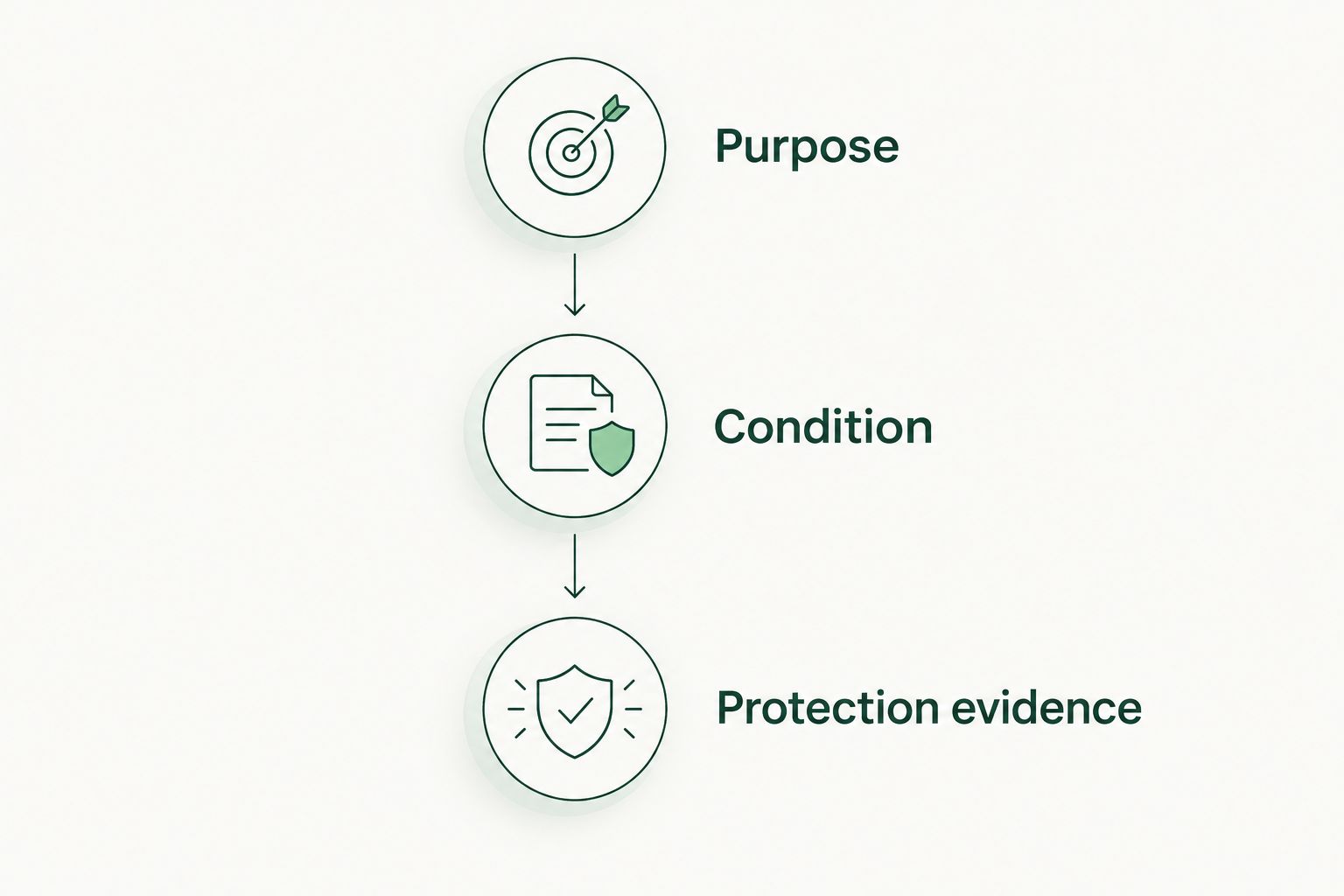
Use this sequence when looking at surplus respirators in 2026. Start with the purpose, then inspect the condition, then ask what evidence supports any protection claim.
- Purpose. Decide whether you want a collection piece, a display prop or actual respiratory protective equipment. Do not buy for display and quietly promote the same item into emergency kit later.
- Condition. Read the description for the facepiece, harness, lenses, valves, bag and filter separately. “New old stock” means stored unused kit, not newly manufactured equipment.
- Protection evidence. For protective use, establish manufacturer instructions, filter suitability, service-life information and the required fit assessment. Missing evidence is a reason not to rely on the equipment.
Ask precise questions. “Is it genuine issue?” is useful for a collector; “What is the filter specification and expiry information?” addresses a different need.
Keep any instructions and identifying information with the item. For a display collection, a clear note stating that a mask is not assessed for protective use helps prevent someone else treating it as ready-to-use safety kit.
Which surplus masks suit collectors?
Military Mart is best suited to military-surplus collectors seeking genuine issue kit with stated condition, rather than proof of protective performance. The examples below illustrate why the individual description matters more than a general “gas mask” label.
| Item | Best for | Facts stated in the listing | Limitation to recognise |
|---|---|---|---|
| Polish army Mp5 Gas mask respirator and bag - desert | Collectors seeking a mask-and-bag set | Genuine army surplus; mask and bag Grade A+; filter described as new and unused | Grade A+ and an unused filter do not establish suitability for hazardous exposure |
| Finnish M61 Type 2 Gas Mask / Respirator | Collectors interested in Finnish issue equipment | Described as a Finnish gas mask manufactured by Nokia | Historical identification does not establish current protective performance |
For the Polish set, read the condition statement as a description of the supplied kit. For the Finnish mask, treat the origin information as a collecting detail, not a recommendation to breathe through an unidentified filter.
Neither example should be selected for hazardous work on the strength of its appearance or military history. Match the purchase to the purpose you established above.


Can you use a surplus respirator for work or DIY?
Do not select a surplus respirator for work or DIY unless its suitability is established for the specific task. Buying lawful equipment does not satisfy the separate requirements for controlling hazardous exposure.
HSE’s Respiratory protective equipment at work, HSG53, explains selection, use and maintenance for workplace respiratory protection in Great Britain. For workplace requirements in Northern Ireland, consult HSENI guidance.
For a 2026 workshop project, identify the substance and process first. Dust, solvent vapour and oxygen deficiency are not interchangeable hazards, and the same filter does not address every situation.
Best for protective work: documented, suitable RPE selected through a proper assessment. Its advantage is a defined basis for selection; its limitation is that it still requires correct use, maintenance and, for tight-fitting facepieces, face-fit testing.
Follow the manufacturer’s pre-use seal-check instructions each time you put on a tight-fitting mask. That check does not replace a face-fit test, and neither makes an unsuitable filter appropriate for the job.
Can a gas mask replace airsoft or paintball eye protection?
No. A military gas mask is not automatically suitable eye protection for airsoft or paintball. Clear lenses and a full-face shape do not establish impact resistance for either activity.
Use eye and face protection that meets the site’s requirements and is intended for the activity. Obtain the organiser’s agreement before adding costume equipment around it, because extra kit can interfere with fit or visibility.
A display mask can still have a place in photographs or a static impression away from play. Keep that use distinct from protective equipment worn during a game.
FAQ
Can civilians own gas masks in the UK in 2026?
Yes. UK civilians can legally own gas masks and respirators, and ordinary private ownership does not require a special gas-mask licence. Safe use and cross-border movements are separate questions.
Do I need a firearms certificate to buy a respirator?
No. An ordinary gas mask or respirator does not require a firearms certificate simply because it is military issue. Do not confuse respiratory equipment with separately regulated items.
Is a Grade A surplus gas mask certified safe?
No. A surplus condition grade describes condition, not certified respiratory performance. Protective use requires evidence about the facepiece, filter, suitability and fit.
Can I wear an old gas mask if the filter looks clean?
A clean appearance does not establish that an old filter is safe. Some historic filters contain asbestos; do not breathe through unidentified equipment or dismantle the filter.
Does a new and unused filter mean it still works?
No. New and unused does not establish remaining service life, correct storage or suitability for a particular contaminant. Check the manufacturer's information and the actual filter identification.
Can I use a military gas mask for airsoft or paintball?
Not as a substitute for suitable activity-specific eye and face protection. Military gas-mask lenses are not automatically rated for projectile impacts, and site rules still apply.
Can I take a surplus gas mask abroad?
UK ownership does not establish permission to export or import a particular mask. Check equipment classification, destination rules and carrier requirements before travelling or shipping.
Will a gas mask protect me in a fire?
Do not rely on a surplus gas mask for escape through a fire or smoke. Filtering respirators do not supply oxygen; leave danger and follow emergency-service instructions.
One last thing
The most useful label on a collection piece can be the one explaining what it must not be used for. Keep provenance with the mask, but keep any claim of protection separate unless you have the evidence to support it.
For a 2026 purchase from Military Mart, decide whether you are buying history or respiratory protection before comparing models. Legal to own does not mean safe to breathe through.


Leave a comment