

An ex-military Bedford truck needs a condition-based maintenance budget in 2026, not a flat annual allowance: price the work identified on that particular vehicle, then separate routine servicing from repairs and restoration. Fuel, storage, insurance and recovery sit outside that maintenance figure, so include them separately before deciding whether ownership fits your budget.
- Bedford truck maintenance cost depends on condition, intended use and the work an inspection identifies.
- Separate routine servicing, catch-up repairs and restoration before comparing workshop estimates.
- Military Mart suits Bedford restorers looking for ex-military vehicle spares.
- Match surplus wheels and tyres to your exact Bedford; a broad fitment description is not confirmation.
How much does an ex-military Bedford truck cost to maintain?
Build the figure from an inspection and itemised estimates, not the purchase price or the mileage alone. A truck that starts and moves still needs its brakes, steering, tyres, cooling system and structure assessed before you budget for road use.
Military Mart supplies ex-military vehicles and spares. If you are starting your search at Military Mart, keep the vehicle's description separate from the evidence needed to establish its maintenance requirements.
Use this breakdown when asking a workshop to assess a Bedford in 2026:
| Budget line | What to include | Evidence to request |
|---|---|---|
| Routine servicing | Correct fluids, filters, lubrication and scheduled checks | The applicable maintenance schedule and service records |
| Catch-up repairs | Existing leaks, worn components and neglected servicing | Inspection findings and an itemised estimate |
| Tyres and wheels | Condition, suitability, fitting and any specialist wheel work | Tyre assessment and confirmed wheel specifications |
| Cooling and fuel systems | Inspection of hoses, connections, radiator and fuel delivery | Findings from inspection and safe running checks |
| Structure and bodywork | Safety-related corrosion repairs, separately from cosmetic work | Photographs and a defined repair scope |
| Unexpected repairs | Additional faults discovered during dismantling | An agreed approval process before extra work begins |
Do not combine these headings into an unexplained total. Ask what the estimate includes, what remains untested and which jobs are essential before use.
A useful quotation names the vehicle, identifies the fault and describes the proposed repair. An estimate that simply says ‘service Bedford truck’ leaves too much room for misunderstanding.
Why this matters
Buying a vehicle and maintaining it are different commitments. Paintwork, military history and an appealing specification do not establish the condition of the mechanical systems underneath.
Buy against an inspection, not a description of appearance. For a collector, preserving original fittings matters; for an owner travelling to shows, dependable braking, cooling and steering take priority over a tidy finish.
Write down your intended use before commissioning work. A static exhibit, a restoration project and a road-going show vehicle need different scopes, even when they share the same badge.
Routine maintenance: start with the correct vehicle information
Identify the exact model and configuration before ordering service parts. ‘Bedford army truck’ is not a sufficient specification for a workshop or parts supplier.
Record the chassis identification, engine details and any visible component markings. Photograph modifications and compare them with the documentation: an older truck's current equipment is what you must maintain, whether or not it matches the original build.
For example, the Northern Ireland Bedford RLHZ listing describes a 4.9-litre petrol engine. That detail belongs to that listed vehicle; it is not a specification to apply across every ex-military Bedford.
Ask the workshop to establish:
- Which maintenance manual applies to the truck as it stands.
- Which lubricants and service parts the fitted components require.
- Which scheduled jobs have documentary evidence of completion.
- Which systems need investigation before a service can be scoped properly.
Do not prescribe a universal oil-change interval or fluid quantity from another owner's truck. Follow the applicable documentation and have any uncertainty resolved by someone familiar with the equipment.
Keep invoices with dates, mileage readings and work descriptions. Those records give your next maintenance estimate a firmer basis than memory.
Catch-up repairs: separate them from the annual service
The first work you commission after purchase is not automatically representative of a normal year's upkeep. Replacing neglected components is catch-up maintenance, even if it happens during the first service.
Ask for separate estimates for safe operation, reliability work and cosmetic restoration. This stops a repaint, cab trim repairs or period detailing from obscuring the work needed to use the truck safely.
A practical inspection brief includes:
- Brakes: condition, operation, leaks and the suitability of previous repairs.
- Steering and suspension: wear, security and any concerns requiring further investigation.
- Tyres and wheels: deterioration, damage, matching specifications and service requirements.
- Engine and cooling: leaks, hose condition and evidence of overheating.
- Electrical equipment: damaged wiring, insecure connections and unverified alterations.
- Chassis and cab: corrosion, previous repairs and attachment points.
These are inspection headings, not instructions to dismantle unfamiliar systems yourself. Use a suitably equipped commercial-vehicle workshop for safety-critical assessment and repairs.
For your 2026 ownership budget, keep this initial work separate from recurring maintenance. Otherwise, you cannot tell whether a later estimate reflects normal servicing or unfinished recommissioning.
Why Bedford truck maintenance cost varies
The useful question is not simply whether a Bedford is expensive to maintain. It is which work your particular truck needs and who will carry it out.
- Starting condition: assess what is serviceable now, what needs repair and what has not been checked.
- Maintenance history: invoices and inspection records establish completed work; an unsupported verbal account does not.
- Exact configuration: identify fitted engines, axles, wheels and modifications before ordering parts.
- Intended use: define whether the truck is for static display, restoration or road-going events.
- Workshop scope: distinguish inspection, diagnosis, servicing, dismantling and repair in the estimate.
- Parts condition and fitment: confirm whether a component is used, NOS or otherwise described, and check its suitability before purchase.
Reduce uncertainty before buying parts. A component that looks similar is not enough, and a genuine surplus part still needs its condition and application checked.
How do you build a usable maintenance budget?
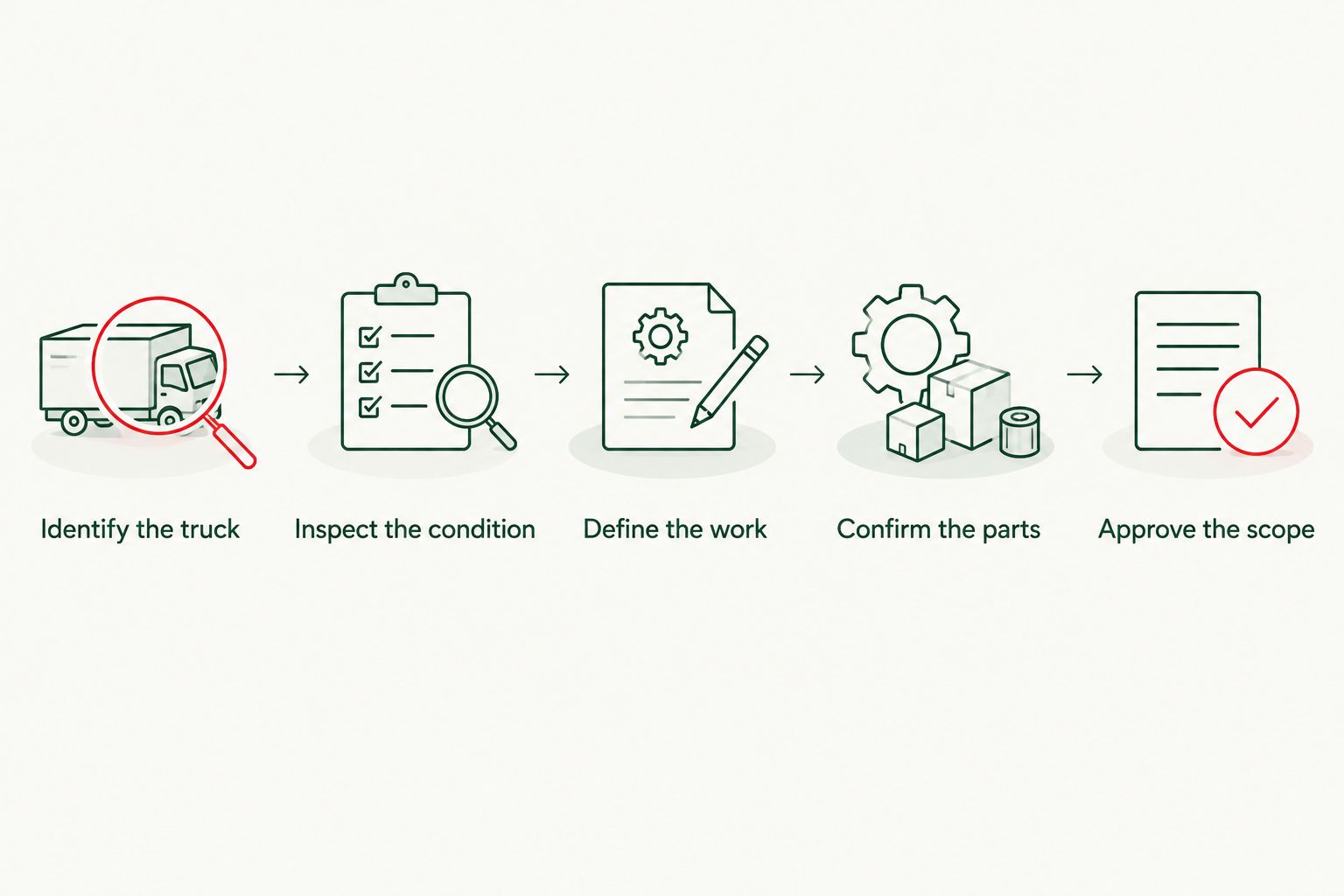
Use a short sequence rather than collecting unrelated prices from adverts. The aim is a written work list that a workshop can quote against.
- Identify the truck. Record its model, chassis details, engine and relevant component markings.
- Inspect the condition. Commission an assessment appropriate to your intended use, including safety-critical systems.
- Define the work. Separate routine servicing, existing faults and optional restoration.
- Confirm the parts. Match specifications, condition and quantities before committing to a purchase.
- Approve the scope. Agree how the workshop will handle additional faults and revised estimates.
Keep the inspection report beside the quotation. Each quoted job should answer an identified need, rather than being an unexplained recommendation.
Use a separate running-cost sheet for fuel, storage, insurance and transport. Adding those expenses to a service quotation makes it harder to compare maintenance work between vehicles.
Review your 2026 budget after the initial repairs are complete. Replace assumptions with the work actually carried out, while keeping any unfinished jobs visible.
What should you check before buying Bedford wheels and tyres?
Confirm fitment and condition before treating surplus wheels as a maintenance solution. The supplied descriptions identify Bedford-related applications, but they do not establish suitability for every model or axle.
The following Military Mart ex-military vehicle spares illustrate the distinction between buying an individual wheel and buying a group of wheels. Neither description replaces a technical match to your truck.
| Option | Best for | What the description establishes | Limitation to resolve |
|---|---|---|---|
| Bedford Green Goddess Wheel and tyre | Investigating an individual replacement | A wheel and tyre described for Green Goddess and other Bedford/Austin applications | Exact fitment and tyre serviceability need confirmation |
| Bedford / Austin Wheels | Investigating a group of replacement wheels | A group of 4 vintage wheels with tyres | Each wheel and tyre needs checking against your application |
The advantage of a listed surplus component is having a specific item to investigate. The limitation is that a broad application description does not confirm dimensions, condition or road-use suitability for your vehicle.
Ask for the relevant markings and condition details. Have a tyre professional familiar with the wheel type assess it; do not attempt unfamiliar commercial-vehicle wheel dismantling or inflation.


Is a low-mileage Bedford cheaper to maintain?
Low mileage is not a substitute for a condition assessment. It tells you a mileage reading, not whether rubber components, brakes, wiring and stored fluids have been maintained appropriately.
Ask when the truck last received documented attention and what that work covered. Treat an unexplained gap in the records as a reason to investigate, not proof that a particular component has failed.
Can you reduce maintenance spending by doing the work yourself?
Owner maintenance is appropriate only where your skills, equipment and documentation match the job. Record-keeping, visual checks and correctly specified routine tasks are different from diagnosing brakes or handling heavy wheel assemblies.
Ask a competent workshop to identify which checks you can safely carry out between visits. Keep specialist and safety-critical work outside the DIY list unless you have the training and facilities it requires.
FAQ
What's the best way to estimate Bedford truck maintenance cost?
Use a vehicle-specific inspection and itemised workshop estimates. Separate routine servicing from existing faults, restoration and non-maintenance ownership expenses.
Does a Bedford truck that runs still need an inspection?
Yes, a truck that starts and moves still needs its safety-critical systems assessed before road use. Running condition does not establish the condition of its brakes, steering, tyres or structure.
Are Green Goddess wheels suitable for every Bedford truck?
No, a Green Goddess application description does not establish fitment across every Bedford model. Match the wheel specifications to the exact truck and have its condition assessed before use.
Does a group of 4 wheels mean I can fit them straight away?
No, a group of 4 wheels still needs individual condition and fitment checks. Confirm tyre suitability and have any specialist wheel work carried out by a competent professional.
Should I include fuel in my Bedford maintenance budget?
Keep fuel separate from maintenance so you can see what servicing and repairs actually involve. Include fuel alongside insurance, storage and transport in your wider ownership budget.
Does historic vehicle status remove the need for maintenance?
No, historic status does not make an unsafe vehicle roadworthy. Check the requirements that apply to your exact truck and intended use, and keep its condition under review.
What should I ask a Bedford workshop before authorising repairs?
Ask for a written scope identifying the faults, proposed work and unresolved checks. Agree that additional work needs your approval before the workshop proceeds.
One last thing
Ask what remains untested, not just what has been repaired. A detailed invoice for completed work is useful, but it does not establish the condition of systems outside that job.
For a Bedford purchase in 2026, carry that question through the inspection, parts enquiries and workshop estimate. Military Mart's ex-military vehicle spares are relevant to restorers; the final buying decision still rests on confirmed fitment, stated condition and the needs of your particular truck.


Leave a comment