

Army surplus clothing is not automatically warmer than regular outdoor gear: insulation, fit, condition and weather protection decide the result. For your 2026 kit choices, compare garments built for the same job; an uninsulated military waterproof is not a substitute for an insulating jacket, however substantial it feels.
- Is army surplus clothing warmer than outdoor gear? Not automatically: compare insulation, fit, condition and weather protection.
- Military Mart army surplus clothing suits buyers who want genuine issue kit with stated condition grades.
- Compare insulating layers with insulating layers, not waterproof shells with winter jackets.
- Build a clothing system around your activity, including the cold period after you stop moving.
Is army surplus clothing warmer than regular outdoor gear?
No single category wins. A thick surplus insulating layer and a lightweight civilian waterproof do different jobs, so comparing them tells you little about whether military or civilian clothing is warmer.
Start with construction rather than camouflage. The guide to army surplus jackets by warmth and weight is a useful next read when narrowing down jacket types.
| Clothing type | Best for | What helps retain warmth | Main limitation |
|---|---|---|---|
| Wool jumper, military or civilian | Insulation beneath an outer layer | Its insulating structure traps air | It is not a waterproof shell |
| Fleece, military or civilian | Adjustable insulation while walking or working | Loft holds insulating air around your body | An exposed fleece is not a substitute for wind protection |
| Waterproof shell, military or civilian | Keeping rain off your insulating layers | Weather protection helps preserve the clothing system beneath | Waterproofing alone does not establish insulation |
| Field jacket or smock | An outer layer selected for its stated construction | Wind protection and room for layers, where provided | A military name does not confirm a liner or thermal filling |
| Insulated jacket, military or civilian | Extra warmth during stops and low-output activity | Insulating fill traps air | Excess insulation during hard activity encourages overheating |
Compare like with like: an insulating garment against an insulating garment, and a weather shell against a weather shell. Neither military origin nor an outdoor-brand label supplies a universal warmth rating.
Why this matters
Buying the wrong type of jacket leaves a gap in your kit. You can own a substantial waterproof and still lack the insulation needed for a cold lunch stop.
For a 2026 winter kit list, separate warmth from weather protection before choosing a garment. That distinction matters whether you are walking the dog, attending cadet training or setting up a wild camp.
Weight is not the same as insulation. Pockets, fasteners and heavy outer fabric add weight without telling you how much insulating air a garment holds.
When does army surplus make sense for warmth?
Army surplus makes sense when the individual garment provides the insulation, fit and condition you need. A genuine issue fleece or wool jumper has a different role from a combat shirt, regardless of their shared military origin.
Start with your activity. Standing beside a fishing lake requires a different clothing arrangement from climbing a steep path with a loaded rucksack.
- Best for low-output use: an insulating layer with enough room beneath your outer clothing. Check coverage and comfort while sitting or standing.
- Best for mixed walking and stops: removable insulation that you can take off before overheating and put back on when you stop.
- Best for wet conditions: insulation combined with a suitable weather shell. Neither part replaces the other.
The benefit is choosing each piece for a clear job. The drawback is that a collection of useful garments still needs to fit together; a warm jumper is less useful beneath a jacket that squeezes it flat.
When does regular outdoor gear make more sense?
Regular outdoor gear makes sense when a particular garment better meets your requirements for fit, carried bulk, insulation or weather protection. Those are product-level comparisons, not automatic advantages of civilian clothing.
For a long walk, check how the garment moves beneath your rucksack and how easily you can adjust ventilation. For a jacket carried mainly for stops, inspect its packed size and the insulation information supplied by its maker.
Best for weight-conscious walking: choose the garment with the most suitable documented construction and fit for your route. Do not assume that every civilian jacket is lighter, warmer or more breathable than every surplus equivalent.
The advantage is selecting against a clear specification. The limitation is the same as with surplus: a winter-looking jacket, technical name or substantial fabric does not prove that it meets your needs.
Why warmth varies between garments
These factors explain more than the military-versus-civilian distinction. Check them before judging a jacket by its appearance.
- Insulation type and amount: wool, fleece and insulating fill work through their construction and trapped air. A shell fabric alone does not provide the same function.
- Wind exposure: moving air increases heat loss. Check whether your outer layer provides the wind protection your insulating layer needs.
- Moisture: rain and perspiration affect comfort and insulation. Keeping rain out does not remove the need to manage sweat.
- Fit: tight outer clothing compresses loft; poorly controlled openings allow draughts. Leave room for layers without ignoring adjustment at cuffs, neck and hem.
- Condition: inspect insulation, closures, lining and weatherproof construction. A condition grade is not a temperature rating.
- Activity: your body produces more heat during exertion than while resting. Dress for movement and carry an answer for the stop afterwards.
Use these checks for both surplus and civilian clothing. A comparison is only useful when the intended activity and weather are the same.
How do you build a warm clothing system?
Use 3 layer roles as a starting framework: moisture management, insulation and weather protection. These are functions, not a rule that you must always wear exactly three garments.
- Base layer: choose clothing next to your skin that suits your activity and manages perspiration. Avoid starting a cold-weather walk already overdressed.
- Insulating layer: add fleece, wool or another suitable insulating garment. Leave space for its structure to hold air rather than crushing it beneath your outer layer.
- Weather shell: add protection against the conditions you expect. Adjust openings and remove unnecessary layers as your effort changes.
Try the complete combination before relying on it outdoors. Bend, reach, sit down and wear your rucksack; check that your sleeves still cover your wrists and that your shoulders move freely.
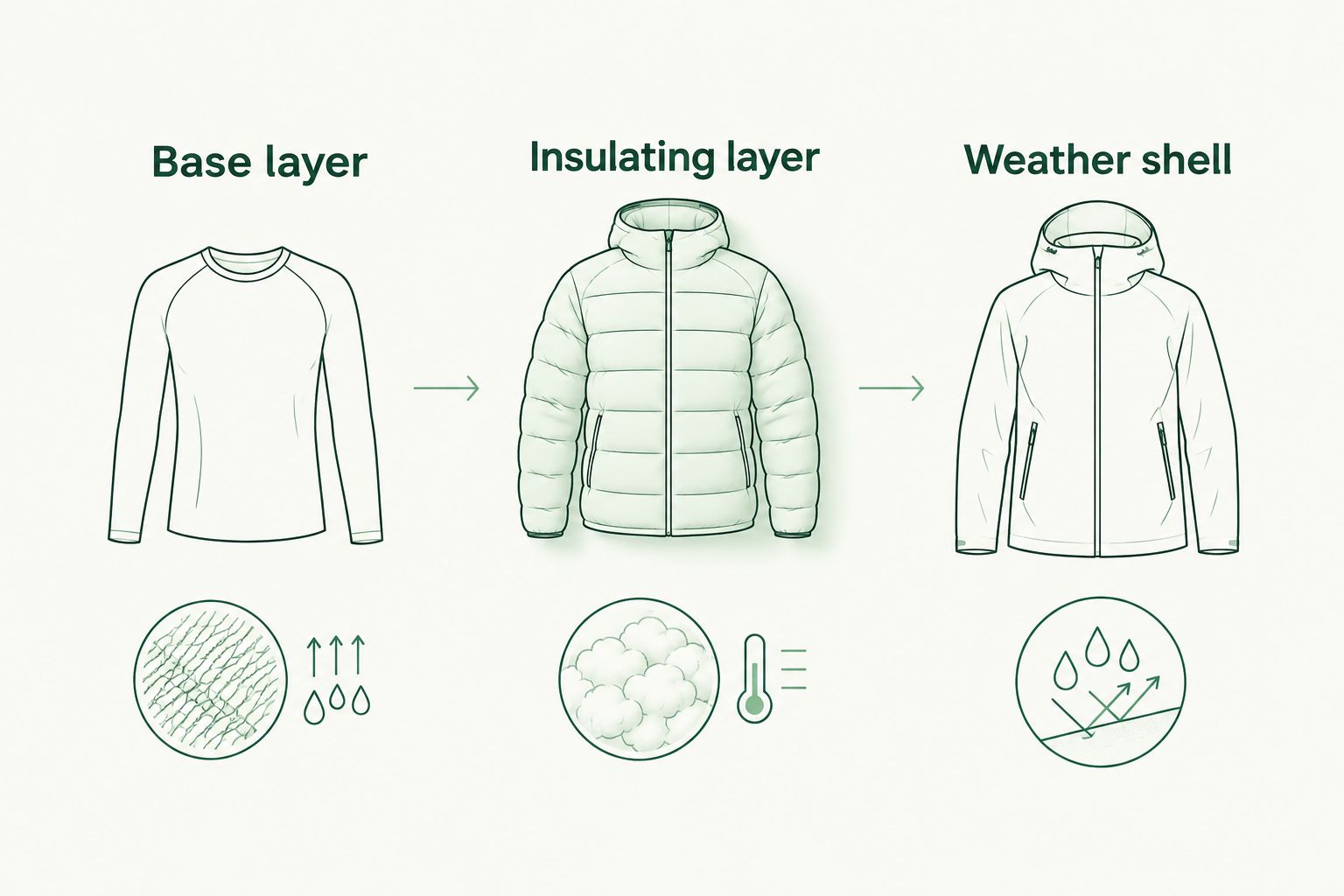
The layering check for 2026 is straightforward: can you shed heat while moving and add insulation when you stop? A system that only works while you keep walking is incomplete.
Keep your spare insulation protected from rain inside your pack. Put it on at a stop rather than waiting until you are thoroughly chilled.
Which surplus layers illustrate the difference?
Military Mart lists insulating clothing and weather shells, so the important distinction is what each garment does. The examples below illustrate separate jobs, not a tested warmth ranking.
Wool pullover: best for an insulating middle layer
The Genuine US Army 100% Wool 5-Button Pullover Sweater – Olive Drab (Grade A) is described as genuine US issue with 100% wool construction and 5 buttons. Its role here is insulation beneath suitable outer clothing.
The benefit is a clearly stated material and condition grade. The limitation is that wool construction does not make the pullover a waterproof garment or establish a comfort temperature.
High-loft fleece: best for removable insulation
The Genuine US Army ECWCS Fleece Cold Weather Jacket – Foliage Green (Grade A) is described as thermal Polartec high-loft fleece. That identifies an insulating garment rather than a rain shell.
Its role is adding or removing insulation as conditions and activity change. Its limitation is that the fleece description does not establish waterproof protection; choose your outer layer separately.
Waterproof jacket: best for the weather-shell role
The British Army Soldier 2000 Woodland DPM MVP Waterproof Jacket is described as waterproof and breathable, with Grade A+ Like New condition. Those are weather-protection and condition details, not an insulation rating.
The benefit is its stated shell function. The limitation is equally important: you still need to choose appropriate insulation beneath it for cold conditions.


Does used surplus lose warmth?
Used surplus needs an individual condition check. Flattened insulation, missing components and damaged closures affect how a garment performs, but the word used alone does not tell you its remaining insulating ability.
Military Mart states condition grades on its surplus kit. For a 2026 purchase, read the specific listing rather than treating Grade A, Like New or NOS as interchangeable descriptions.
Check these areas when the garment arrives:
- Insulation: look for obvious thinning, uneven filling or areas that remain flattened.
- Components: confirm whether any liner, hood or other detachable part you need is included.
- Closures: operate zips, buttons and adjustments while wearing the garment over your intended layers.
- Shell condition: inspect the lining, seams and any seam tape where present.
- Fit: check coverage and movement with the complete clothing combination, not over a thin indoor shirt alone.
New old stock describes unused older stock; it does not supply a thermal rating. Likewise, genuine military origin establishes provenance, not guaranteed suitability for a particular winter outing.
Is a military waterproof warmer than a normal raincoat?
A military waterproof is not inherently warmer than a normal raincoat. Both need to be assessed for insulation separately from their rain-protection function.
A shell helps your clothing system by limiting exposure to wind and rain. If you need more insulation underneath, changing to a heavier-looking shell does not necessarily solve that problem.
Is a heavier army jacket always warmer?
A heavier army jacket is not always warmer. Outer fabric, pockets and hardware contribute weight without establishing thermal performance.
Check the lining and any insulating fill before making the comparison. Also confirm what is included: a photograph showing a substantial collar or roomy cut is not evidence of an insulating liner.
Should I mix surplus and civilian outdoor clothing?
Mix surplus and civilian clothing when the garments work together. A civilian base layer, surplus fleece and suitable waterproof shell form a sensible combination if their fit and functions match your needs.
There is no practical reason to make every layer come from the same category. Check freedom of movement, coverage and ventilation instead.
FAQ
Is army surplus clothing warmer than outdoor gear?
Army surplus clothing is not automatically warmer than outdoor gear. Compare insulation, fit, condition and weather protection between garments intended for the same activity.
What's best for warmth: a surplus fleece or a waterproof jacket?
A surplus fleece provides insulation, while a waterproof jacket provides rain protection. For cold, wet conditions, choose compatible layers that perform both jobs.
Can I wear an army smock instead of a winter coat?
An army smock only replaces a winter coat if its construction and the layers beneath provide the protection you need. The word smock does not confirm insulation or waterproofing.
Is Grade A surplus guaranteed to keep me warm?
Grade A describes condition, not a guaranteed level of warmth. Read the individual listing for materials, construction and included components.
Is wool army clothing waterproof?
Wool army clothing is not automatically waterproof. Use a suitable weather shell when you need rain protection, and assess the wool garment as an insulating layer.
Should my surplus jacket fit over a fleece?
Your surplus jacket should fit over a fleece if you intend to wear them together. Check that the combination allows movement without squeezing the insulation flat.
Can I rely on surplus clothing alone for winter camping?
Winter camping requires suitable sleeping insulation and ground insulation as well as clothing. A warm jacket does not replace a sleeping system selected for the expected conditions.
One last thing
Try the stop, not just the walk. Before relying on a new clothing combination, assess how it feels when you are no longer generating heat through exercise, somewhere sheltered with an easy way indoors.
Military Mart army surplus clothing belongs in your 2026 kit when its construction, condition and fit match the job. Buy the missing function, not another jacket that merely looks warmer.


Leave a comment