

A buff for skiing is a seamless tube of stretch fabric worn round the neck and pulled up over the chin, nose and ears to cut wind chill on a lift and block blowing snow on the way down, and it earns its place in a ski bag faster than almost anything else you pack. Skiers need something different from a dog walker's neck gaiter: it has to work under a helmet strap, survive being yanked up and down forty times a day, and not fog your goggles the second you stop moving.
- A buff for skiing blocks wind chill on lifts and cuts cold air on fast descents without adding bulk under a helmet.
- Merino wool and fleece-lined buffs suit most UK ski trips in 2026; thin cotton tubes freeze once damp.
- Fit-test the buff with your own goggles before travel day - a gap at the nose bridge fogs lenses inside ten minutes.
- Military-style neck gaiters and buffs work as hard on the piste as they do on a building site or a bike commute.
Why a buff for skiing matters for this crowd
A chairlift at altitude in January is colder than the piste itself, because you're sitting still with wind moving past you at speed instead of generating heat by moving. That's the moment a buff pays for itself - pulled up over the lower face, it traps warm air against the skin while you're doing nothing but sitting there.
On the way down, the same buff has a different job: keeping cold air off your throat and chest without choking you when you're breathing hard on a red run. A neck gaiter or buff built for outdoor work has to flex between both jobs in the same afternoon, which rules out anything too thick or too tight.
Work out the temperature range you're actually skiing in
UK skiers heading to the Alps or Pyrenees in 2026 will see resort base temperatures anywhere from -2°C to -15°C depending on month and altitude, with wind chill on exposed lifts often 5-10°C colder again. Match the buff to the coldest hour of the day, not the average.
- Check the forecast for wind speed at altitude, not just the valley base temperature
- Below -10°C, plan on a fleece-lined or merino buff rather than a thin synthetic tube
- Pack a lighter buff for spring skiing above freezing, when a heavy one just makes you sweat
- Carry a spare for multi-day trips - a wet buff left overnight in a boot bag doesn't dry by morning
Pick a buff that fits under your helmet and goggles
Bulk is the enemy here. A buff that rides up too high pushes your helmet forward; one that's too tight across the bridge of the nose pushes warm breath straight into your goggles.
- Look for a tube roughly 50cm long so it sits flat under a helmet strap without bunching
- Avoid seams or logos across the bridge of the nose - they're the first thing to chafe on a long day
- Test the stretch cold - fabric that feels loose indoors often tightens once it's damp with breath
- A slightly longer buff can double as a hat on the walk to the lift on a bitter morning
Match the fabric to how hard you're working
A buff that's warm enough for a static lift queue is often too warm once you're skiing hard, which is why breathability matters as much as insulation. If you run cold on the chair but overheat on the run, add or remove a layer underneath rather than swapping the buff itself - an advanced mid-layer fleece under a shell jacket does more for core warmth than a heavier buff ever will.
- Merino wool regulates temperature well and doesn't hold odour over a week-long trip
- Fleece-lined synthetic buffs are the warmest option but slower to dry if they get wet
- Thin microfibre tubes work for spring conditions and as a base layer under a thicker buff
- Windproof softshell buffs block gusts on exposed ridgelines but trap the most moisture against the skin
Test the fit with your goggles before you travel
Do this at home, not on the mountain. Pull the buff up to where you'd wear it skiing, put your goggles on over it, and breathe normally for two minutes.
If the lenses mist up, the gap at the nose bridge is letting warm breath escape upward instead of staying trapped in the buff. If your buff lets goggles fog after ten minutes on the chairlift, it's not sealing the gap at the nose bridge - that's the single most common fit fault reported by ski shops every winter.
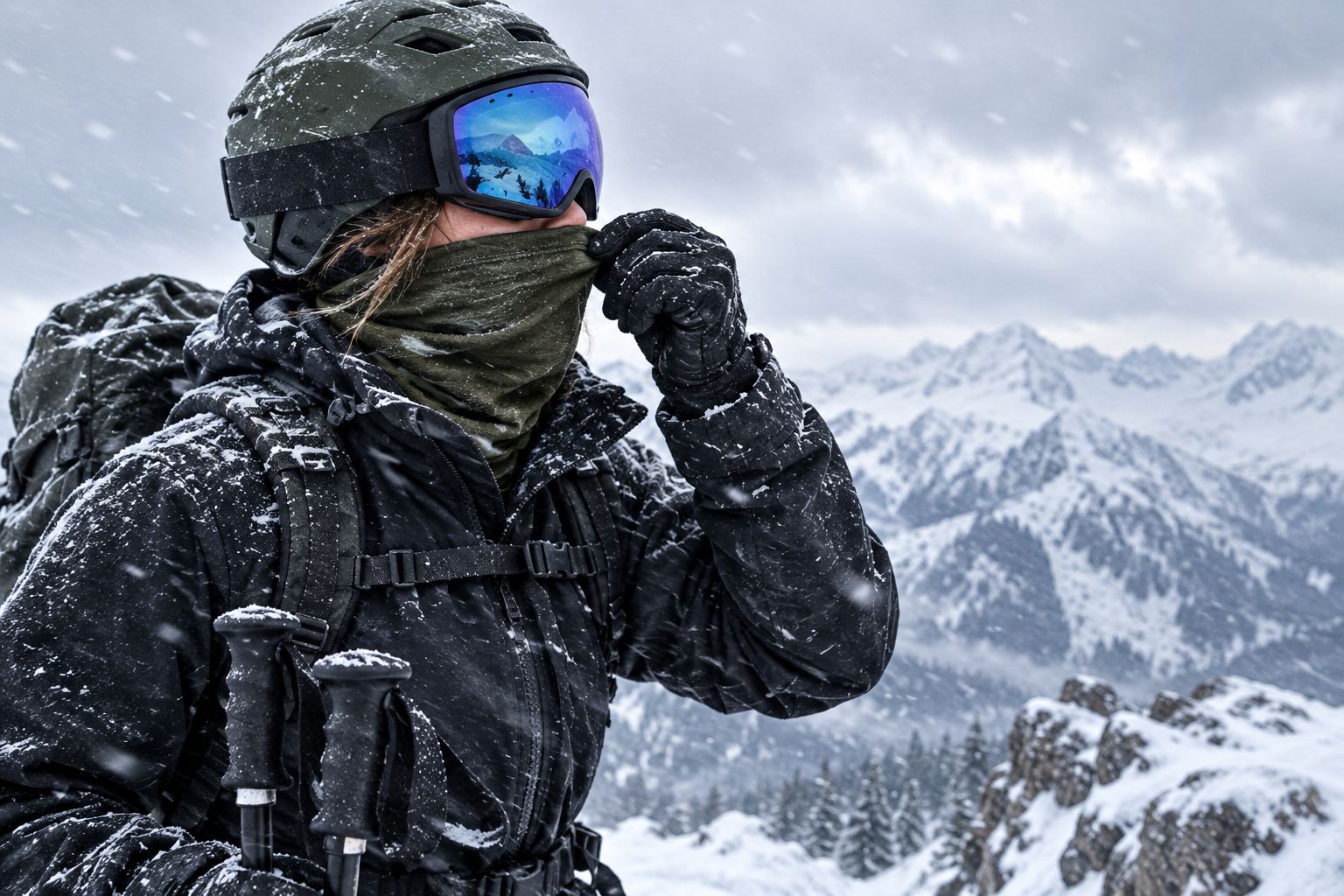
Layer the buff into your full kit for travel days
A ski trip isn't just the hours on snow - it's the walk from the chalet to the lift queue in trainers, or standing outside a resort café in ski boots waiting for a bus. That's where the rest of your kit has to pull its weight alongside the buff.
- A waterproof shell over the mid-layer keeps wind off the torso when the buff is only covering the neck and face
- A Gore-Tex waterproof parka handles the wet snow and slush of transfer days better than a ski jacket alone in heavy weather
- Waterproof gloves matter as much as the buff - cold hands ruin a ski day faster than a cold neck
- Pack a dry base layer for the evening so you're not sat in damp kit after the last run

Care for the buff between ski trips
A buff worn daily for a week collects salt, sweat and sunscreen, and none of that helps it insulate. Wash it properly before it goes back in the drawer for next season.
- Hand wash or use a gentle machine cycle - fabric softener coats merino fibres and reduces warmth
- Air dry flat rather than on a radiator, which can shrink synthetic blends
- Check the seams each season for fraying before the next trip, not the night before you fly
- Store it dry and loose rather than balled up damp at the bottom of a kit bag
Comparing buff types for skiing
| Option | Best for | Key limitation | Verdict |
|---|---|---|---|
| Merino wool buff | Multi-day trips, sensitive skin | Slower to dry once soaked through | Buy |
| Fleece-lined synthetic buff | Sub -10°C conditions, exposed lifts | Bulkier under a tight-fitting helmet | Buy |
| Windproof softshell buff | Ridgelines and high-wind resorts | Traps moisture against the skin | Hold |
| Thin microfibre tube | Spring skiing, layering piece | Not warm enough alone below -5°C | Hold |
| Cotton scarf or snood | Nothing on the mountain | Soaks with sweat and freezes solid | Skip |
“If your buff lets goggles fog after ten minutes on the chairlift, it's not sealing the gap at the nose bridge.”
Common mistakes skiers make with a buff
- Buying on warmth alone - a fleece-lined buff that's too warm for a hard-charging red run leaves you sweating, then cold when you stop.
- Skipping the goggle fit-test - the gap-at-the-nose problem only shows up once you're breathing hard, not standing still in a shop.
- Packing one buff for a week - a single wet buff left in a boot bag overnight is still damp at 8am the next day.
- Choosing cotton because it's cheap - cotton holds sweat and moisture against the skin and freezes rather than insulating.
- Wearing it as the only wind protection - a buff covers the neck and lower face; it does nothing for the chest and shoulders in a gust without a shell layer over the top.
Browse cold-weather kit for 2026
Layering pieces, waterproofs and neck gaiters built for outdoor use.
FAQ
What's the best buff for skiing?
A merino wool or fleece-lined buff is the best buff for skiing in 2026 because it regulates temperature on the lift and stays warm under a helmet without excess bulk. Thin cotton scarves or snoods aren't suitable - they soak with sweat and freeze.
Is a buff warmer than a neck gaiter for skiing?
A buff and a neck gaiter are usually the same product under different names - a seamless fabric tube. Warmth comes from the fabric weight, not the name, so compare merino or fleece-lined options against thinner synthetic tubes.
Can you wear a buff under a ski helmet?
Yes, a buff around 50cm long sits flat under most helmet straps without bunching. Avoid thick seams or logos near the nose bridge, which can chafe over a full day's skiing.
How do you stop a buff from fogging your goggles?
Fit-test the buff with your own goggles before travel day - a gap where warm breath escapes upward at the nose bridge is the usual cause of fogging. A snugger fit at the bridge, not a tighter overall fit, usually fixes it.
What size buff do I need for skiing?
A tube roughly 50cm long works for most adults, long enough to cover from the collar to the bridge of the nose and double as a hat on cold mornings. Shorter tubes tend to slip down mid-run.
Are military-style buffs suitable for skiing?
Yes - military-style neck gaiters and buffs are built for sustained cold-weather wear, which suits lift queues and exposed ridgelines just as well as fieldwork. The fabric and cut matter more than the styling.
How do you wash a ski buff?
Hand wash or use a gentle machine cycle without fabric softener, which coats merino fibres and reduces warmth. Air dry flat rather than on a radiator to avoid shrinking synthetic blends.
Do I need more than one buff for a ski trip?
For a trip longer than two days, yes - a single buff worn daily doesn't dry overnight in a boot bag, so a second one to rotate keeps you from starting the day in damp fabric.
One last thing
Pack two buffs, not one: a thin microfibre tube for lift queues and transfer days, and a fleece-lined or merino one for exposed ridgelines and the coldest morning of the trip. Swap between them rather than wearing one wet buff for the entire week - it's the single change that stops the neck-and-face kit failing halfway through a 2026 ski holiday.


Leave a comment