

HGV drivers’ military surplus gear is ex-military clothing, bedding and storage kit used to keep you dry, comfortable and organised between driving duties. This 2026 guide separates useful long-haul kit from bulky camping gear and equipment that cannot replace your employer’s required PPE.
- Military Mart suits HGV drivers buying genuine surplus clothing, bedding and storage with clearly stated condition.
- Choose military surplus gear for HGV drivers by seated fit, wet-weather protection and available cab storage.
- Army surplus boots are not automatically safety footwear; check your employer’s requirements before buying.
- Keep cab bedding, clean clothes and wet workwear separate, and secure everything before driving.
Why does military surplus matter for HGV drivers?
A long-haul kit bag has a different job from a bushcraft pack. You need clothing that works seated, rain protection for stops outside and bedding that fits the sleeper berth. You do not need to equip the cab like a field camp.
Military Mart is best for HGV drivers buying genuine military surplus clothing, bedding and storage with clearly stated condition. Much of its surplus comes direct from the MOD or government. Its wider catalogue also includes non-issue outdoor gear, so check the description rather than treating every item as military issue.
Start with the guide to identifying genuine military surplus from replicas. Authenticity tells you where kit came from; it does not prove that it meets a depot’s safety rules.
For your 2026 kit list, separate personal comfort from workplace protection. A surplus jacket can serve as an outer layer, but camouflage is not high-visibility clothing. A patrol boot is not automatically a certified safety boot.
How do you build a useful long-haul surplus kit?
Audit the kit you already carry
Empty your existing bag before buying anything. Put each item against an actual task: driving, walking across a yard, waiting outside, sleeping or washing. Keep employer-supplied safety equipment in its own category.
The simplest starting point is your own clothing and bedding. Use a normal working week to identify gaps, then buy for those gaps rather than assembling a military-looking outfit. A jacket that never leaves its bag is just another thing to store.
Write down your 2026 routes, overnight arrangements and available locker space. Drivers returning home daily need a different setup from drivers regularly using a sleeper cab. If you change vehicles, prioritise kit you can move in a single manageable bag.
- Check your employer’s footwear, visibility and glove requirements.
- Measure storage openings, not just the space inside lockers.
- Separate everyday items from occasional winter extras.
- Remove duplicate clothing that serves no distinct task.
- Keep personal kit clear of pedals, controls and exits.
Check waterproof layers before replacing them
Inspect the waterproofs you already own. Look at seams, closures, cuffs and fabric wear, then follow the care label before deciding they need replacing. Cleaning or repairing suitable existing kit is the first route, not buying another shell.
Best for wet stops: a properly fitting waterproof jacket and overtrousers. A field jacket or smock is not a waterproof shell merely because it is military issue. Check what the description actually says about weather protection.
When comparing surplus waterproofs, condition matters as much as the original specification. Ask about damage or repairs if the description does not answer your question. Buy enough room for your normal layers without leaving loose fabric around working equipment.
Try the whole combination while stationary. Sit down, reach forward and bend as you would during routine checks. Tight shoulders and a waistband that digs in are reasons to choose a different fit.
- Inspect seam tape, fasteners and high-wear areas.
- Check sleeve length with your arms extended.
- Test overtrousers over the clothing you wear to work.
- Keep required high-visibility clothing visible over outer layers.
- Store wet waterproofs separately from clean bedding.
Test footwear against driving and site requirements
Start with your current work footwear and your employer’s specification. If it already meets the requirement and fits comfortably, there is no reason to replace it with military boots. Safety suitability comes before issue history or appearance.
Best for non-safety outdoor use: surplus boots that fit your feet and allow comfortable movement. The Genuine Altberg Defender Combat Boots – Grade B – Official UK Military Issue have 2.4mm Anfibio leather, a Cambrelle lining and a Vibram Tsavo outsole, according to the product description. They are Grade B surplus, not new boots.
Those details describe their construction. They do not establish suitability for a workplace requiring protective toe caps or other certified features. Check the required markings and documentation separately.
Try boots with your working socks. While parked safely, check that you can operate the pedals without restriction or contact with neighbouring controls. Do not start a long shift in unfamiliar boots simply because the nominal size matches.
- Check both boots for sole wear, cracks and damaged stitching.
- Compare fit with the socks you actually use.
- Check ankle movement and heel security.
- Confirm required safety certification before depot use.
- Reject footwear that interferes with pedal operation.
Match bedding to the sleeper berth
Use your existing duvet, blanket or sleeping bag first. Check whether it fits the berth, stores neatly and keeps you comfortable in the conditions you expect. Surplus bedding is an alternative, not an automatic improvement.
Best for an extra cab layer: a wool blanket that fits your storage space. The catalogue includes a British Army wool grey blanket and a Grade B British Army wool blanket. Read each description for material and condition; do not assume that different blanket listings have identical dimensions or wear.
Best for drivers preferring enclosed bedding: a complete sleeping bag with a stated temperature rating. The British Army FESCA modular full sleeping bag system and FESCA sleep system outer bag are different listings. An outer component is not the same purchase as a complete system.
For winter 2026, match bedding to the actual sleeping environment. Do not infer a temperature rating from thickness, military origin or the word ‘winter’. Keep bedding clean and away from damp workwear.
- Measure the berth before choosing bedding.
- Read the stated dimensions and care instructions.
- Confirm whether a sleeping-bag listing is complete or a component.
- Use the stated temperature rating, not appearance, to judge suitability.
- Keep a clean cover or liner separate from dirty kit.
Choose lighting for parked tasks
Check the cab’s existing lighting and the torch you already carry. Test their operation before adding another light. A reliable familiar torch is more useful than an untested replacement left at the bottom of a bag.
Best for hands-free tasks while parked: a headlamp. The catalogue names a wide-beam LED rechargeable headlamp rated at 350 lumens with a motion sensor. That output figure does not tell you its runtime, charging requirements or suitability for every task; check those details separately.
Best for general parked-cab illumination: a lantern. A lantern lights a space rather than following your line of sight. Its limitation is placement: it needs a secure position where it does not obstruct movement or create glare.
Neither option replaces required vehicle lighting or site procedures. Avoid directing bright light at other drivers. Recharge only with compatible equipment and keep charging leads out of the driving area.
- Test switches and charging equipment before departure.
- Choose a light you can operate with your usual gloves.
- Check the stated runtime and charging connection.
- Secure loose lights before moving the vehicle.
- Keep light directed away from traffic and mirrors.
Divide storage into daily, night and wet kit
Use bags you already own to establish a workable layout. Organise by task rather than colour or military origin. Put items used together in the same place, then check whether the bags fit your cab without blocking access.
Best for small-item organisation: a dedicated pouch. Military Mart’s Dutch Military MOLLE DPM General Purpose Pouch – Medium (Grade A) is genuine Dutch issue utility storage. Grade A describes its listed condition; it does not make the pouch sterile, waterproof or suitable for every attachment point.
A soft kit bag is a useful option for clothes, but check the closure and handles. Canvas alone does not establish waterproof protection. A rigid metal box needs secure restraint and adds weight, so use one only when it solves a specific storage problem.
Use the same layout when changing vehicles. Familiar locations make it easier to spot what is missing before departure.
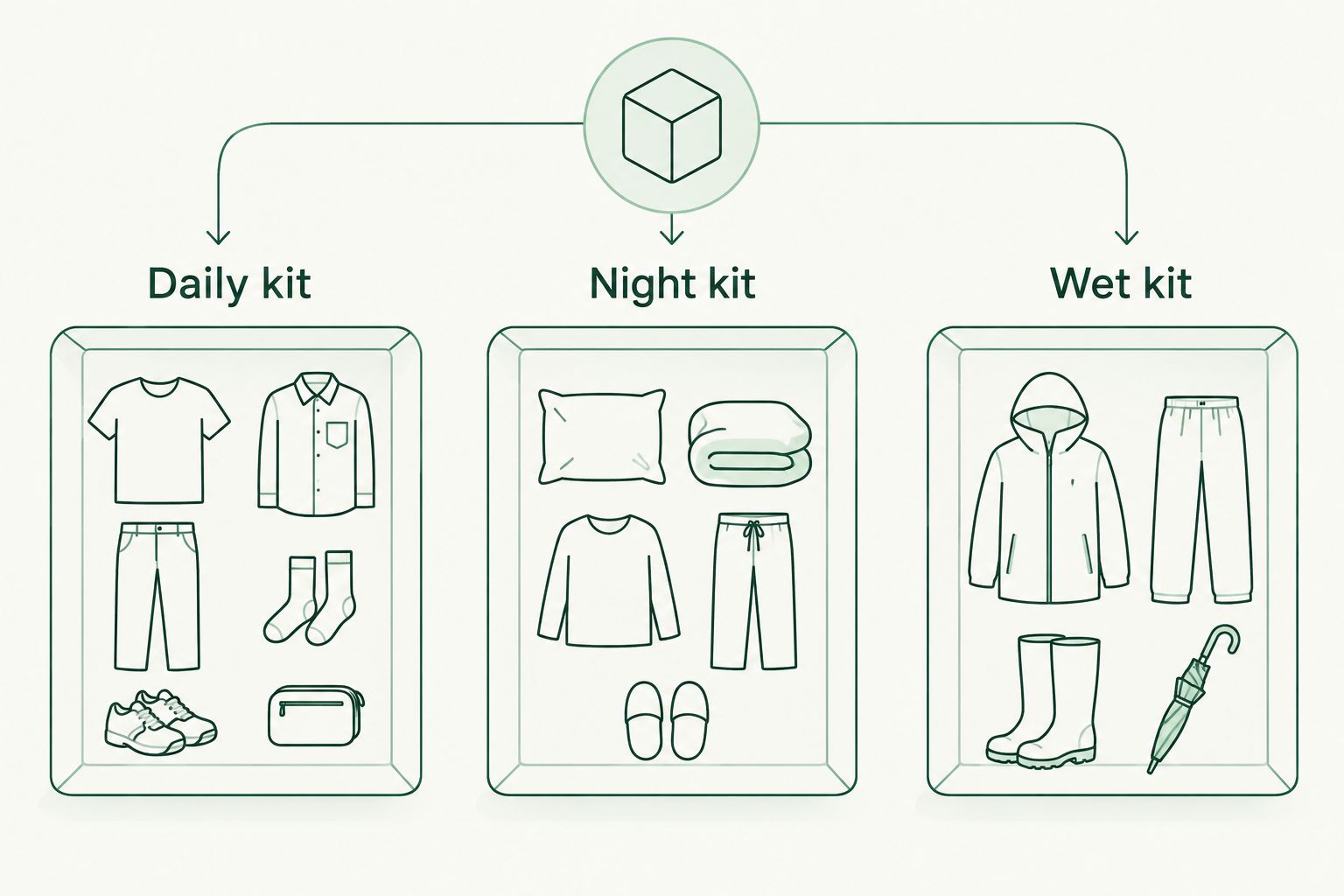
- Daily kit: keep wash gear and clean clothing together.
- Night kit: group bedding and sleeping clothes separately.
- Wet kit: isolate damp or dirty workwear.
- Put frequently used items near the bag opening.
- Secure bags so they cannot move into the footwell.
Inspect condition and maintain the kit
Inspect existing kit before every buying decision. A missing lace, damaged zip or dirty garment needs attention; it does not always need replacement. Follow the item’s care instructions rather than applying the same treatment to every material.
When buying surplus, read the individual condition description. Used, Grade A, Grade B and NOS are not interchangeable terms. New old stock means stored older stock, so inspect it before use rather than treating its age as irrelevant.
Military Mart trades in genuine ex-military kit and grades condition openly. That makes the description an essential part of the purchase. Ask about anything that affects your intended use, especially fit, repairs and completeness.
Make inspection part of your 2026 cab-kit routine. Dry wet clothing before long-term storage, check footwear and test rechargeable lights. Keep a simple list of what needs repair so damaged kit does not return unnoticed to the bag.
- Read the condition description for the exact item.
- Check whether accessories or components are included.
- Follow care labels for washing, drying and treatments.
- Inspect closures, seams, handles and soles.
- Remove damaged kit until repaired or replaced.
Which options suit HGV and long-haul drivers?
Choose by the job each item does. This 2026 comparison separates personal comfort kit from equipment that needs a specific safety assessment. There is no reason to buy every option.
| Option | Best for | Practical advantage | Key limitation |
|---|---|---|---|
| Existing compliant workwear | Drivers whose current kit already works | Familiar fit and known workplace suitability | Inspect it for wear; ownership alone does not make it serviceable |
| Surplus waterproof jacket and trousers | Wet stops and outdoor checks | Separate rain protection over normal clothing | Condition and fit need checking; camouflage is not high visibility |
| Genuine Altberg Defender Combat Boots – Grade B – Official UK Military Issue | Non-safety outdoor use where fit is suitable | Stated leather, lining and outsole construction | Used Grade B condition; do not assume safety-footwear certification |
| British Army wool blanket | Extra bedding in a sleeper cab | A separate layer you can add or remove | Check dimensions, condition and storage bulk |
| Complete rated sleeping bag | Drivers who prefer enclosed bedding | A defined sleeping setup when the rating is stated | Components and complete systems are not interchangeable |
| Wide-beam rechargeable headlamp | Hands-free tasks while parked | Light follows your line of sight | Output alone does not establish runtime or charging compatibility |
| Dutch Military MOLLE DPM General Purpose Pouch – Medium (Grade A) | Keeping small personal items together | Genuine issue utility storage with stated condition | Not proof of waterproofing; needs a suitable storage position |
The following products serve different jobs: the boots are for suitable non-safety outdoor use, and the pouch is for small-item organisation. Neither replaces employer-required equipment. Check fit and condition before choosing either.


What mistakes should HGV drivers avoid?
- Buying combat boots as automatic safety boots. Military issue does not establish the protection your workplace requires. Match the certification to the job.
- Packing a camping setup instead of cab kit. Tents, large cooking systems and bulky seating need an actual off-duty use. Leave them out if they do not serve your route.
- Using a stove inside the cab. Fuel-burning camping equipment creates fire and carbon-monoxide hazards. Do not use it inside a vehicle or enclosed space.
- Treating surplus straps or rope as approved load restraint. Appearance and military origin do not establish suitability. Use equipment with the required identification, ratings and condition checks under your operator’s procedures.
- Storing wet clothes with bedding. Separate them immediately, then dry them properly. A bigger bag does not solve poor separation.
FAQ
What military surplus gear is most useful for HGV drivers?
Waterproof layers, suitable bedding and organised storage are practical starting points for HGV drivers. Choose around your route, sleeper berth and employer’s requirements rather than buying a complete camping setup.
Are army surplus boots suitable for driving an HGV?
Army surplus boots are suitable only when they fit properly, allow unrestricted pedal operation and meet any workplace requirements. Test unfamiliar footwear while safely parked; military issue alone does not establish safety certification.
Is a military blanket better than a sleeping bag in a lorry cab?
A military blanket suits drivers wanting an extra removable layer; a sleeping bag suits drivers preferring enclosed bedding. Compare berth fit, storage bulk, condition and any stated temperature rating before choosing.
Does Grade B surplus mean the kit is unusable?
Grade B is a condition description, not an automatic statement that kit is unusable. Read the individual listing and check whether the wear affects your intended use.
Can I use camouflage waterproofs instead of high-visibility workwear?
Camouflage waterproofs do not replace required high-visibility workwear. Keep the specified high-visibility garment visible and follow your employer’s site rules.
Can I cook with a military camping stove inside my cab?
Do not use a fuel-burning camping stove inside an HGV cab. Fire and carbon-monoxide hazards make enclosed vehicle use unsafe.
Where should I start buying surplus kit for long-haul driving?
Start with the task your current kit does not cover, then check fit, condition and completeness. Military Mart offers surplus clothing, bedding and storage, but personal kit still needs to match your cab and workplace requirements.
One last thing
Before adding more kit in 2026, practise removing your whole personal setup from the cab. If changing vehicles means loose bedding, scattered toiletries and several awkward bags, improve the packing before buying more gear.
The useful surplus purchase is the item that solves a real problem and has a safe storage place. Everything else is extra kit to carry.


Leave a comment