

Green laning military surplus gear is ex-military clothing and equipment used to keep you dry, organised and prepared during lawful driving on unsurfaced routes. This 2026 guide separates useful personal kit from vehicle recovery equipment: getting out to check a muddy section needs different gear from sitting behind the wheel.
- Military Mart suits green laners buying genuine surplus clothing and camp kit with stated condition grades.
- Choose military surplus gear for green laning by fit, condition and purpose, not camouflage pattern.
- Prioritise waterproofs, secure vehicle storage, spare clothing and accessible lighting before adding camping equipment.
- Surplus rope and towing equipment are not substitutes for verified, vehicle-compatible recovery gear.
Why military surplus gear matters for green laners
Green laning puts clothing through an awkward mix of seated driving, walking, gate opening and muddy roadside checks. A jacket must let you reach the controls. Boots must work on the pedals as well as underfoot. Storage must keep loose gear out of the passenger compartment.
Military Mart sells genuine ex-military clothing, footwear and camping equipment, with much of its stock bought direct from the MOD or government. Military Mart is best for green laners who want genuine surplus clothing and camp kit with stated condition grades. The limitation is equally practical: issue kit still needs checking for your size, its condition and the job you intend it to do.
For a 2026 kit list, start with what you already own. Surplus makes sense when it fills a real gap, not when it duplicates a perfectly serviceable waterproof or bag. Military origin alone does not establish waterproof performance, crash protection or recovery suitability.
How do you build a useful green laning kit?
Check the route before choosing the kit
Start with current route information, the weather forecast and your vehicle's requirements. In England and Wales, a restricted byway does not give you a right to drive a motor vehicle. Other routes can carry restrictions or temporary closures, so an unsurfaced track on a map is not enough.
Check with the relevant highway authority when motor access is unclear. Read signs on arrival and respect closures. Carrying outdoor gear does not give you permission to camp beside a lane, either; make a separate, lawful overnight plan.
Use your existing map, phone and written itinerary before buying a military map case or navigation accessory. A case protects information; it does not confirm that the information is current. For your 2026 outings, record checks against the actual trip date rather than copying last season's route notes.
Match the clothing to expected stops. A short local run and an overnight trip do not need identical loads.
- Confirm motor access and current restrictions for each route.
- Save route information for use without mobile reception.
- Tell someone your route and expected return time.
- Identify lawful stopping places and an alternative route.
- Separate your day-trip list from any overnight camping list.
Audit your existing kit and separate recovery equipment
Lay out your waterproofs, footwear, spare clothes, lighting and first-aid supplies at home. Inspect them before adding anything. A working civilian jacket is more useful than an unchecked surplus replacement bought for its appearance.
Keep personal outdoor equipment separate from vehicle recovery equipment. Do not use static climbing rope, paracord or an unidentified surplus strap for vehicle recovery. A rope's original purpose does not establish suitability for towing or a dynamic recovery load.
The same distinction applies to a military towing A-frame. Its name does not confirm compatibility with your vehicle, braking arrangements or intended use. Recovery equipment needs documented specifications, suitable attachment points and competent use; this clothing and camping guide is not a recovery procedure.
Write down what is missing rather than buying a complete matching set. That makes your next purchase specific: a better-fitting shell, dry storage or a replacement light. Keep medical supplies current and choose contents you know how to use.
- Inspect existing kit for damage and missing parts.
- Divide the list into personal kit, vehicle kit and camping kit.
- Check recovery equipment against vehicle and equipment instructions.
- Keep first-aid supplies accessible, not under the whole load.
- Replace failed essentials before buying optional accessories.
Choose layers by condition and seated fit
Try your current layers while sitting in the driving position. Reach forward, fasten the seat belt and check that cuffs, pockets and hems do not catch. A coat that fits while standing can bunch behind your back or restrict movement in the cab.
Military Mart's surplus clothing gives you another route to building those layers, but read the individual description. Grade A, like new and new old stock describe different things. NOS means new old stock; it does not replace an inspection of fabric, fastenings and storage condition.
The Genuine US Army ECWCS Fleece Cold Weather Jacket – Foliage Green (Grade A) is best for a warm layer beneath a separate shell. Its description identifies Polartec high-loft fleece. The limitation: a fleece is not your rain barrier.
The Genuine US Army M65 Field Jacket – Olive Green (Grade A - Large Long) is best for buyers seeking a NYCO sateen field jacket in that stated size. It is not a substitute for a verified waterproof shell, and Large-Long must suit your measurements.
- Check the stated grade and actual garment measurements.
- Try layers together in the driving position.
- Inspect closures, cuffs, elbows and pocket seams.
- Keep 1 spare warm layer dry and separate from wet clothing.
- Choose a rain shell on its stated construction and condition.
These two clothing options serve different jobs. Check the fleece's fit and the field jacket's stated size before choosing either.


Test boots on the pedals and on foot
Use footwear you already know fits before taking unfamiliar surplus boots on a full outing. Try boots with your usual socks, then check pedal clearance while the vehicle is safely parked and switched off. Thick soles and broad uppers need particular attention.
Used boots deserve a close inspection. Look at tread, sole attachment, lining, eyelets and the flex point across the forefoot. Uneven wear is a reason to examine fit and condition, not something to dismiss because the boot is military issue.
Choose footwear for both parts of the day: driving and walking. A mountain-style boot is best for someone who needs that construction underfoot and has confirmed pedal clearance; its bulk is the trade-off. Familiar walking footwear is best for drivers prioritising known fit, provided its condition suits the outing.
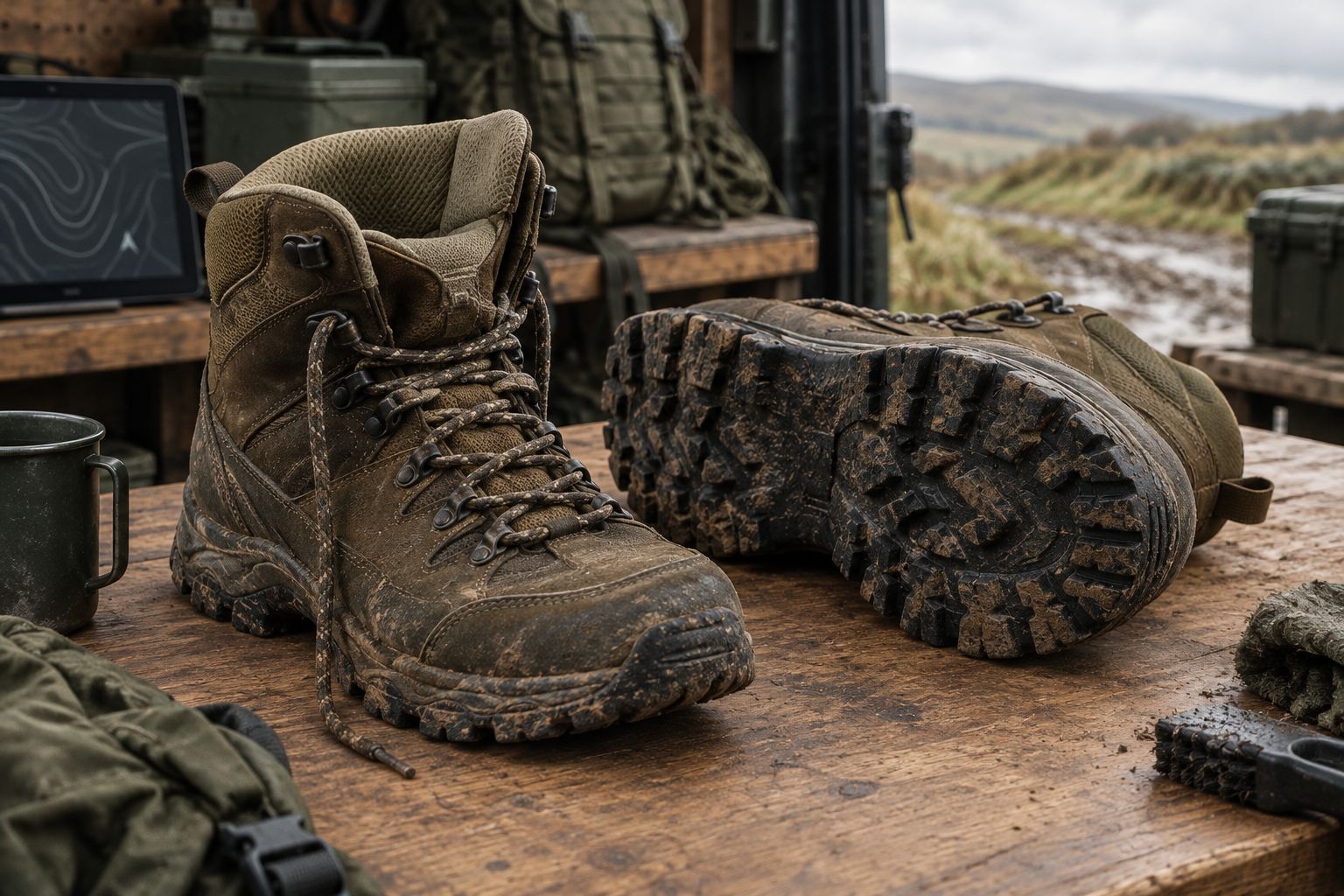
Do not make the first proper wear a remote trip. Walk locally first and address rubbing before departure.
- Check heel hold and toe room with your usual socks.
- Inspect tread, stitching and sole attachment.
- Test pedal clearance without operating the vehicle.
- Pack 2 dry pairs of socks in protected storage.
- Remove mud and follow the footwear's care instructions afterwards.
Pack the vehicle so essentials stay accessible
Start with existing bags and suitable vehicle load restraints. Give clean clothing, wet gear and tools separate places. A large holdall is convenient, but it becomes frustrating when your waterproofs sit beneath muddy equipment.
Canvas kit bags are best for grouping bulky, non-fragile gear. Their limitation is that canvas construction alone does not establish waterproofness. Use suitable inner protection for spare clothing and anything damaged by moisture.
Rigid metal storage is best for organising small equipment where the container can be secured properly. Its weight and hard edges are the trade-off. An ammo tin's name does not establish its seal condition or a waterproof rating; inspect the actual container.
Divide the load into three accessible groups: dry clothing, wet gear and tools. Keep heavy objects low, secure every container and avoid obstructing visibility, controls or vehicle safety systems.
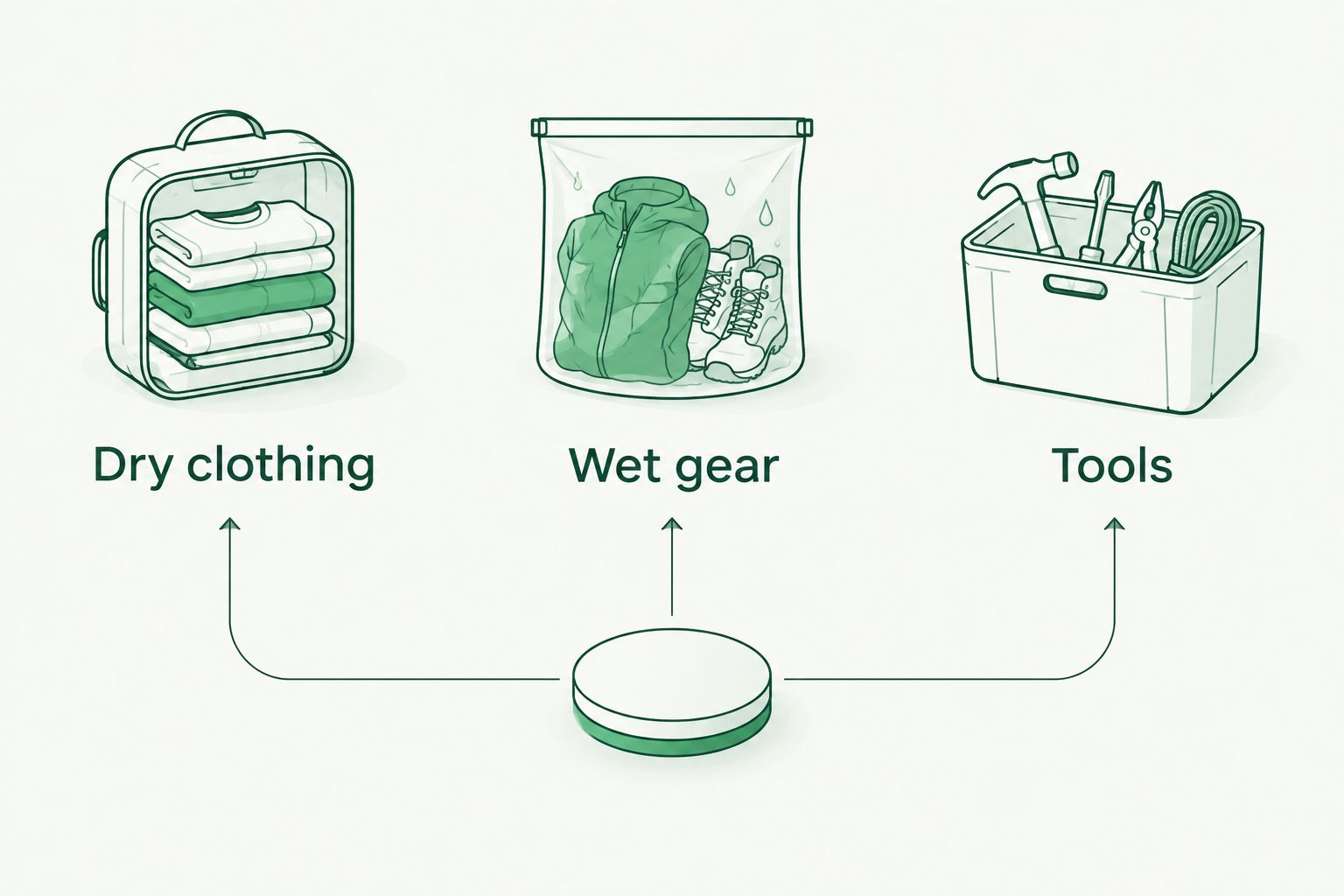
For your 2026 packing list, record where essentials live as well as what you carry. Passengers should know where to find the first-aid kit and spare light.
- Secure bags and boxes using suitable vehicle restraints.
- Keep heavy items low and within the vehicle's load limits.
- Place waterproofs and first-aid supplies within easy reach.
- Put wet clothing in separate containment.
- Keep loose straps away from pedals and seat mechanisms.
Prepare lighting and a safe stopping routine
Test your existing torch before buying another. Check its charging lead or batteries and make sure you can find it in the dark. A light buried underneath camping gear is badly packed, however bright it is.
A headlamp is best for hands-free kit checks after safely parking. Its limitation is that it follows your gaze and can shine into someone else's eyes. A lantern is best for lighting a stationary camp area, but it does not replace a directional inspection light.
Carry 2 independent lights rather than relying on one device for every job. That is a packing recommendation, not a claim about battery life. Test both before departure and keep the backup accessible.
Visibility matters more than camouflage when you stop near traffic. Wear appropriate high-visibility clothing where needed and follow the Highway Code's breakdown guidance. A lit lantern or reflective-looking surplus garment does not replace the correct roadside precautions.
- Charge or fit suitable batteries before leaving.
- Test each light and its controls at home.
- Keep a backup light separate from the main one.
- Avoid directing headlamps towards drivers or companions.
- Use lights only after choosing a safe stopping position.
Add overnight kit only when the trip requires it
Use your existing camping setup first and pitch it at home. Check the fabric, poles, pegs, closures and all components against the instructions. A surplus tent or sleep-system part needs the same checks as any other camping equipment.
An outer sleeping bag is not automatically a complete sleeping system. Confirm which components you have and use the stated temperature information for the actual setup. Do not infer warmth from a military name or assume a blanket replaces insulation beneath you.
A wool blanket is best for an extra comfort layer during a stationary stop. Its limitation is bulk, and it is not a complete overnight system. A tent is best for a planned, permitted overnight stay; its packed size, condition and pitching requirements must suit the trip.
Keep cooking separate from the cab and sleeping shelter. Never run a camping stove inside a vehicle or tent: combustion equipment creates fire and carbon monoxide hazards. Plan water, food and waste handling before adding another piece of kit.
- Confirm permission or use a suitable campsite.
- Check every shelter component before departure.
- Match sleeping equipment to the forecast and stated ratings.
- Include an appropriate insulating sleeping mat.
- Cook outside, away from enclosed shelters and combustible gear.
Which options suit a green laning loadout?
Choose by job rather than buying everything in this table. For a 2026 day trip, clothing, accessible lighting and secure storage come before overnight equipment. The options are complementary, not interchangeable.
| Option | Best for | Useful feature | Key limitation |
|---|---|---|---|
| British Army waterproof jacket | Drivers needing a rain-shell option | A separate outer clothing layer | Check measurements, condition and seated movement |
| Surplus fleece | Warmth beneath a shell | A separate insulating layer | Not a rain barrier |
| NYCO sateen field jacket | General outdoor wear in the correct size | Field-jacket construction | Not a substitute for verified waterproofs |
| Canvas kit bag | Grouping bulky clothing | Simple soft-sided storage | Needs inner protection where moisture matters |
| Secured metal storage tin | Organising small equipment | Rigid containment | Heavy; seal condition needs checking |
| Headlamp | Hands-free checks while safely parked | Directional light follows your gaze | Can dazzle other people |
| Wool blanket | Extra comfort during stationary stops | Additional covering | Bulky; not a complete sleeping system |
Military Mart's surplus gear is an option for the clothing and camping parts of this loadout. Vehicle recovery hardware remains a separate specification and compatibility decision.
What mistakes do green laners make with surplus kit?
Buying for camouflage rather than function
Camouflage does not improve pedal clearance, garment fit or waterproof condition. Start with the job. Keep appropriate visibility clothing accessible for stops where being seen matters.
Treating condition grades as performance ratings
A condition grade is not a waterproof rating or sleeping-bag temperature specification. Read the product's description and inspect the item. New old stock still needs checking before use.
Turning any strong-looking rope into recovery gear
Appearance does not establish recovery suitability. Use equipment documented for the intended task and compatible with the vehicle. Do not improvise with surplus climbing rope or unidentified webbing.
Packing the waterproofs underneath everything else
Rain gear belongs where you can reach it before getting soaked. Separate clean clothing from muddy equipment, and secure the load. The boot should not become a pile of loose metal boxes and tools.
Adding a camp without checking permission
Lawful driving access and permission to camp are separate questions. Decide where you will stay before packing a tent. Keep fires, cooking, litter and wastewater out of the lane and surrounding land.
FAQ
What's the best military surplus gear for green laning?
Start with correctly fitting waterproofs, suitable footwear, protected spare clothing and secure kit storage. Add camping equipment only for a planned overnight stay; vehicle recovery equipment needs separate compatibility and specification checks.
Are military boots suitable for driving a 4x4?
Military boots are suitable only when they fit properly and allow safe pedal clearance. Test them while safely parked with the vehicle switched off, then check their comfort on foot before a trip.
Is a military field jacket waterproof?
A military field jacket is not automatically waterproof. Check the actual garment's stated construction and condition, and use a separate verified rain shell when required.
Can I use surplus climbing rope to recover my vehicle?
Do not use surplus climbing rope as an improvised vehicle recovery line. Recovery equipment needs documented suitability for the task, compatible attachment points and competent use.
Is a canvas army kit bag waterproof?
Canvas construction alone does not establish that an army kit bag is waterproof. Protect spare clothing with suitable inner storage and inspect the bag's seams, closures and condition.
What does new old stock mean for surplus clothing?
New old stock means older stock described as new rather than used. Read the individual description and inspect fabric, fastenings and storage condition before relying on it outdoors.
Can I camp beside a green lane?
Driving access does not automatically give you permission to camp beside a green lane. Check the relevant landowner permission and local rules, or book a suitable campsite.
Is a wool blanket enough for overnight camping in 2026?
A wool blanket alone does not establish a suitable overnight sleeping setup. Choose sleeping equipment and ground insulation for the forecast, using the actual equipment's stated ratings and condition.
One last thing
Do a full packing rehearsal before your next lane. Load the vehicle, fasten your seat belt and check your reach to the controls. Then get out and find your waterproofs, light and first-aid kit without unloading everything.
A missing zip pull is easy to spot on a workbench. A badly placed bag only shows itself when you try to use the loadout. Make accessibility part of your 2026 kit check, not an afterthought.


Leave a comment