

Cadet instructors’ military surplus gear is ex-service clothing and equipment chosen to keep adult instructors equipped for approved training, supervision and camp duties. This 2026 guide covers military surplus gear for cadet instructors, where condition, fit and unit requirements matter more than camouflage or collecting a matching set.
- Military Mart suits cadet instructors buying genuine military surplus gear with stated condition grades.
- Choose military surplus gear for cadet instructors around unit requirements, boot fit and usable waterproofs.
- Used surplus needs inspection; new old stock still needs a fit and condition check.
- Keep personal field kit separate from shared teaching equipment and approved safety equipment.
Why military surplus gear matters for cadet instructors
An instructor’s kit has to support the lesson, not distract from it. You need to move comfortably, reach teaching materials and stay equipped while supervising others, including during periods when you are standing rather than walking.
Military Mart is best for cadet instructors who want genuine surplus with stated condition grades. Much of its stock comes direct from the MOD or government, and its range includes cadet kit, clothing, footwear and camping equipment. The limitation is straightforward: genuine military origin does not establish suitability for your force, activity or body shape.
For your 2026 kit review, start with what your unit provides and what you are expected to supply yourself. Military Mart is a source for filling those gaps, not a substitute for your unit’s instructions or activity risk assessment.
Separate the buying decision into three questions: is the item permitted, does it fit, and is its condition suitable for the task? A good answer to only one is not enough. A genuine jacket in the wrong pattern, or a well-graded boot that rubs, still belongs off your working kit list.
How do you build an instructor’s surplus kit?
1. Confirm your unit’s requirements before buying
Write your kit list from the activity brief and your unit’s current guidance. Do this before browsing products. Army, Air and Sea Cadet settings are not interchangeable, and an item described as military issue is not automatically appropriate for every cadet organisation.
Divide your 2026 list into personal clothing, personal field equipment and shared teaching kit. Mark anything already issued or held centrally. This prevents buying another shelter when the actual gap is a correctly fitting waterproof layer.
Ask the activity lead about anything unclear, especially uniform patterns, insignia, permitted personal equipment and overnight arrangements. Keep a separate note of optional comforts so they do not displace required kit.
- Record the required uniform and footwear specification.
- Confirm which items your unit issues or lends.
- List personal kit separately from shared stores.
- Check overnight accommodation and sleeping arrangements.
- Mark optional items clearly before making purchases.
2. Inspect condition and provenance item by item
Start with the label, seller’s description and condition grade. Check those against the job you need the item to do. Used, new and NOS—new old stock—describe different histories; none removes the need to inspect the actual equipment.
Look closely at stress points rather than judging by colour alone. Faded fabric and a failed fastening are different problems. For waterproof clothing, inspect the inside as well as the outside, including seams, coatings and closures.
Military Mart’s military surplus gear is graded for condition, but read the individual listing rather than treating a grade as a universal specification. Genuine surplus and clearly labelled reproductions have different uses. Neither authenticity nor an unused appearance proves protective performance.
- Read the individual condition description in full.
- Check origin and any reproduction wording.
- Inspect seams, zips, buckles and attachment points.
- Look for deterioration, persistent damp or damaged coatings.
- Set aside anything whose condition does not suit the activity.
3. Fit boots and uniform for working movement
Try your existing boots and clothing with the socks and layers you actually use. Walk, kneel, squat and reach overhead. A uniform that looks tidy while standing still can restrict you when demonstrating field skills or helping with camp equipment.
For replacement footwear, the Altberg Defender boots, Grade B are a genuine UK military-issue option. Best for: instructors considering used issue boots and prepared to inspect their fit and condition. The supplied product description specifies 2.4 mm Anfibio leather; that material specification does not tell you how an individual used pair fits or how much wear it has.
Grade B is a condition label, not a promise of parade appearance or suitability for your feet. Check both boots, including the sole bond, tread, lining and heel support. Reject a pair that causes pressure or lets your heel move excessively.
- Measure both feet and check the listing’s sizing information.
- Try boots with your intended field socks.
- Check toe space, heel hold and pressure points.
- Inspect both soles and the leather-to-sole junction.
- Test trousers and outer layers while kneeling and reaching.
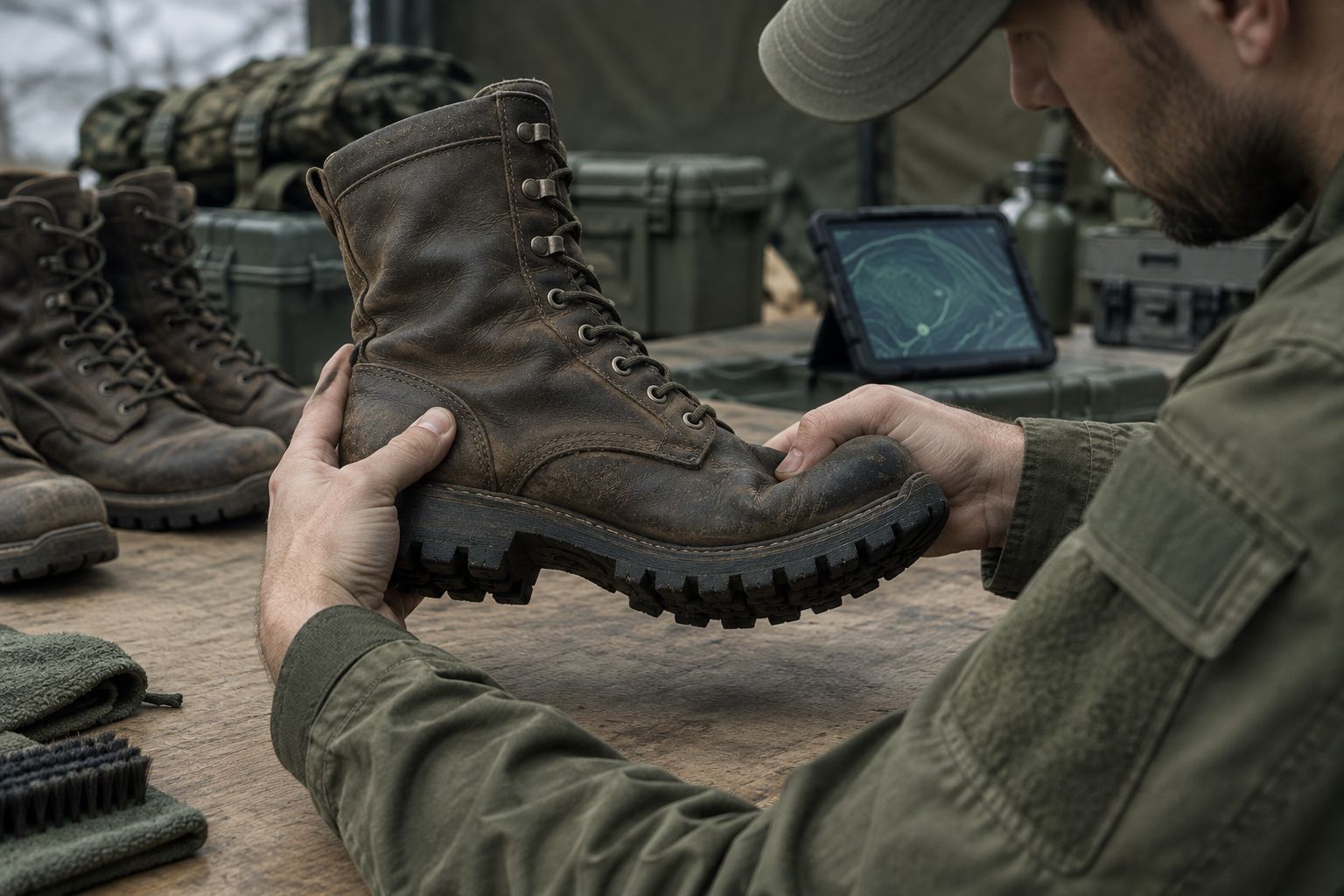
A close inspection is more useful than a polished exterior. Pay attention to the places that flex and carry load.
4. Build weather protection around the actual activity
Lay out your existing base layer, insulating layer and outer protection before replacing anything. Check how they work together. A bulky layer that blocks movement or prevents the waterproof from closing properly is not a useful addition.
For 2026 field training, plan separately for movement and stationary supervision. You do not generate the same warmth while watching a lesson as while carrying equipment. Keep a dry change protected from wet clothing rather than relying on the outer bag alone.
Do not treat a smock, poncho or camouflage pattern as proof of waterproofing. Read the stated function and inspect the garment. An outer layer also needs usable cuffs, closures and enough room for the layers underneath.
- Check the forecast and activity brief before selecting layers.
- Test the outer garment over your intended insulation.
- Inspect cuffs, hood adjustment and front closures.
- Pack 1 complete dry change in separate waterproof protection.
- Carry 2 pairs of spare socks as a practical starting point.
5. Pack teaching essentials where you can reach them
Use your existing bag first. Pack it for a rehearsal and see whether you can retrieve the lesson materials, waterproof and torch without spreading everything across the ground. Capacity is only useful when the load stays manageable and the contents stay organised.
Keep personal necessities separate from group resources. A pouch can organise small items, but adding pouches everywhere makes a bag harder to check. Choose attachment points that hold securely and do not leave straps hanging where they snag.
Keep sensitive paperwork protected and follow your organisation’s rules for carrying personal information. Store batteries, pens and loose accessories so they cannot damage other contents. First-aid supplies need their own checks; a surplus medical bag is only a container.
- Put frequently used teaching materials in an accessible compartment.
- Protect maps, notes and required paperwork from rain.
- Separate personal essentials from shared equipment.
- Secure loose straps and check buckles under load.
- Test your torch and its power source before departure.
6. Check overnight kit as a complete system
Start with the sleeping arrangements in the activity brief. Indoor accommodation, a tented camp and an approved field overnight require different kit. Do not buy shelter equipment simply because it appears on a general bushcraft list.
For outdoor sleeping, assess the bag, ground insulation, shelter and dry clothing together. A sleeping bag’s military origin is not a temperature rating. Check the exact product information and choose against the expected conditions, with the activity lead’s requirements taking priority.
An outer sleeping-bag component is not automatically a complete sleep system. Likewise, a blanket is supplementary kit unless the overnight arrangements specifically support using it as your main bedding. Inspect tent seams, poles and fastenings before taking responsibility for a shelter.
- Confirm whether bedding or shelter is already provided.
- Check the exact sleeping-bag model and stated rating.
- Include suitable insulation beneath your sleeping bag.
- Inspect the complete shelter before packing it.
- Keep sleeping kit separate from wet boots and clothing.
7. Rehearse, maintain and record your kit
Do a packed-kit rehearsal before the event, using what you intend to wear and carry. Walk with the bag, put on the waterproof and retrieve the items needed for a lesson. Fix awkward access and poor fit at home, not while cadets are waiting.
A 10-minute pre-departure inspection is a useful routine, not a replacement for detailed checks. Look for faults, missing components and discharged lights. Shared equipment also needs a clear record of who checked it and what needs attention.
After use, follow the care instructions, dry equipment thoroughly and store it appropriately. Record repairs and faults while they are fresh. Do not return suspect safety equipment to the general stores pile because it still looks serviceable.
- Rehearse carrying and accessing the packed load.
- Check lights, closures and required components.
- Label personal kit so it returns to the right owner.
- Record defects and remove unsuitable items from use.
- Clean, dry and inspect equipment before storage.
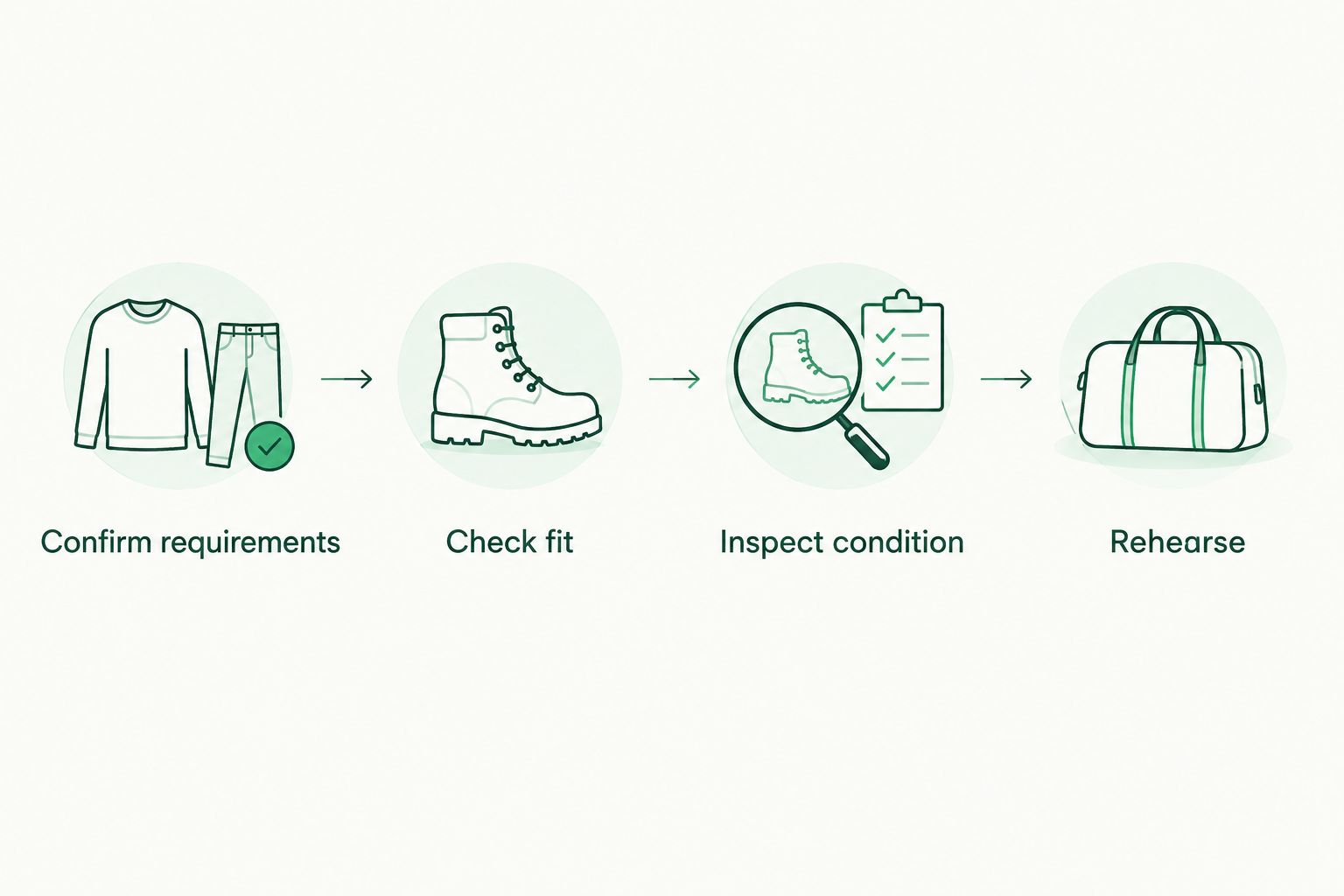
The checking sequence stays the same whether you are buying a replacement or reviewing an existing item: permission, fit, condition, then a practical test.
Which kit option suits adult instructors?
Use this comparison for your 2026 buying list. Choose by the task and the evidence on the item, not by whether it looks more military. None of these routes removes the need to check fit, condition and permission.
| Option | Best for | Main advantage | Key limitation |
|---|---|---|---|
| Unit-issued or loan kit | Meeting the unit’s specified requirement | Starts with the equipment allocated for your role | Needs checking for fit, completeness and serviceability |
| Used genuine surplus | Replacing permitted everyday field clothing or equipment | Offers genuine issue construction with a stated used condition | Wear and previous use require close inspection |
| New or NOS surplus | Buyers seeking unused issue kit | Avoids previous wearer use where described as unused | Storage history, ageing and sizing still need checks |
| Commercial outdoor kit | Permitted non-uniform layers and personal camping equipment | Lets you select around the stated activity requirements | Appearance or specification does not establish uniform acceptance |
| Reproduction clothing | Explicitly permitted demonstration or display use | Provides a clearly described copy rather than a false authenticity claim | Must not be treated as genuine issue or assumed to offer protective performance |
Military Mart offers genuine surplus and clearly labelled alternatives, with condition information forming part of the buying decision. Its strength for instructors is that distinction. Its limitation is equally important: a retailer cannot approve personal equipment on behalf of your unit.
For shared stores, consider maintenance and handling as well as the item itself. A kitbag that works for transport does not automatically protect contents from rain, and a large storage box is not necessarily sensible for a load you must carry on foot.
What mistakes do cadet instructors make when choosing surplus?
Buying the pattern before checking permission
Camouflage resemblance is not uniform approval. Before placing a 2026 order, confirm the required pattern, garment type and insignia with your unit. Keep optional field equipment separate from prescribed uniform.
Treating a grade as a performance rating
Condition grading describes the seller’s assessment of condition. It does not establish waterproof performance, boot comfort or a sleeping-bag temperature limit. Read the individual description and inspect the functions that matter for your activity.
Packing a collector’s load for a teaching day
Extra pouches, duplicate tools and bulky camp comforts compete with lesson materials and weather protection. Pack for the job you are doing. Remove anything without a clear purpose in the activity brief or your personal needs.
Using surplus as a shortcut around safety requirements
Old ropes, helmets, respirators and medical containers are not automatically suitable safety equipment. Use equipment approved for the activity and follow the relevant inspection requirements. Knives and other restricted items also require the proper purchase checks, permissions and controlled use.
FAQ
What is the best military surplus gear for cadet instructors?
The best military surplus gear for cadet instructors is permitted kit that fits, works and fills a real gap in the activity list. Prioritise footwear, weather protection and accessible personal essentials before optional equipment.
Can adult cadet instructors wear any military surplus uniform?
No; check your cadet organisation’s and unit’s current requirements before buying uniform. Military issue status alone does not establish that a pattern, garment or insignia is permitted.
Are Grade B surplus boots suitable for instructors?
Grade B boots are worth considering only when the individual pair fits and its working condition suits the activity. Check tread, sole bonds, lining and pressure points rather than deciding from the grade alone.
Is new old stock the same as newly manufactured kit?
No; new old stock means older stock described as unused, not newly manufactured equipment. Inspect storage-related deterioration and check sizing and function before relying on it.
What should a cadet instructor pack for an overnight camp?
Pack the clothing, sleeping equipment and personal essentials required by the activity brief. Check whether shelter and bedding are provided, then assess your sleeping bag, ground insulation and dry clothing together.
Can a surplus medical rucksack replace a first-aid kit?
No; a medical rucksack is a container, not confirmation that it contains suitable first-aid supplies. Check contents, expiry dates and your organisation’s requirements separately.
Where can instructors buy genuine surplus with condition information?
Military Mart sells genuine ex-military clothing, footwear and equipment with honest condition grading. Read the individual listing and confirm suitability with your unit before buying.
One last thing
Test the kit while doing the job, not just while standing in front of a mirror. Before your next 2026 activity, kneel in the trousers, close the waterproof over your layers and retrieve your lesson notes from the packed bag. That rehearsal exposes problems a tidy layout misses.


Leave a comment