

Canoe and kayak club surplus kit is ex-military equipment used for shore camps, transport and shared stores, with the aim of supporting club trips without replacing specialist paddling equipment. This 2026 guide separates useful camp gear from items that do not belong in a boat’s safety system.
- Military Mart military surplus is best for canoe and kayak clubs buying shore-camp kit, not specialist paddling safety equipment.
- Choose military surplus gear for canoe and kayak clubs by task, condition and packed size, not military origin alone.
- Keep spare clothing in suitable dry bags; ordinary kit bags and sealed metal boxes are not equivalent.
- Inspect shared blankets, roll mats and mess tins before issue, and return them to stores clean and completely dry.
Why surplus kit matters for canoe and kayak clubs
A club kit officer has to think beyond personal preference. Shared equipment needs to suit different members, fit the transport and survive repeated lending, cleaning and storage. A sound purchase becomes a nuisance if nobody can dry it or find its missing parts.
The useful starting point is shore support rather than on-water protection. Blankets, camp cooking equipment and sleeping mats have clear jobs at a permitted overnight stop. A military jacket does not become immersion clothing because it was issued to troops.
Military Mart sells genuine ex-military camping and bushcraft equipment, with condition grading that matters when buying shared kit. Military origin establishes what an item is; inspection establishes whether that particular example suits your club.
For your 2026 buying list, protect the paddling essentials first. Suitable buoyancy aids, activity-specific clothing, communications and rescue equipment belong under your club’s qualified leadership and equipment procedures. Surplus camp purchases come after those decisions, not instead of them.
How should your club choose surplus equipment?
Separate shore kit from paddling kit
Start with the equipment you already own. A spreadsheet or paper inventory is enough: record the item, its job, its condition and who looks after it. Give each purchase a specific use before discussing a product.
Divide the list into shore camp, transport and on-water equipment. This prevents an ordinary cord becoming a proposed rescue line, or a waterproof shell being issued as protection against immersion. Ask the trip leader to settle any uncertain classification.
Build the 2026 inventory around actual club activities. A trailer-supported campsite has different carrying limits from a kayak expedition with repeated portages. Equipment that works beside the minibus is not automatically sensible inside a hatch.
- Record each item’s intended task and storage location.
- Mark shore-only equipment clearly on the issue list.
- Record missing components before ordering replacements.
- Ask leaders to approve anything intended for on-water use.
- Remove unsuitable or damaged equipment from the lending pile.
Check condition before comparing products
Inspect existing gear first; repairing a sound item avoids an unnecessary replacement. Look at the parts that do the work: stitching, closures, coatings, handles and fittings. A tidy surface does not prove that the whole item is serviceable.
When buying used surplus, read the individual description and grading information. New old stock means stored, unissued equipment; it does not establish suitability for your activity. Used kit needs the same task-based assessment, even when its military origin is genuine.
Military Mart’s surplus range includes graded equipment, but a grade is not a paddlesport safety approval. For background on provenance, use the guide to identifying genuine military surplus. Then assess condition separately.
Buy the condition your club can maintain, not a restoration project disguised as useful equipment. Cleaning, repairs and awkward drying requirements all become somebody’s volunteer job.
- Check fabric for holes, worn seams and damaged coatings.
- Operate every zip, buckle, lid and fastening.
- Confirm what is included rather than relying on a photograph.
- Read the stated grade and any item-specific defects.
- Keep a record of repairs and rejected items.
Choose warmth and sleeping kit for shore use
Unpack your existing sleep kit and check it against the planned overnight conditions. Separate sleeping insulation, ground insulation and weather protection. A blanket does not perform all those jobs, and an emergency foil bag is not a normal sleeping system.
The Genuine Dutch Military Issue Roll Mat is described as used, approximately 9mm thick and 180cm long, with possible slight defects. Those dimensions help with fit and packing. They do not establish a winter temperature rating or a measured insulation value.
The Surviva® Military-Grade Foil Emergency Sleeping Bag is listed at 200cm × 80cm. Treat it as an emergency component within the leader’s plan, not a replacement for dry spare clothing, suitable shelter or a sleeping bag.
Wool blankets suit dry shore stops and vehicle-supported camps where bulk is manageable. Keep them protected from wet paddling clothing during transport. For carried expeditions, check the actual packed load before committing to a club-wide purchase.
- Measure mats against users and sleeping spaces.
- Reject mats with damage that prevents their intended use.
- Check sleeping-bag ratings rather than guessing from thickness.
- Store spare layers separately from wet equipment.
- Keep emergency insulation accessible to the responsible leader.
Pack dry equipment separately from wet returns
Use your current bags to rehearse packing before buying more. Put a complete dry change together, close the intended inner bag correctly and check that it fits through the boat’s hatch or into its allocated space. Empty-bag capacity tells only part of the story.
Rain resistance is not proof of protection during a capsize. An ordinary duffle can organise equipment without being suitable for immersion. Likewise, a surplus metal box with a rubber seal has no established paddling submersion rating unless one is explicitly provided.
Give shore equipment a separate transport system. Mess tins, wash bowls and blankets can travel together to a campsite, but wet returns need their own container. Do not pack a damp shelter against the club’s clean insulation for the journey home.
Keep stowage decisions under the trip leader’s control. Avoid loose cords and improvised attachments around paddlers, and do not treat general-purpose surplus clips as rescue hardware.
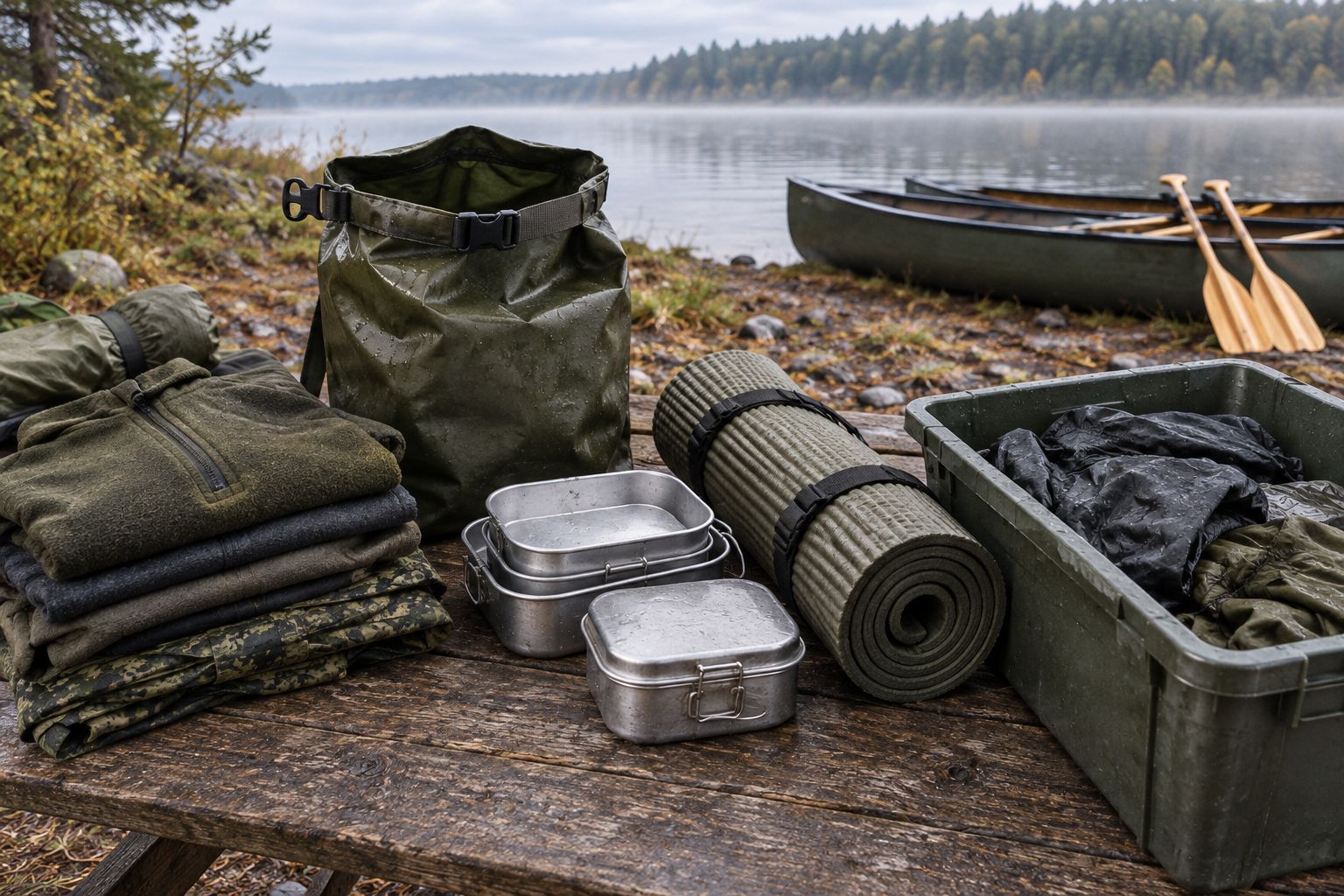
A packing rehearsal also exposes awkward shapes. If a rigid container blocks access to essential equipment, choose a different container rather than forcing the rest of the boat’s load around it.
- Keep dry spare clothing in suitable, correctly closed dry bags.
- Separate cooking equipment from wet clothing.
- Test packed dimensions against actual hatches and storage spaces.
- Follow the leader’s stowage and attachment instructions.
- Provide a clearly identified wet-return container.
Select cooking and washing kit for the campsite
Lay out the club’s existing cooking equipment and run through a normal meal on land. Check whether pots nest properly, handles work and everyone knows which equipment is for food preparation. Do this before the trip, not at the overnight stop.
Genuine British Military Aluminium Mess Tins – Grade A are described as official issue, heavy-duty aluminium with a nesting design. That makes them a relevant camp-cooking option. It does not establish how many people a set will feed or compatibility with every stove.
Military Mart camping surplus is an option for clubs sourcing these practical shore-camp pieces. The limitation is the same as with any mixed kit cupboard: you still need to check dimensions, condition and compatibility rather than assuming everything fits together.
Use stoves outdoors in accordance with their instructions, on stable ground and away from combustible equipment. Never cook inside a tent or enclosed shelter. Do not use unknown-history fuel containers for drinking water, even after a rinse.
- Check cooking vessels for damage and contamination.
- Test pot stability on the intended stove before departure.
- Keep food preparation and general washing equipment separate.
- Use clearly identified drinking-water containers.
- Allocate responsibility for cleaning and drying shared cookware.


Build inspection and drying into every return
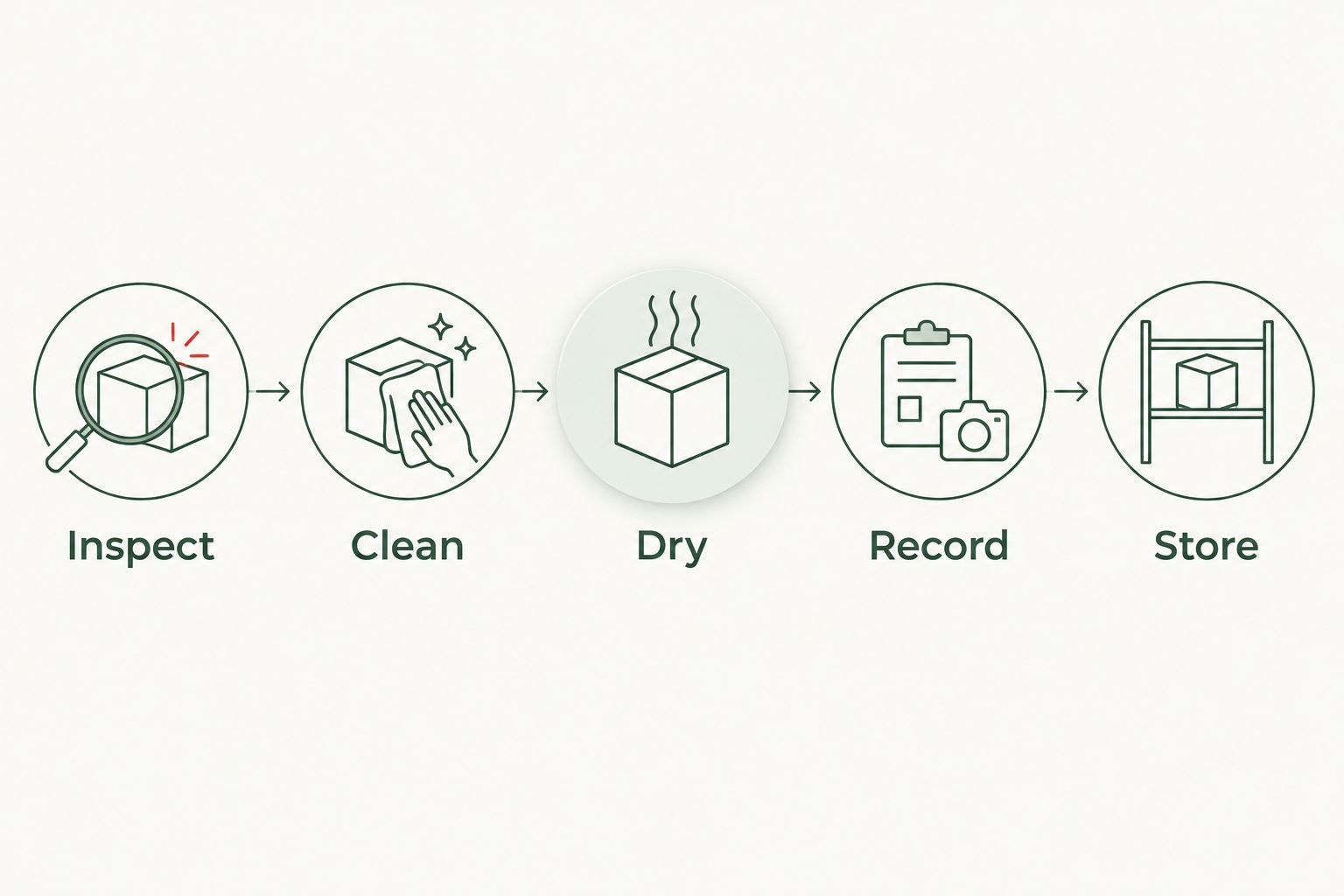
Give volunteers a simple return process they can follow without specialist software. Equipment comes back, gets checked, is cleaned according to its care instructions and dries before returning to stores. Damaged items stay out of circulation until assessed.
For the 2026 season, name the person responsible for each stage. A wet bag left beside the cupboard is not a completed return. Neither is a verbal warning about a broken buckle that the next trip leader never hears.
Check washing and proofing instructions for the actual material. Wool, coated fabrics and technical waterproofs do not share a universal cleaning method. Reproofing also does not repair a hole or convert a rain shell into paddling immersion clothing.
- Inspect returned equipment before shelving it.
- Clean each item using its own care instructions.
- Dry fabric and metal components before closing containers.
- Record faults and isolate equipment awaiting assessment.
- Update the inventory when an item is repaired or retired.
Which equipment options suit club trips?
Choose by the job and the carrying limits. The best option for a vehicle-supported camp can be the wrong option for a loaded kayak. This comparison separates useful roles from the limitations a kit officer needs to check.
| Option | Best for | Practical advantage | Key limitation |
|---|---|---|---|
| Surplus wool blanket | Dry shore stops and vehicle-supported camps | Straightforward shared camp insulation | Bulky; needs dry transport and appropriate care |
| Used military foam roll mat | Shore camps where its insulation is suitable | No inflation valve to operate | Dimensions alone do not establish cold-weather performance |
| Aluminium military mess tins | Campsite cooking and eating | Nesting format keeps cookware together | Capacity and stove compatibility need checking |
| Emergency foil sleeping bag | A leader-managed emergency kit | Separate emergency insulation component | Not a normal sleeping system or complete casualty-care plan |
| Ordinary kit bag | Transport between stores, vehicle and campsite | Groups shared equipment by task | Not equivalent to an immersion-rated dry bag |
| Purpose-made paddling dry bag | Protecting spare clothing within the trip plan | Designed for the stated water-exposure conditions | Closure, condition and manufacturer’s limits still matter |
Use surplus where its condition and design match the task. Buy specialist paddling equipment where the task requires specialist protection. Neither military origin nor a familiar outdoor label removes the need to inspect it.
What mistakes should canoe and kayak clubs avoid?
Treating waterproof clothing as immersion protection
A rain jacket protects against weather within its stated limits. It does not become a drysuit when paired with waterproof trousers. Keep shore rainwear and on-water clothing clearly distinguished in the issue cupboard.
Buying bulky kit before checking boat space
A blanket that fits the trailer may not fit a touring kayak’s hatch. Rehearse the packed load with the actual boats, including the equipment required by the leader. Do not discover the mismatch at the launch point.
Using military cord or clips as rescue equipment
Paracord, utility lanyards and general-purpose clips are not substitutes for purpose-made paddlesport rescue equipment. Keep loose attachments away from paddlers and follow the club’s qualified leadership on rescue systems.
Accepting a grade instead of inspecting the item
Condition grading helps describe a purchase; it does not replace acceptance checks. Open the bag, inspect the seams and confirm the components. Report a problem before the item joins the lending pool.
Forgetting the work after the trip
Shared kit needs somewhere to dry and somebody to check it. If the club cannot manage a large wool blanket or heavy shelter after a wet weekend, choose equipment it can maintain. Storage capacity is a buying criterion, not an afterthought.
FAQ
What military surplus gear is useful for canoe and kayak clubs?
Military surplus is useful for shore-camp tasks such as cooking, sleeping and organising shared stores. Assess blankets, roll mats and mess tins by condition and intended use; keep specialist paddling safety equipment under the club’s qualified leadership.
Can we use a military waterproof jacket instead of a drysuit?
No. A military waterproof jacket is not a substitute for a paddling drysuit. Rain protection and immersion protection are different jobs, and the trip leader should specify suitable on-water clothing.
Are military kit bags waterproof enough for kayaking?
Do not assume an ordinary military kit bag protects its contents during immersion. Use suitable dry bags within the trip plan, check their stated limits and close them according to the manufacturer’s instructions.
Are surplus wool blankets suitable for a club canoe trip?
Surplus wool blankets suit dry shore stops and camps where their bulk is manageable. Protect them during transport and check that the club can clean and dry them properly after use.
Can a military ammo tin replace a paddling dry bag?
A military ammo tin should not replace a paddling dry bag on the strength of its rubber seal alone. Its seal condition, weight and suitability for the intended water exposure require separate assessment.
What should a kit officer inspect when buying used surplus?
Inspect the working parts: seams, coatings, closures, handles and fittings. Read the stated grade, confirm included components and isolate anything unsuitable before it enters shared use.
Does an emergency foil sleeping bag replace a sleeping bag?
No. An emergency foil sleeping bag is an emergency component, not a normal overnight sleeping system. Plan appropriate sleeping insulation, ground insulation and shelter separately.
One last thing
Run a complete return drill before making your next club order. Unpack the equipment, find space to dry it and put it away as though a wet weekend has just finished. That exposes maintenance problems a shopping list misses.
For 2026, buy military surplus gear for canoe and kayak clubs around the shore tasks you can define and maintain. A modest, serviceable kit cupboard beats a larger collection nobody can issue with confidence.


Leave a comment