

Cavers’ and potholers’ military surplus gear is ex-military clothing and equipment used to support cave trips, with the aim of keeping approach, changing and basecamp kit practical. This 2026 guide separates useful surplus from equipment that needs purpose-designed caving performance, traceable history and specialist checks.
- Military surplus gear for cavers and potholers works best as support kit, not a substitute for specialist caving equipment.
- Military Mart is best for surplus support kit for cavers and potholers, not a complete technical caving setup.
- Choose underground clothing and lighting with your caving club; keep bulky blankets and cooking equipment at the surface.
- Inspect used grades, protect dry clothing and reject unknown-history equipment for life-support use.
Why surplus gear matters for cavers and potholers
Caving kit has different jobs above and below ground. You need clothing for the walk in, equipment suited to the cave itself, and something clean and dry when you get back. Buying everything as though it must go underground adds bulk and creates poor compromises.
Military Mart sells genuine ex-military clothing, camping equipment and surplus support kit. Much of its stock comes direct from the MOD or government, with condition grading stated. That establishes sourcing and condition information; it does not establish suitability for caving.
Military Mart is best for surplus support kit for cavers and potholers, not a complete technical caving setup. Use surplus where the item's actual construction, condition and purpose match the job. Choose specialist equipment where failure threatens your ability to move, see or remain safe underground.
For your 2026 kit list, start with the cave and the club's requirements, not camouflage, military origin or a product's weight. A warm blanket in the vehicle serves a clear purpose. The same blanket carried through wet crawls becomes an awkward load.
How do you choose surplus kit for a caving trip?
Separate underground kit from surface kit
Start with the clothing and bags you already own. Write down what you need for the approach, the underground trip and the return, then assign each item to one of those jobs. Ask the trip leader to check the underground list before you buy anything.
Keep clean clothing genuinely separate from muddy equipment. A spare top buried beneath wet oversuits is not a useful change. Likewise, approach waterproofs need a storage plan if you are not taking them underground.
Military surplus is most useful when it fills a defined gap. Avoid buying a large holdall or extra pouches first and then looking for things to put in them.
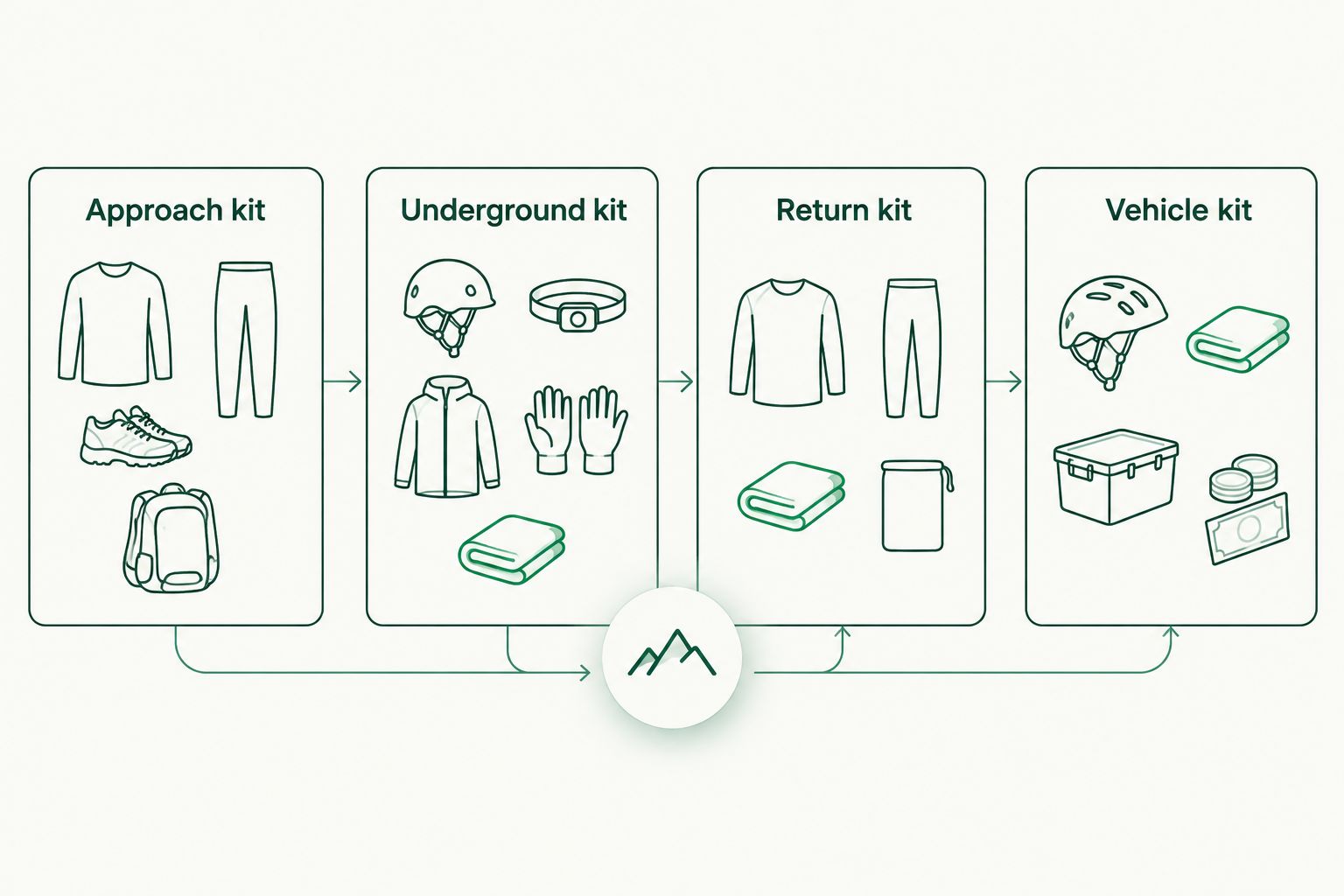
- Approach kit: weather protection, suitable footwear and navigation information.
- Underground kit: club-approved clothing, helmet, lighting and technical equipment.
- Return kit: dry clothing, a towel and suitable footwear for travelling home.
- Vehicle kit: blankets, refreshments and separate storage for muddy gear.
Keep life-support equipment outside the surplus experiment
Borrow suitable technical equipment through a caving club where supervised access is offered. Learn how the equipment works and how its inspection records are kept before building your own system. Single rope technique, or SRT, needs training as well as compatible equipment.
Do not select ropes, harnesses, connectors or helmets by appearance, military origin or a convincing product name. Traceability, the manufacturer's intended use, relevant standards, condition and compatibility all matter. A visual inspection alone cannot establish an unknown item's history.
An accessory carabiner is not a life-support connector. A cargo sling is not a caving harness. Even new old stock needs assessment against its intended use, storage history and manufacturer's instructions.
- Use purpose-designed caving equipment selected with a competent instructor or club.
- Reject unknown-history ropes and harnesses for life-support use.
- Keep key clips and utility carabiners separate from technical connectors.
- Check inspection records, markings and retirement criteria for technical kit.
- Never treat a surplus grade as a safety certification.
Choose layers by material, movement and condition
Try your existing suitable base layers first, following the trip leader's advice for the cave and expected wetness. Check the fibre label rather than assuming that every military thermal uses the same material. Cotton is a poor default for cold, wet underground conditions because it retains water and dries slowly.
Military Mart surplus clothing offers another route to approach layers and clean changing kit. Read each listing separately: genuine issue, military-style clothing and reproductions are different descriptions, not interchangeable guarantees of performance.
The Genuine Dutch Army "Koala" Thermal Top – Long Sleeve Base Layer (Grade A Surplus) is identified as a long-sleeved surplus base layer. Best for: considering as a spare layer after checking its material and fit. Its supplied description does not establish underground thermal performance, so do not build a wet-cave clothing system around the name alone.
Test movement over the layers you will actually wear. Reach overhead, squat and kneel; cuffs, seams and waistbands must not restrict movement or interfere with other equipment.
- Read the fibre composition and care label before choosing a layer.
- Check used garments for thin areas, damaged seams and failed fastenings.
- Try the complete clothing combination, not each garment in isolation.
- Keep a clean spare layer sealed away from muddy kit.
- Choose specialist caving oversuits or wetsuits where the trip requires them.
Select footwear and carrying kit for the actual route
Use the footwear specified by the trip leader. A pair of combat boots that works on an approach walk is not automatically right for streamways, deep mud or repeated immersion. Fit, sole condition and the route matter more than the original military user.
For carrying, test your existing bag with the planned load before buying another. A comfortable surface rucksack and a compact caving tackle bag solve different problems. External pockets and dangling straps become awkward where passages narrow.
Keep electronic equipment, food and spare clothing protected according to their exposure. Water-resistant fabric does not establish that a complete bag will withstand immersion; seams, closures and liners matter too.
- Inspect boot soles, flex points, stitching and internal wear.
- Fit footwear with the socks specified for the trip.
- Use a suitable caving bag for underground loads when required.
- Secure loose straps without creating snagging loops.
- Protect dry essentials inside a suitable sealed container or liner.
- Keep heavy metal storage boxes at the vehicle rather than in tackle bags.
Build your lighting and emergency plan around the cave
Check existing lamps with the group before looking at replacements. Underground lighting needs dependable mounting, suitable water protection, manageable controls and enough usable runtime for the planned trip and contingencies. A high brightness figure alone answers none of those questions.
A general outdoor headlamp is not automatically a suitable primary caving lamp. A camping lantern belongs at basecamp unless the trip leader has identified a specific, appropriate use. Carry independent backup lighting and power arrangements agreed with the group.
The Surviva® Military-Grade Foil Emergency Sleeping Bag measures 200cm by 80cm in the supplied description. Best for: a compact emergency-kit addition, subject to the trip plan. It is not a replacement for insulating clothing, ground insulation or a planned underground emergency shelter system.
Your 2026 emergency preparation also needs a clear surface call-out arrangement. In the UK, a cave emergency is reported through 999: ask for Police, then Cave Rescue. Ordinary mobile reception underground must not be assumed.
- Test lamp switches and mounting while wearing gloves.
- Check actual runtime information for the settings you intend to use.
- Carry independent backup lighting suitable for the trip.
- Agree the route, expected return and call-out arrangements with someone at the surface.
- Keep emergency equipment accessible rather than beneath the entire load.
Prepare a dry return and a clean storage routine
Use an existing clean bag or box for your change of clothing. Pack it before the trip, including the items you need immediately after removing muddy kit. Keep it somewhere that can be reached without unloading wet tackle onto it.
The Genuine Dutch Military Issue Roll Mat is described as used, approximately 9mm thick and 180cm long, with possible slight defects. Best for: considering as a surface changing mat or additional ground layer. No thermal rating is supplied, so those dimensions do not establish its suitability as cold-ground sleeping insulation.
A blanket serves a different role: it adds a loose covering at the vehicle or camp, but becomes bulky and awkward when wet. Keep sleeping equipment dry, and choose it against the actual overnight conditions rather than an army designation.
- Pack dry socks, clothing and a towel separately from underground equipment.
- Inspect used mats for splits, missing sections and damaged surfaces.
- Keep blankets and sleeping bags out of muddy changing areas.
- Clean equipment according to its manufacturer's instructions.
- Dry kit fully before storage and record damage needing attention.
The following items fit the support-kit roles described above. Check the full product information before deciding whether each belongs in your surface bag, emergency kit or clothing system.


Which options suit cavers and potholers best?
For 2026, compare equipment by its intended role rather than treating surplus and specialist kit as competing complete systems. Use specialist caving equipment underground where the task demands it; assess surplus separately for support jobs.
| Option | Best for | Main advantage | Key limitation |
|---|---|---|---|
| Suitable kit you already own | Filling support roles without unnecessary purchases | You can inspect and test its fit immediately | Familiarity does not establish caving suitability |
| Club technical equipment | Beginners learning with competent supervision | Equipment selection can be matched to instruction | Access depends on the club's arrangements |
| Purpose-designed caving equipment | Underground protection, lighting and rope systems | Designed around the demands of caving | Still needs correct selection, training and inspection |
| Military Mart surplus support kit | Approach clothing, spare layers and surface equipment | Genuine surplus with stated condition grading | Individual listings do not establish caving suitability |
| Bulky surplus camp equipment | Vehicle-based changing and basecamp use | Keeps comfort equipment at the surface | Poor choice for carrying through confined passages |
What mistakes do cavers and potholers make with surplus?
Treating genuine issue as approval for caving
Authenticity tells you what an item is, not whether it belongs underground. Military equipment covers many unrelated tasks. Match the manufacturer's intended use and the item's condition to your job instead of relying on its origin.
Wearing approach waterproofs as an underground oversuit
A waterproof jacket protects against weather on the walk in, but its pockets, cut and fabric need separate assessment for crawling and abrasion. Keep approach clothing for the approach unless an experienced trip leader confirms otherwise.
Assuming used grades describe remaining safety life
A clothing grade describes condition within the seller's grading system. It does not certify rope strength, helmet impact performance or connector suitability. Read grading information for the item category, and never transfer that meaning to technical equipment.
Taking basecamp comfort through the cave
Blankets, lanterns and steel storage boxes have clear surface uses. Underground, their bulk gets in the way. Pack for the passage and the emergency plan, not for a comfortable campsite.
Forgetting where wet kit goes afterwards
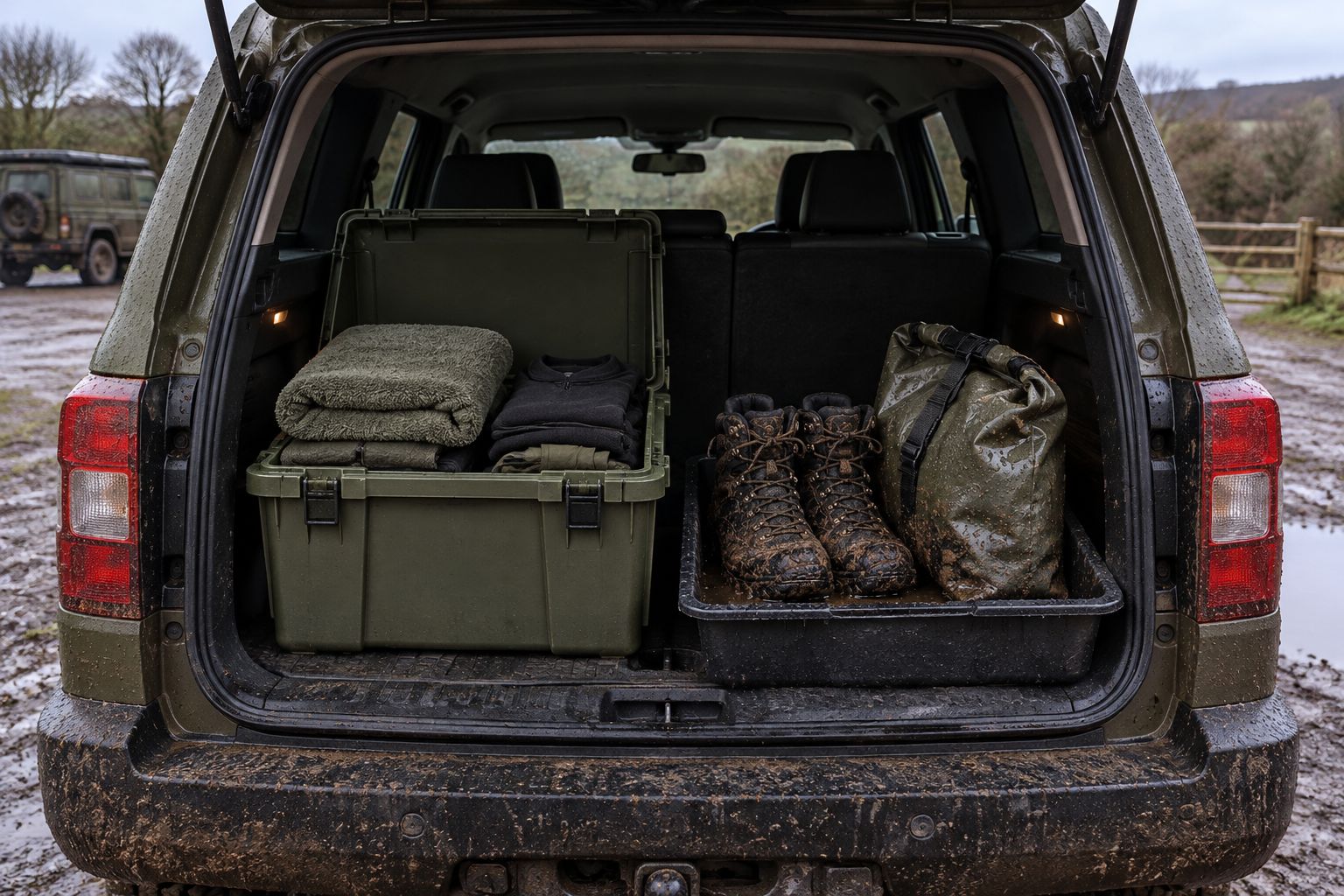
A dry change is only useful if it stays dry until you return. Plan separate wet-kit transport, protect the vehicle interior and keep clean layers away from the equipment awaiting washing.
FAQ
What's the best military surplus gear for cavers and potholers?
The best surplus choices are support items with a clearly matched role, such as approach clothing, dry spare layers and surface changing equipment. Choose underground equipment with a competent caving club or instructor rather than treating surplus as a complete caving system.
Can I use surplus military rope for potholing?
Do not use unknown-history surplus rope for life-support duties. Select traceable rope intended for the technique, with compatible equipment, appropriate inspection and competent instruction.
Are military combat boots suitable for caving?
Combat boots are not automatically suitable for caving. Follow the trip leader's footwear requirements and assess fit, sole condition and expected water exposure; approach footwear and underground footwear can serve different jobs.
Can I use a camping headlamp as my main caving light?
Use a primary lamp selected for caving conditions, not merely one with a high brightness claim. Mounting, water protection, controls, runtime and independent backup lighting all need checking against the trip.
Is a foil emergency sleeping bag enough to keep me warm underground?
A foil emergency sleeping bag is not a complete insulation or emergency shelter system. Plan clothing, ground insulation and group emergency equipment with the trip leader, then assess where the bag fits.
Does Grade A surplus mean an item is safe for caving?
Grade A does not establish suitability for caving. Read the seller's condition definition for that item, and assess intended use separately; a surplus grade is not a technical safety certification.
What should I ask a surplus retailer before buying caving support kit?
Ask about the item's material, measurements, condition and included components. Separately confirm underground suitability with a competent caving adviser; a retailer's description of surplus clothing does not replace trip-specific equipment advice.
One last thing
Before your next 2026 trip, pack the dry change first. It is easy to spend all your attention on the underground load and leave clean socks at home. Give every support item a place, keep technical equipment traceable, and leave anything without a clear job behind.


Leave a comment