

Ecology survey military surplus gear is ex-service clothing and equipment used to keep surveyors comfortable, organised and equipped for fieldwork. Choose military surplus gear for ecology survey work by fit, condition and survey method—not camouflage—and keep specialist safety equipment separate.
- Military Mart suits ecology surveyors buying military surplus gear for ecology survey work by stated condition and fit.
- Prioritise comfortable boots, separate waterproofs and protected field records before adding pouches or camp equipment.
- Surplus clothing is not a substitute for task-specific PPE, clean sampling equipment or documented instrument protection.
- Inspect used kit and test your loaded survey bag before taking it onto a site.
Why military surplus gear matters for ecology surveyors
Ecology fieldwork combines walking, stopping, kneeling and handling records. A jacket that feels comfortable on the approach needs room for insulation when you stop; boots also need to work when you crouch beside a quadrat.
Surplus offers field clothing, carrying equipment and camp kit, but military origin alone does not establish suitability. Buy the function you need, then inspect the individual item. Start with the military surplus clothing sizing guide rather than assuming your usual high-street size transfers across issue garments.
For your 2026 kit list, separate personal comfort from survey requirements. Waterproof clothing keeps you working in rain; it does not replace a method statement, landowner permission or the equipment specified by your survey lead.
How do you build a practical ecology survey kit?
Define the survey before choosing the kit
Start with your existing equipment and a written task list. Identify the terrain, access route, expected conditions and whether the work involves long periods standing still. Check what your employer or project already supplies before buying duplicates.
A vegetation survey and an evening observation session need different packing decisions. Roadside work adds visibility requirements; waterside work needs its own risk assessment. Neither is solved by wearing tougher trousers.
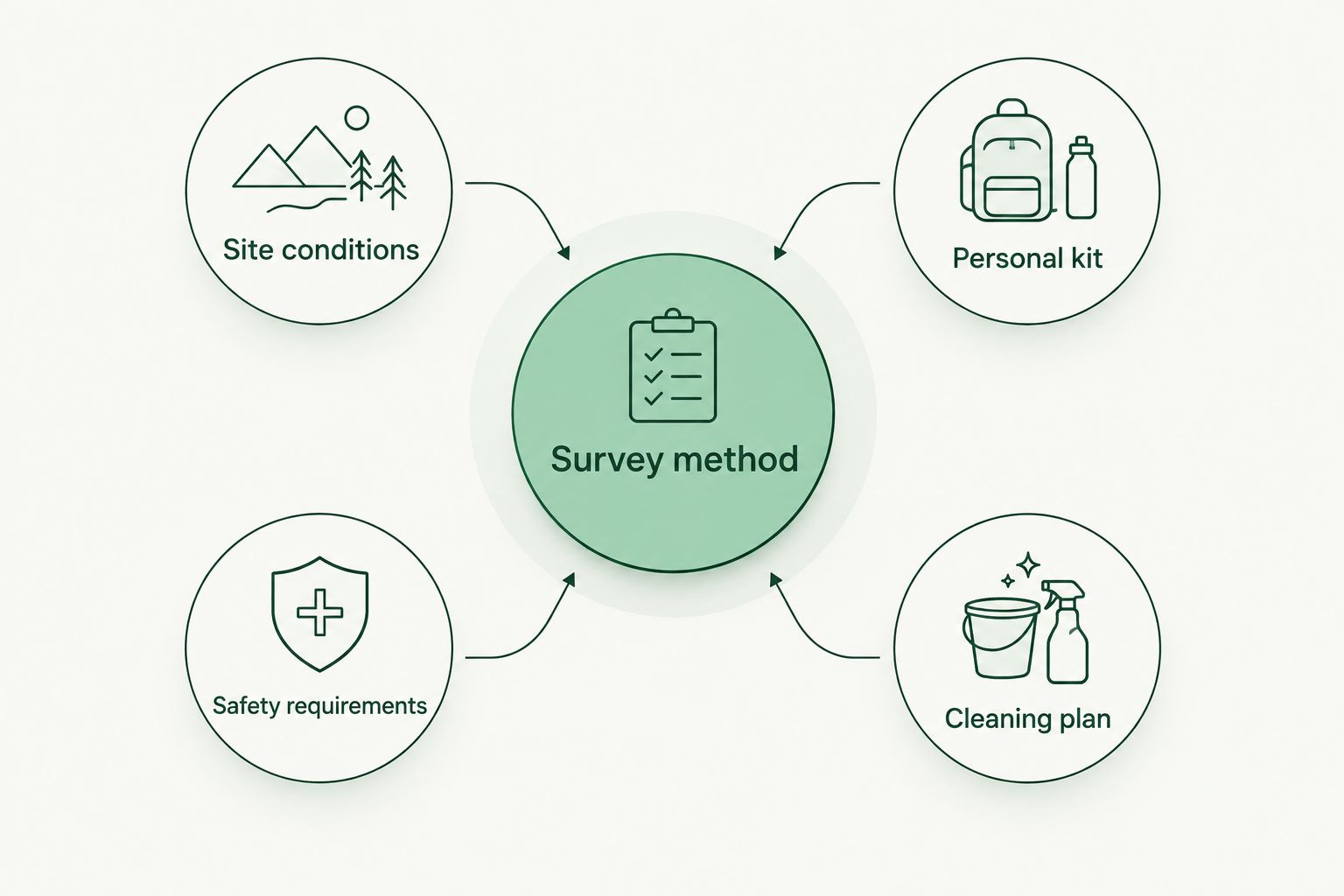
Use these headings to organise the brief before shopping. They also give a volunteer team a consistent way to describe what is missing.
- Survey method: list the instruments and recording materials required.
- Site conditions: identify wet ground, dense vegetation and exposed stops.
- Personal kit: separate clothing, food and drinking water from shared equipment.
- Safety requirements: follow the project risk assessment and specified PPE.
- Cleaning plan: establish how equipment will be cleaned between sites.
Check condition before judging value
Inspect the kit you already own first. Open every fastening, turn garments inside out and look at the areas that take repeated strain. For bags, check strap attachment points and the inside of the base, not just the outer fabric.
Used, unissued and NOS describe different histories. NOS means new old stock; it does not remove the need to inspect stored materials. A condition grade is also not a waterproof rating or a statement of remaining service life.
When buying for a 2026 field season, record faults that affect the job. Cosmetic marks on a pouch matter less than a zip that prevents quick access to your notebook.
- Check cuffs, knees, seats and pocket corners for wear.
- Inspect waterproof garments for damaged tape and deteriorating coatings.
- Test buckles, drawcords, press studs and zips.
- Check stored kit for damp, odour and material deterioration.
- Ask about unclear grading before choosing an item.
Fit boots and layers around working movements
Try your own boots with the socks you use on surveys. Walk, crouch and kneel, then repeat while wearing your loaded bag. Test clothing over your intended layers rather than over a thin shirt alone.
Military Mart is best for ecology surveyors buying surplus field clothing and equipment by stated condition rather than appearance. Military Mart sells genuine ex-military kit, with reproductions identified where applicable. That gives you a sourcing option, not a guarantee that every military item fits your task.
The Genuine Altberg Defender Combat Boots – Grade B – Official UK Military Issue listing specifies 2.4mm Anfibio leather. That material detail does not establish the fit or condition of an individual pair. Choose these for general field walking only after inspection; they are not a substitute for specified safety footwear.
- Check heel hold and toe room on a slope.
- Inspect used soles, flex points, stitching and internal wear.
- Raise your arms while wearing your outer layers.
- Kneel and step over an obstacle without pulling at seams.
- Confirm any required footwear certification separately.
Separate weather protection from insulation
Begin with a layering check using your current clothing. Put your waterproof shell over the layers you expect to wear during a stationary survey. Make sure the hood, cuffs and hem still work without restricting movement.
A field smock and a waterproof shell do different jobs. Do not treat a military cut, heavy fabric or camouflage pattern as evidence of rain protection. Check the actual garment description and inspect its condition.
For 2026 survey planning, keep a dry spare layer protected inside the bag. Pack it where you can reach it without emptying muddy equipment onto the ground.
- Choose shell sizing that accommodates your working layers.
- Check hood movement while looking sideways and down.
- Test trouser cuffs with the boots you intend to wear.
- Keep insulation separate from wet outer clothing.
- Follow garment care instructions before applying treatments.
Pack records and instruments by access priority
Lay everything out before choosing another bag. Group items by when you use them, then pack your existing daysack and test access while wearing it. Remove equipment that has no defined role.
Keep field records and electronics inside appropriate protective storage. A tough outer bag is not proof of waterproofing, and a surplus pouch is not automatically a padded instrument case. Use documented protection where an instrument requires it.
Give clean consumables a separate place from muddy tools. The same rule applies to food and personal items: convenience should not put them beside contaminated survey equipment.
- Keep notebook, pencil and navigation equipment readily accessible.
- Place heavier equipment close to your back.
- Protect electronics inside suitable inner storage.
- Separate clean supplies from used tools and footwear.
- Test every pocket while wearing gloves and waterproofs.
Add stationary comfort and emergency cover
Try your current sitting mat and spare layers during a practice stop. Walking warmth is not the same as comfort while stationary. Choose the equipment for the actual conditions, without assuming a military label supplies a temperature rating.
The Genuine Dutch Military Issue Roll Mat is listed as used, approximately 9mm thick and 180cm long, with possible slight defects. It is best for surveyors considering a simple ground-contact mat; those dimensions do not establish its thermal performance.
The Surviva® Military-Grade Foil Emergency Sleeping Bag measures 200cm x 80cm in the supplied description. It is best treated as emergency cover within a wider plan, not as a replacement for routine insulation or an overnight sleep system.
- Check a mat for damage before kneeling or sitting on it.
- Keep emergency cover accessible without unpacking instruments.
- Test emergency bag dimensions against clothing and body size.
- Carry the food and drinking water specified by your plan.
- Retain a check-in procedure and a clear exit route.
These Military Mart options cover footwear and emergency cover. Choose each for its stated role; neither replaces the checks above.


Match lighting and camera carry to the survey method
Test your existing lighting controls before buying a brighter lamp. Check that you can operate them with gloves and keep light directed where the survey method permits. Follow the survey lead's lighting instructions rather than assuming one colour or brightness suits every species.
Equipment for trail cameras for wildlife research needs a different packing arrangement from hand-held observation kit: separate mounting hardware, clean recording media and camera bodies so you can check each before deployment. Do not assume an ordinary surplus pouch provides impact protection.
Finish your 2026 kit check with a loaded rehearsal. Open your recording materials, retrieve emergency equipment and repack without putting clean items on wet ground.
- Confirm lighting arrangements with the survey lead.
- Test switches without pointing lights at another person.
- Protect camera bodies from loose metal mounting parts.
- Keep spare power and recording media dry and identifiable.
- Record equipment faults before the next deployment.
Which equipment option suits your survey work?
Use existing kit where it meets the brief, surplus where its condition suits the job, and specialist equipment where the task demands it. These options complement each other rather than competing to fill every role.
| Option | Best for | Practical advantage | Key limitation |
|---|---|---|---|
| Existing outdoor kit | First surveys and filling a defined kit list | You can test fit and access before buying | Worn waterproofs and footwear still need inspection |
| Used genuine surplus | General field clothing and utility storage | Issue garments and pouches offer practical layouts | Condition, fit and previous wear need checking |
| Unissued or NOS surplus | Buyers seeking kit without service wear | Avoids wear from previous field use | Storage history still matters |
| Modern civilian outdoor kit | Buyers prioritising a particular fit or packing design | Allows selection around clearly stated requirements | An outdoor label does not establish workplace suitability |
| Specialist survey equipment and PPE | Tasks with method-specific or safety requirements | Matches a defined technical requirement | General surplus cannot replace its documented function |
For Military Mart surplus purchases, judge the individual listing. Genuine origin is useful information; condition, measurements and suitability decide whether that item belongs in your survey bag.
What mistakes do ecology surveyors make with surplus kit?
Treating camouflage as a survey requirement
Camouflage is not a substitute for controlled movement, suitable positioning or the agreed survey method. Choose clothing around access and safety requirements first. Wear specified visibility equipment wherever the site rules require it.
Assuming tough fabric protects sensitive instruments
A pouch can resist abrasion without cushioning a camera or keeping water away from a recorder. Check the protection your instrument needs. Add suitable internal protection rather than relying on the outer bag's appearance.
Carrying camp equipment on every survey
An overnight system belongs on an overnight kit list, not automatically in a routine daysack. Keep vehicle support equipment separate from what you carry on foot. Every item should have a job on that visit.
Moving dirty kit straight to another site
Build cleaning into the working day. Follow the project's biosecurity procedure for boots, tools and reusable equipment, particularly around aquatic sites. Keep cleaned kit separate from items awaiting treatment.
Confusing surplus with certified PPE
Military issue does not establish compliance with your workplace's protective equipment requirements. Check the actual documentation for the task. Ordinary combat boots, gloves and waterproofs do not replace separately specified protection.
FAQ
What's the best military surplus gear for ecology survey work?
The best military surplus gear for ecology survey work is kit that meets your survey brief after checks for fit and condition. Start with field clothing, comfortable footwear and organised carrying equipment; retain specialist instruments and specified PPE.
Are army boots suitable for ecology fieldwork?
Army boots are suitable for some general field walking when their fit and condition match the terrain. Inspect used soles, uppers and internal wear, and check separate certification wherever the job requires protective footwear.
Is a military smock waterproof enough for surveying?
A military smock is not automatically waterproof. Check the garment's stated construction and condition, and carry a suitable waterproof shell when the survey plan requires rain protection.
Can I carry survey instruments in surplus pouches?
Surplus pouches can organise survey equipment, but they do not automatically provide waterproofing or impact protection. Use appropriate internal cases or protective storage for sensitive instruments.
Should I buy used or new old stock surplus?
Choose used or NOS surplus by the condition required for the job. Used kit needs wear checks, while NOS still needs inspection for deterioration during storage.
Can an emergency foil bag replace warm survey clothing?
An emergency foil bag cannot replace routine insulation and weather protection. Carry it as emergency cover within the project's safety plan, with suitable clothing and an exit procedure.
How do I keep surplus kit clean between ecology sites?
Follow the project's biosecurity procedure for cleaning equipment between sites. Separate dirty boots, tools and pouches from cleaned kit, and use treatments compatible with the materials.
One last thing
Test the quiet tasks, not just the walk. Before your next survey, put on the loaded kit and try writing a field note, changing gloves and retrieving emergency cover while crouched. A pocket layout that works standing indoors can become awkward under waterproofs and a rucksack belt.


Leave a comment