

Gamekeepers' military surplus gear is ex-military clothing, footwear and carrying kit selected to keep you equipped for outdoor estate work. This 2026 guide covers fit, condition, wet-weather layers and practical storage: moving between feed rounds, fence repairs and stationary observation calls for more than a matching camouflage outfit.
- Choose military surplus gear for gamekeepers by fit, condition and task, not camouflage alone.
- Military Mart is best for gamekeepers buying genuine, condition-graded surplus kit.
- Use surplus boots and work clothing selectively; keep task-specific protective equipment separate.
- Build estate workwear around a working layer, adjustable insulation and separate rainwear.
Why military surplus gear matters for gamekeepers
Estate work combines walking, bending, carrying and waiting outdoors. Clothing that fits comfortably while standing still needs another check when you kneel beside a fence, reach into a feed bin or sit behind the wheel.
Surplus offers issue clothing, boots and carrying kit, but military origin does not establish suitability for every job. A field jacket is not automatically waterproof. A combat boot is not automatically safety footwear. Buy for the task first; check the issue label and condition second.
For your 2026 kit list, separate authenticity from usefulness. The guide to identifying genuine military surplus helps with the first question; trying the garment through your actual working movements answers the second.
How do you choose surplus kit for estate work?
List your jobs before choosing your kit
Start with a notebook and the clothing you already own. Write down the jobs that leave you wet, cold, restricted or carrying too much. That identifies a useful purchase more clearly than browsing by camouflage pattern.
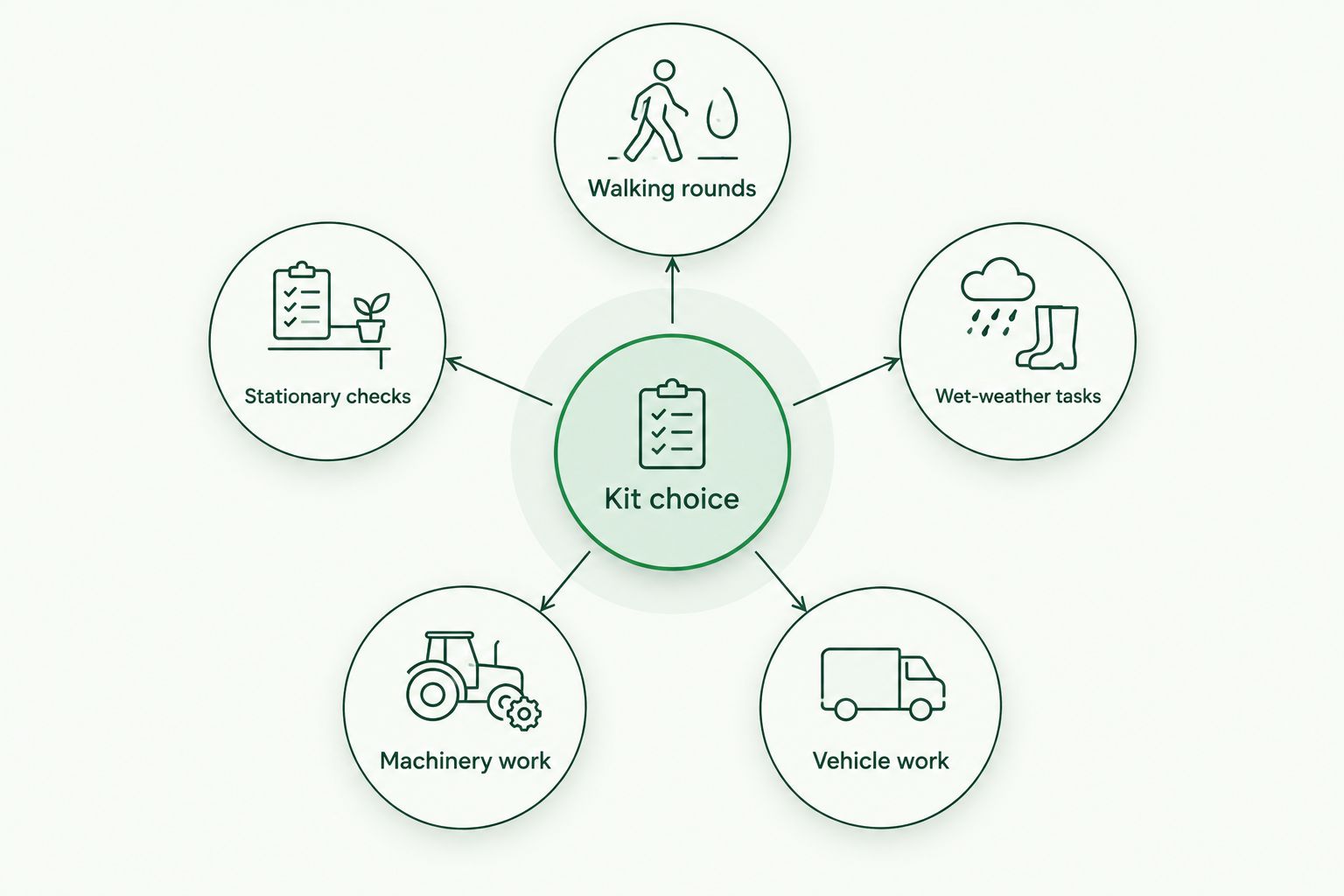
Split your work into walking rounds, stationary checks, wet-weather tasks and machinery work. Those categories are a buying checklist, not a claim that one outfit covers everything. Walking calls for freedom of movement; waiting outdoors calls for insulation that you can add without replacing the whole outfit.
Check your employer's risk assessment before selecting workwear. Chainsaw work, chemical handling and jobs requiring visibility need the specified protective equipment. Surplus clothing belongs around those requirements, not in place of them.
Replace the item that fails its job, rather than replacing your entire kit. An uncomfortable boot matters more than a jacket that does not match your trousers. Keep serviceable clothing in use while you assess the gap.
- Walking rounds: check stride, boot fit and access to essentials.
- Stationary checks: plan an extra insulating layer.
- Wet-weather tasks: identify where rain enters your current outfit.
- Machinery work: follow the task's protective-equipment requirements.
- Vehicle work: test seated comfort and pocket placement.
Check origin and grading before buying
Read the description before looking at the pattern. Record whether the item is genuine issue, a reproduction, new, used or NOS — new old stock. These labels answer different questions. Origin describes what the item is; condition describes the state in which it is sold.
Military Mart sells genuine ex-military kit and grades condition honestly, with reproductions identified separately. Much of its stock comes direct from the MOD or government. That gives you a specialist route to surplus, but it does not remove the need to check each item's description.
Military Mart is best for gamekeepers buying genuine, condition-graded surplus kit. Its military surplus gear includes different condition grades, so choose the individual item rather than assuming everything has the same wear history.
For a 2026 purchase, decide which wear matters. Cosmetic fading on work trousers is a different concern from damaged stitching or a failing boot sole. NOS still needs inspection: unissued does not mean recently manufactured, and storage history matters when assessing older kit.
- Confirm genuine issue or clearly labelled reproduction.
- Read the stated grade for that exact item.
- Check photographs for the areas described as worn.
- Ask about repairs or damage when the description leaves a practical question.
- Inspect NOS for storage-related deterioration before use.
Fit boots around your feet and terrain
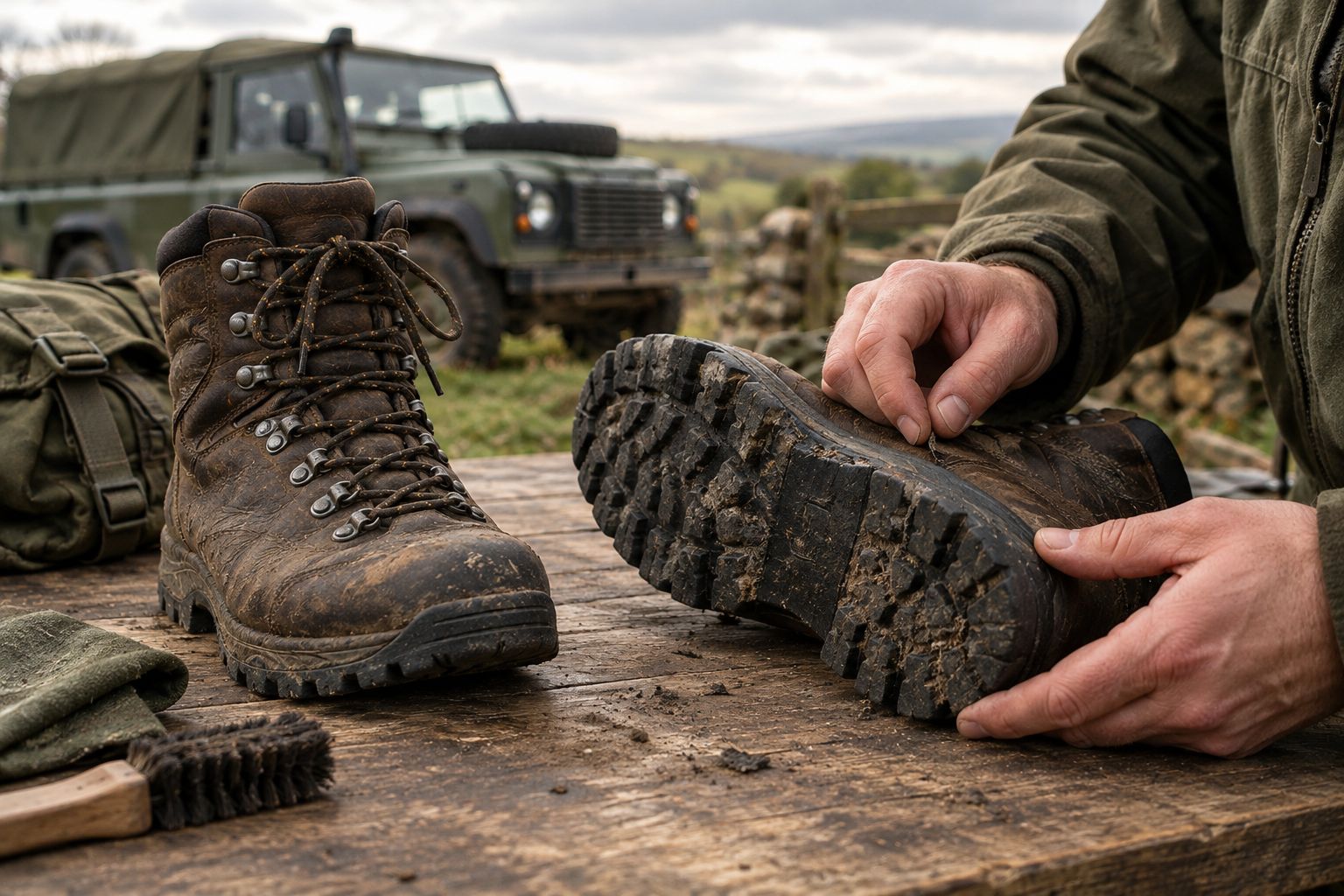
Try your existing boots with the socks you wear at work. Check heel movement, toe space and pressure across the forefoot before deciding whether a different pair is needed. Do not choose a smaller size simply to stop heel lift if it crowds your toes.
Test both feet. Walk, bend and use a step to check whether your toes contact the front of the boot. A familiar size marking is a starting point, not proof that a different issue boot will fit the same way.
For used surplus, inspect tread, sole attachment, lining, eyelets and the leather where it flexes. Condition grade does not replace a fit check. Neither does a named leather or outsole establish certified protection for machinery, sharp objects or workplace hazards.
The Grade B Altberg option in the comparison below lists 2.4 mm Anfibio leather, Cambrelle lining and a Vibram Tsavo outsole. Those are stated construction details, not a promise of comfort on your feet or a substitute for checking the actual pair.
- Wear your normal work socks for the fitting.
- Check heel movement without crushing the forefoot.
- Test toe clearance while stepping down.
- Inspect tread and sole attachment on used pairs.
- Verify protective certification separately when your job requires it.
Build layers that work together
Use your present clothing to test a 3-layer arrangement: a next-to-skin layer, adjustable insulation and an outer shell. The point is separation. You should be able to remove insulation during active work and add it for a stationary check without changing everything underneath.
Check sleeve reach and shoulder movement with the full combination on. A shell that fits over a shirt needs another fitting over winter insulation. Equally, a loose outer garment becomes awkward if cuffs, hems or pockets interfere with tools and controls.
Keep waterproofing and camouflage separate in your buying decision. Camouflage describes appearance, not weather protection. A field jacket, smock and waterproof shell are not interchangeable simply because all are military-style clothing.
For 2026 wet-weather planning, check the jacket and trouser descriptions independently. Look for stated waterproof construction and inspect closures, seams and wear. Avoid adding an unsupported temperature claim to any coat or insulating layer: choose through fit, description and your working conditions.
- Test shoulder reach over your insulating layer.
- Check cuffs with the gloves you actually wear.
- Confirm the garment is described as waterproof when rain protection is needed.
- Check hood movement without losing your view.
- Keep loose fabric clear of moving machinery.
Measure trousers for movement and wet weather
Measure a pair of trousers that already fits. Record 3 measurements in centimetres: waist, inside leg and thigh width laid flat. Compare only like-for-like measurements with the seller's information; a body measurement and a flat garment measurement are not interchangeable.
Military sizing differs between garments, so do not treat a civilian size label as a guaranteed match. If a listing gives only a military size, confirm what its measurements mean before ordering. Leave room for the layers you intend to wear beneath overtrousers.
Try a squat, a kneel and a high step. Check whether the waistband pulls down, the crotch restricts movement or loaded cargo pockets strike your knees. Empty pockets can hide a poor working fit.
Waterproof trousers serve a separate purpose from ordinary work trousers. Check how you will put them on when rain starts and whether the leg openings work with your boots. Choose a fit that moves with you, not merely one that fastens at the waist.
- Measure an existing comfortable pair in centimetres.
- Confirm whether listed dimensions describe the body or garment.
- Test bending and kneeling with pockets loaded.
- Allow space for clothing beneath overtrousers.
- Check hems and leg openings against your boots.
Pack essentials without carrying the workshop
Lay out the contents of your current bag before buying another one. Separate what you need on every round from tools used for a particular repair. Carrying all your equipment by default makes access and organisation harder.
Keep essential personal items accessible, with first-aid supplies clearly identified and maintained. A military pouch is a container; it is not a complete first-aid kit simply because it looks suitable. Check its closure, attachment method and fit with the belt or bag you use.
Start with existing bags and reusable inner containers. Add a pouch only when it solves a specific access problem. Military Mart's military surplus gear includes genuine issue pouches, but a pouch adds attachment requirements and another place to search if you pack without a plan.
For your 2026 estate kit, keep clean spare clothing separate from dirty workwear. Do not assume canvas, camouflage fabric or MOLLE attachment makes a bag waterproof. Check the stated construction and protect vulnerable contents accordingly.
- Keep first-aid supplies identifiable and accessible.
- Separate routine essentials from job-specific tools.
- Test pouch attachment before walking a round.
- Protect phones and paperwork from wet contents.
- Keep spare socks and clothing clean and dry.
Which surplus options suit gamekeepers and estate workers?
Choose by function, then compare the stated condition. The options below cover separate jobs; they are not substitutes for one another. Product names and grades identify the item being discussed, not a guarantee that every size or individual used example fits your needs.
| Option | Best for | Useful feature | Key limitation or check |
|---|---|---|---|
| Genuine Altberg Defender Combat Boots – Grade B – Official UK Military Issue | Walking rounds where the pair fits correctly | Listed 2.4 mm Anfibio leather, Cambrelle lining and Vibram Tsavo outsole | Grade B requires inspection of actual wear; verify any required safety certification separately |
| British Army Soldier 2000 DPM Goretex jacket — new | Buyers comparing a waterproof outer layer | The listing identifies British Army origin, Goretex and new condition | Confirm measurements and room over insulation; it is not a complete cold-weather system |
| US Military APEC Multicam® Gore-Tex Trousers – Grade A | Buyers comparing separate rain overtrousers | Genuine US issue with Gore-Tex identified in the supplied description | Check layering room, closures and the condition of the actual garment |
| Dutch Military MOLLE DPM General Purpose Pouch – Medium (Grade A) | Organising small essentials on compatible carrying kit | Genuine Dutch issue with MOLLE attachment identified | Attachment compatibility matters; do not assume waterproof protection |
Buy boots for fit, rainwear for coverage and pouches for access. Genuine origin is useful information, but it does not answer those practical questions. Check the full listing before selecting a size or condition grade.


What mistakes should gamekeepers avoid?
Buying camouflage instead of weather protection
A woodland pattern says nothing about waterproofing. Choose the required function from the description, then consider appearance. For estate work, a matching jacket and trousers are less useful than a combination that fits and covers you properly.
Treating issue boots as certified safety footwear
Military origin does not prove protection for your particular workplace hazard. Follow the estate's risk assessment and check the required certification. Keep a comfortable walking boot for appropriate rounds rather than asking it to perform every job.
Ignoring wear because the kit is genuine
Authenticity matters to collectors and practical buyers, but worn kit still needs inspection. Check stressed seams, fastening points and boot soles before service. Cosmetic wear and functional damage are different buying decisions; do not treat both as harmless character.
Fitting clothing only while standing
Estate work puts clothing under strain when you kneel, reach and climb into a vehicle. Test those movements with normal layers and loaded pockets. A waistband that fastens in front of a mirror is not enough evidence of working fit.
Packing wet kit with the dry spare layer
A spare layer loses its purpose if it shares unprotected space with soaked clothing. Separate wet and dry contents, then unpack after work. Before the next round, check that the spare clothing is actually dry rather than assuming it stayed that way.
FAQ
What's the best military surplus gear for gamekeepers?
The best military surplus gear for gamekeepers is kit selected for the task, with verified fit and condition. Start with suitable boots, work trousers and separate rainwear; add carrying kit only for essentials you need on your rounds.
Are surplus combat boots suitable for estate work?
Surplus combat boots suit estate walking tasks when the actual pair fits and passes a condition check. Military origin does not establish workplace safety certification, so use the required protective footwear for jobs that specify it.
Is a military field jacket waterproof?
A military field jacket is not waterproof merely because it is military issue. Check the individual description for waterproof construction and inspect the garment's seams, closures and condition.
Should gamekeepers choose new or used surplus?
Choose new or used surplus according to acceptable wear and the item's job. Used kit needs close inspection, while NOS also needs checking for deterioration associated with storage.
How do I choose the right size in military surplus trousers?
Compare the listing's measurements with a comfortable pair you already wear. Confirm what the military size means and test bending, kneeling and pocket loading with your intended layers.
Can military surplus replace protective equipment for estate machinery work?
Military surplus cannot replace protective equipment solely on the basis of its military origin. Follow the task's risk assessment and verify the required protection and certification for each item.
Where can I compare genuine surplus for gamekeeping?
Military Mart sells genuine ex-military clothing, footwear and carrying kit with condition grading. Check each listing's origin, grade and measurements rather than treating the whole surplus range as equally suitable for estate work.
One last thing
Test your kit with pockets loaded and your normal layers underneath. That exposes problems an empty-pocket fitting misses: a pouch pressing against the seat, trouser pockets restricting a kneel or a jacket pulling across the shoulders.
Before putting a new-to-you outfit into regular use, rehearse the movements your work requires. Walk, reach, kneel and sit in the vehicle. For your 2026 kit list, record the actual fault rather than a vague wish for better gear. Replace what fails; keep what works.


Leave a comment